Highlights:
– Emerging Leader: Lars Klingbeil's ascent to becoming Germany’s Vice Chancellor and Federal Finance Minister showcases a generational shift in leadership within the SPD, despite limited direct experience in fiscal policy.
– Ambitious Reforms: Klingbeil's role in implementing fiscal reforms, managing a large infrastructure and climate fund, and advocating for social justice and economic investment underscores his commitment to addressing key national priorities.
– Technological Engagement: Maintaining ties to Germany's IT sector through personal and professional networks highlights Klingbeil's connection to digital policy, which could influence his approach to fiscal and economic decisions in a rapidly evolving technological landscape.
Summary
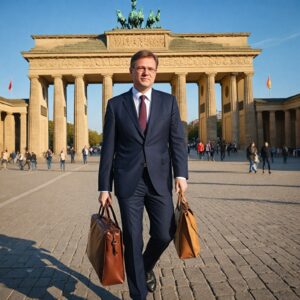
Lars Klingbeil is a German politician and co-leader of the Social Democratic Party (SPD), poised to become Germany’s Vice Chancellor and Federal Finance Minister in the upcoming government formed in 2025. Born in 1978, Klingbeil has been a Bundestag member since 2009 and has steadily risen through the party ranks, holding key roles including SPD General Secretary (2017–2021) and parliamentary faction leader. His appointment to the finance ministry, despite limited direct experience in fiscal policy, underscores his central influence within the SPD and signals a generational leadership shift amid Germany’s evolving political landscape.
Klingbeil’s political career has been marked by efforts to unify the SPD and navigate its transition during a period of electoral challenges and shifting alliances. Under his leadership, the SPD has faced significant setbacks, including its worst federal election result in over a century, yet Klingbeil remains a trusted figure within the party and among coalition partners, notably Chancellor Olaf Scholz. His forthcoming ministerial role places him at the forefront of implementing ambitious fiscal reforms, such as revising Germany’s longstanding debt rules and managing a €500 billion infrastructure and climate fund designed to address economic stagnation and environmental priorities.
Politically, Klingbeil advocates for social justice through demands for higher wages, pension stability, and substantial economic investment, while also promoting pragmatic cooperation within the “traffic light” coalition comprising the SPD, the Greens, and the Free Democratic Party. His stance on energy diversification and cautious foreign policy reflects responsiveness to geopolitical challenges, especially regarding relations with Russia and European security concerns. However, his leadership has not been without controversy; critics question the SPD’s ideological direction under his stewardship and express concern over internal tensions and the party’s ability to balance progressive goals with coalition compromises.
Beyond politics, Klingbeil maintains strong ties to Germany’s IT sector through his personal and professional networks, including his wife Lena-Sophie Müller’s role as managing director of Initiative D21, a prominent digital policy organization. As he assumes one of the country’s highest offices, Klingbeil’s tenure will be closely watched for its impact on Germany’s fiscal policy, coalition dynamics, and the future trajectory of the SPD in a complex domestic and international environment.
Early Life and Education
Lars Klingbeil completed his secondary education with the Abitur in Munster before undertaking alternative civilian service. In 1999, he began studying political science at Leibniz University Hannover, where he graduated in 2004 with a Master of Arts degree. During his time at university, Klingbeil worked in the constituency offices of then-Chancellor Gerhard Schröder and Heino Wiese from 2001 to 2003. His academic studies were supported by a scholarship from the Friedrich Ebert Foundation, and his fields of study also included sociology and history. Following his graduation, Klingbeil worked as a youth education advisor for the Social Democratic Party in North Rhine-Westphalia.
Political Career
From 2003 to 2007, Klingbeil served as deputy federal chairman of the Jusos, the youth organization of the Social Democratic Party (SPD), marking his rise through the party ranks without direct contact with the working class. Klingbeil has been a member of the German Bundestag since 2009 and has been active in the Defence Committee. He has also been a deputy member of the Committee on Cultural Affairs and Media and served as deputy chairman of the German-Russian Parliamentary Friendship Group from 2010 to 2013. Since 2013, he has led the Bundestag group of SPD parliamentarians from Lower Saxony, the party’s second largest delegation in the Bundestag. He won the constituency of Rotenburg I – Heidekreis in the 2017 federal elections with 41.2% of the vote and contested the same constituency again in 2021.
In 2017, Klingbeil was nominated by SPD chairman Martin Schulz as the party’s General Secretary, a position he held until 2021. During this period, he played a key role in party organization and strategy. In December 2021, he was unanimously nominated by the SPD executive committee to become party co-chair, succeeding Norbert Walter-Borjans and taking office alongside Saskia Esken. Their leadership was framed as a victory for the party’s left wing, guided by the Jusos under Kevin Kühnert.
Klingbeil’s leadership tenure coincided with challenging times for the SPD, including a significant drop in voter support, placing the party third behind the Union and the AfD in recent elections—the party’s worst performance in 138 years. Despite this, he has gained considerable backing from prominent SPD figures, including Chancellor Olaf Scholz, who described his election result as “very good”.
In early 2025, Klingbeil was elected chief of the SPD parliamentary faction, further consolidating his influence within the party. Most recently, the SPD tasked Klingbeil with assuming the vice-chancellorship and the role of federal finance minister in the new government, despite his limited experience in fiscal policy. This appointment reflects his central position in the party and the coalition negotiations underway.
Throughout his career, Klingbeil has been involved in SPD efforts emphasizing party unity, especially following the left-wing leadership’s rise and the complex negotiations involving Chancellor Olaf Scholz’s candidacy and government formation. His positions and the party’s direction have drawn both support and criticism, highlighting ongoing internal dynamics and the broader challenges facing the SPD in contemporary German politics.
Appointment as Vice Chancellor and Finance Minister
In April 2025, Lars Klingbeil, the co-leader of Germany’s Social Democratic Party (SPD), was widely expected to assume the influential positions of Vice Chancellor and Federal Finance Minister in the incoming centrist coalition government. At 47 years old, Klingbeil is a seasoned SPD veteran, though he does not possess extensive experience in fiscal policy. He is set to replace Joerg Kukies, who had held the finance minister post since November of the previous year.
The decision to appoint Klingbeil was confirmed by the SPD’s general secretary, Matthias Miersch, who stated that the party’s committee had tasked him with entering the new government in these roles. This leadership change within the SPD aligns with a broader generational shift in the party’s leadership, as Klingbeil and Saskia Esken were elected co-chairs with a mandate to renew and strengthen the party’s direction.
Klingbeil’s appointment comes at a critical time as Germany faces several economic and political challenges, including a stagnating economy, domestic infrastructure issues, and pressures stemming from international trade tensions and security demands within Europe. Prior to finalizing the coalition agreement, the SPD and its coalition partners had already agreed on major fiscal policy changes, notably altering Germany’s longstanding debt rules and initiating a 500 billion euro infrastructure and climate fund. As finance minister, Klingbeil is expected to play a leading role in implementing these significant policy shifts.
Beyond his upcoming ministerial responsibilities, Klingbeil has also been engaged in digitization efforts and maintains close connections with the IT industry. His wife, Lena-Sophie Müller, serves as managing director of Initiative D21, Germany’s largest partnership between politics and business aimed at shaping the information society. This background highlights Klingbeil’s broader interests in modernization and innovation alongside his political career.
Political Significance and Implications
Lars Klingbeil’s anticipated appointment as Germany’s vice chancellor and finance minister marks a pivotal moment for both the Social Democratic Party (SPD) and the broader political landscape of the country. As the newly nominated party chairman, Klingbeil is expected to play a central role in providing strategic support to Chancellor Olaf Scholz and maintaining cohesion within the “traffic light” coalition, which comprises the SPD (red), the Free Democratic Party (yellow), and the Green Party.
Klingbeil’s leadership style reflects a focus on collective negotiation and party unity over personal ambition, emphasizing the importance of prioritizing the coalition’s success above individual ministerial appointments. This approach is critical as the SPD navigates internal tensions and power dynamics, especially regarding ministerial portfolios and the vice-chancellor position, which is highly contested within the party and coalition partners. His ability to manage these dynamics will shape the SPD’s future effectiveness in government.
The incoming coalition faces significant challenges, including a stagnating German economy, infrastructural deficits, trade tensions arising from U.S. tariff policies, and increasing pressure on European allies to bolster military capabilities. Klingbeil’s expected leadership at the finance ministry situates him at the forefront of implementing major fiscal reforms, such as Germany’s historic shift away from strict debt rules and the establishment of a €500 billion infrastructure and climate fund. These initiatives represent a substantial policy shift and could redefine Germany’s economic and environmental strategy for years to come.
Moreover, Klingbeil’s stance in coalition negotiations has been characterized by a firm demand for higher wages, stable pensions, and significant economic investments, coupled with calls for a more conciliatory tone towards the conservative Christian Democrats led by Friedrich Merz. This muscular yet pragmatic posture signals Klingbeil’s intent to assert the SPD’s influence within the coalition and to reshape Germany’s political leadership landscape.
Klingbeil’s political significance also extends to the SPD’s position on foreign policy, particularly regarding relations with Russia. While the party historically advocated closer engagement with Moscow, recent developments and the threat of renewed conflict in Ukraine have led to introspection within the SPD, with Klingbeil affirming that “everything is on the table” in the event of an escalation. His role will be instrumental in balancing the party’s pro-European orientation with pragmatic security considerations.
Despite concerns raised by some critics about the SPD’s internal contradictions and potential complicity in strengthening right-wing forces in Germany and Europe, Klingbeil’s leadership is widely viewed as a moment of renewal and strategic realignment for the party. His ongoing prominence, including potential elevation to parliamentary group leader following the 2025 federal elections, underscores his growing influence and the trust vested in him to guide the SPD through a complex political era.
Policy Positions and Initiatives
As co-leader of the Social Democratic Party (SPD) and the expected vice-chancellor and finance minister, Lars Klingbeil has taken a firm stance on several key policy areas. In coalition negotiations with conservative Christian Democrat Friedrich Merz, Klingbeil has demanded higher wages, stable pensions, and substantial economic investment, while also calling for a more conciliatory approach from the conservative bloc. These demands highlight his commitment to social justice and economic stability within Germany’s evolving political landscape.
Klingbeil is poised to play a central role in implementing significant fiscal reforms, including changes to Germany’s long-standing debt rules and the establishment of a €500 billion infrastructure and climate fund aimed at revitalizing the economy and addressing environmental challenges. His leadership is expected to be crucial in navigating these ambitious initiatives amidst the country’s stagnating economy, infrastructural needs, and the pressures arising from international trade tensions and calls for increased European military capabilities.
On energy policy, Klingbeil has advocated for diversifying Germany’s energy supply, particularly by developing liquefied natural gas terminals, to reduce dependence on Russian natural gas amid geopolitical tensions. This reflects a pragmatic approach to energy security and an awareness of Germany’s strategic vulnerabilities in the broader context of West-Kremlin relations.
Within the SPD, Klingbeil’s dual role as party and faction chair places him at the heart of internal dynamics, especially as the party copes with its worst electoral result in over a century and navigates complex coalition negotiations. His interactions with other prominent figures, such as Defense Minister Boris Pistorius, underscore the competitive and collaborative challenges involved in shaping the party’s future and its position in government.
Klingbeil’s policy positions emphasize social equity, economic revitalization, and strategic pragmatism, reflecting his broader commitment to social democratic principles in a challenging domestic and international environment.
Public Reception and Criticism
Lars Klingbeil’s rise within the Social Democratic Party (SPD) has sparked significant debate regarding the ideological direction of the party. Despite being labeled by some as a “left-wing Social Democrat,” critics argue that such a description is inherently contradictory given the party’s current stance and policies. Following the 2019 SPD leadership election, Klingbeil and his co-leader Saskia Esken emphasized party unity as paramount, especially after choosing Olaf Scholz—previously a defeated candidate considered more centrist—as their chancellor candidate. This focus on unity has led to criticism that dissent within the party, particularly against its perceived right-wing and militaristic trajectory, is treated as disloyalty or sabotage.
Klingbeil’s role has also drawn scrutiny in the broader political context of Germany. Some observers link the SPD under his influence to a strengthening of right-wing forces, highlighting close political ties and alliances that complicate the party’s social democratic identity. Notably, Social Democratic head of state Frank-Walter Steinmeier, often critical of extremist movements publicly, has been accused of tacitly enabling right-wing and fascist elements in Germany and Europe. These critiques suggest that Klingbeil’s SPD faces challenges balancing progressive ideals with political pragmatism.
The party’s electoral performance under Klingbeil’s leadership has further fueled criticism. The SPD suffered a significant decline, dropping from 25.7 percent to 16.4 percent of the vote, falling behind the Union and the far-right AfD to its worst result in 138 years. This outcome has intensified internal tensions within the party, particularly concerning key ministerial appointments and coalition negotiations. Klingbeil’s dual role as both party leader and faction chair places him at the center of these dynamics, with potential conflicts arising over foreign and security policy portfolios, especially in relation to Defense Minister Boris Pistorius.
Personal Life
Lars Klingbeil is married to Lena-Sophie Müller, whom he wed in 2019. Müller has been serving as the managing director of the lobbying association “Initiative D21” since 2014, a prominent non-profit organization that fosters cooperation between politics and business to advance Germany’s information society. The association was founded with support from IBM and former Chancellor Gerhard Schröder and now includes around 200 companies and government representatives across various levels.
Klingbeil maintains a close connection to the IT industry through both his political work and his wife’s professional involvement. Despite his significant political roles and an estimated net worth of approximately €1.5 million, Klingbeil leads a relatively modest lifestyle, reflecting his commitment to social justice and equality. His assets include a residence in Munster, but he is known for eschewing extravagance consistent with his values.
During his youth, Klingbeil had a brief rebellious phase in which he chose civilian service over obligatory military duty in 1998. Even as a student, he worked in the constituency office of then-Chancellor Gerhard Schröder, with whom he continues to maintain a friendship.
The content is provided by Blake Sterling, 9 Minute Read