Highlights:
– Preserving Economic Stability: The article underscores the importance of maintaining the Federal Reserve's independence to safeguard economic stability, as demonstrated by Warsh advising against Trump's attempt to remove Powell despite policy disagreements.
– Global Financial Ramifications: Trump's discussions about potentially firing Powell have implications not only for the U.S. economy but also for global financial markets, highlighting the interconnected nature of economic policies and decisions.
– Future Economic Uncertainty: Economists are closely monitoring Trump's actions, especially in light of potential tariff proposals, indicating a climate of uncertainty that could impact economic decisions and global markets.
Summary
This article delves into reports that during his presidency, Donald Trump held discussions with former Federal Reserve Governor Kevin Warsh about potentially firing Jerome Powell, the Chairman of the Federal Reserve, an appointment made by Trump himself in 2018. This came in the wake of Trump’s publicly expressed dissatisfaction with Powell and the Fed’s monetary policies, causing a stir that had the potential to destabilize global financial markets. Trump’s controversial remarks, labeling Powell as “the enemy” and indicating he had the “right to remove him as chairman”, prompted conversations about a possible replacement, with Warsh emerging as a potential candidate.
The Federal Reserve plays a significant role in shaping the U.S. economy through monetary policy decisions. It has the power to influence interest rates, control the money supply, and stimulate or curb economic growth. Its chairperson, a position appointed by the President and confirmed by the Senate, wields substantial influence over these policies. The Chair’s position is protected by the Federal Reserve’s founding statute, which grants the institution its independence and prevents the removal of the Chair for policy reasons.
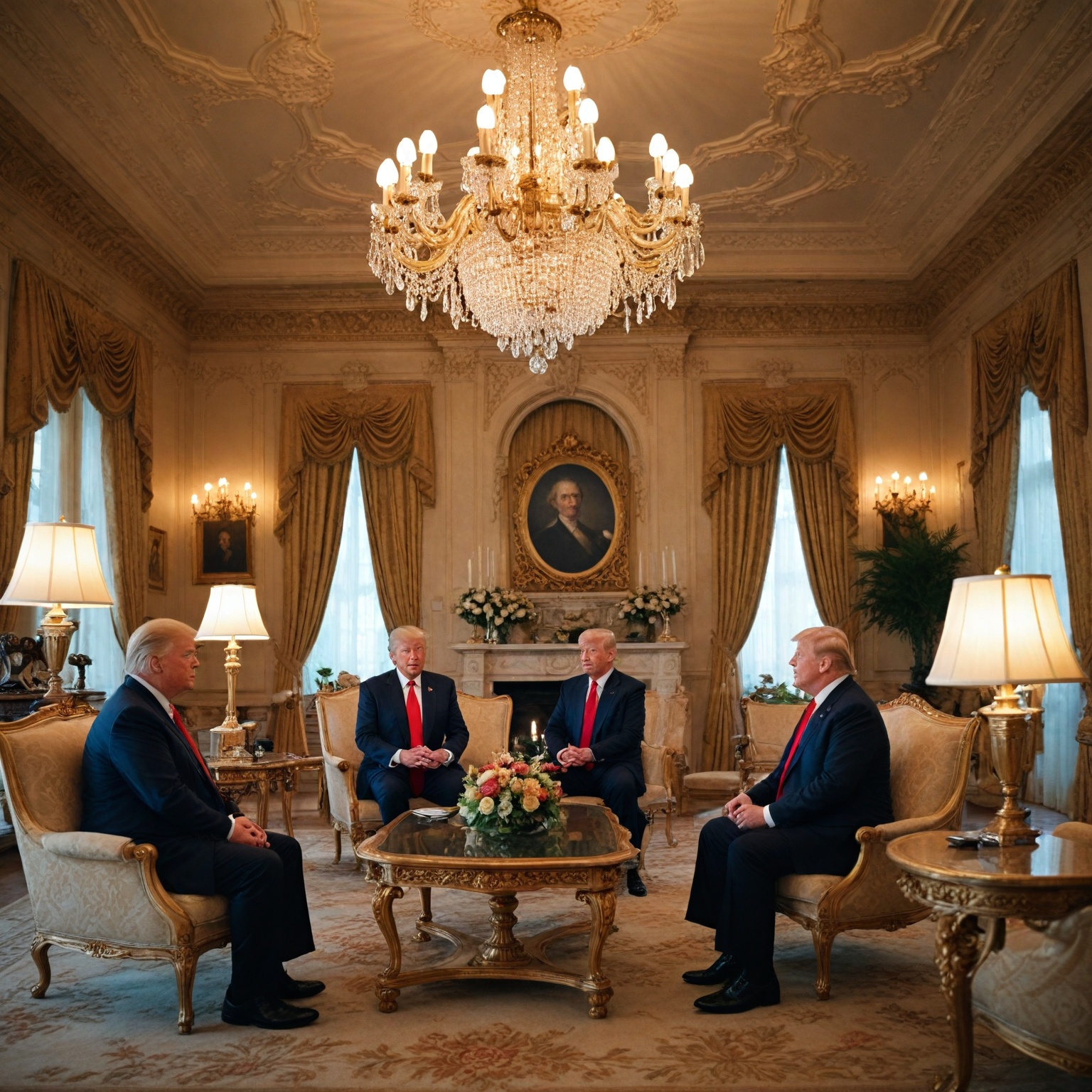
Trump’s discussions with Warsh were reportedly held at Trump’s Mar-a-Lago estate in Florida. During these discussions, Warsh advised Trump against firing Powell and interfering with his term, which is set to end in 2026. Despite Trump’s critical stance on Powell’s refusal to lower interest rates, Warsh’s counsel underlines the importance of preserving the Fed’s independence in maintaining economic stability.
The situation remains under observation as economists contemplate potential changes in Trump’s upcoming term that may impact rate cuts, given his tariff proposals. The consequences of any action against the Fed’s Chairman could potentially impact both domestic and international markets, considering the crucial role of the Federal Reserve in the U.S. economy and its influence on global financial markets.
Background Information
The Federal Reserve (Fed), the central bank of the United States, plays a crucial role in shaping the economy through its monetary policy decisions. The Fed influences interest rates, controls the money supply, and has the power to stimulate economic growth or curb inflation. The Federal Open Market Committee (FOMC), typically meeting eight times a year, discusses the outlook for the U.S. economy and evaluates monetary policy options.
The Chair of the Fed, a position appointed by the President and confirmed by the Senate, has substantial influence over U.S. monetary policy. Jerome H. Powell, appointed by President Trump and succeeding Janet Yellen in 2018, held the position as the chair of the Fed during Trump’s presidency and was later renominated by President Biden in 2021.
Throughout his term, President Trump expressed dissatisfaction with Powell and the Fed’s monetary policies. His pointed remarks on Powell echoed his past criticism against the Fed chair, escalating an issue with potential to destabilize global financial markets. In 2019, Trump labeled Powell “the enemy” and suggested he had the “right to remove him as chairman”. Despite these critiques, Trump’s efforts to fire Powell were met with warnings of market destabilization.
As discussions about Powell’s role continued, Kevin Warsh emerged as a potential replacement. Warsh, a former Federal Reserve Governor, reportedly advised Trump not to fire Powell and allow him to complete his term without interference.
Legal and Historical Precedents
The Federal Reserve was created by an act of Congress in 1913, and since 1977, has been tasked with promoting maximum employment and stable prices . The central bank is granted independence, enabling it to set interest rates without political interference, even if the policy might not be popular with the governing bodies . This independence has been recognized and supported by Supreme Court Justice Samuel Alito .
The Federal Reserve System considers itself an independent entity because its decisions related to monetary policy do not require approval from the President or anyone in the executive or legislative branches of government . It doesn’t receive funding appropriated by Congress, and its members serve terms that span multiple presidential and congressional terms .
The chairman of the Federal Reserve, currently Jerome Powell, is the active executive officer of the Board of Governors of the Federal Reserve System . The chairman cannot be removed for policy reasons as the founding statute guarantees the independence of the Federal Reserve .
The Federal Reserve has played a pivotal role in managing post-crisis economic transitions. In the late 1970s and into the early Reagan administration, for example, the Fed raised interest rates significantly to combat inflation, leading to a short-term economic recession .
Report of Trump’s Discussions with Kevin Warsh
President Donald Trump has reportedly held discussions with former Federal Reserve Governor Kevin Warsh about the potential replacement of the current central bank chairman, Jerome Powell. These discussions took place at the president’s private residence and club, Mar-a-Lago, in Florida. Further discussions about the potential dismissal of Powell were held with other individuals.
Trump has repeatedly urged Powell to lower interest rates, expressing his displeasure with Powell for his refusal to do so. He has publicly called for Powell’s “termination” on various occasions, asserting that it “cannot come fast enough”.
Despite these tensions, Warsh has advised Trump against firing Powell or interfering with his tenure, which is set to end in 2026. In addition, Warsh has emerged as a possible candidate for the Treasury secretary position, suggesting Trump’s prioritization of a candidate who can effectively communicate with markets and investors during potential future turbulence.
Critics argue that political influence on a central bank can lead to pressures to overstimulate the economy for short-term gains that exceed the economy’s underlying potential. As of now, Trump has not announced a final decision regarding Powell’s position, and has not dismissed Powell. Looking forward, economists are observing for potential key changes in Trump’s upcoming term that could jeopardize more rate cuts, given his tariff proposals.
Potential Consequences
If the Federal Reserve raises the short-term federal funds target rate it controls, it can negatively impact stocks and slow business activity due to a higher interest rate environment .
Furthermore, the Federal Reserve’s actions can have international ramifications. Although U.S. monetary policy does influence global financial markets, it is not the sole determinant. Changes in other countries’ policies, such as those by the European Central Bank, also have an impact on the U.S .
In 2025, equity markets have experienced increased volatility due to policy announcements from the White House, with the Federal Reserve’s actions and projections remaining a critical market focus . Given this context, any action to fire the current Chairman could potentially have significant consequences on both domestic and international markets.
The content is provided by Blake Sterling, 9 Minute Read