
Summary
**Your Clients Are Using AI to Replace You: Do These 3 Things Before They Do** examines the accelerating impact of artificial intelligence (AI) on the modern workforce and offers strategic guidance for professionals seeking to maintain their relevance amid widespread automation. As AI technologies increasingly perform tasks once reserved for human workers—ranging from routine manual labor to complex creative functions—many industries face significant disruption, with surveys indicating that a substantial portion of companies have already replaced employees with AI or anticipate doing so in the near future. This evolving landscape highlights urgent concerns about job security, equitable access to the benefits of technological progress, and the ethical responsibilities of employers and policymakers.
The article outlines key challenges posed by AI-driven automation, including the vulnerability of “middle-skill” jobs and the necessity for workers to acquire new competencies to stay competitive. It emphasizes that while many tasks are increasingly automatable, uniquely human capabilities—such as emotional intelligence, creativity, and complex decision-making—remain critical for career resilience. Moreover, the ethical dimensions of AI adoption are explored, focusing on the socioeconomic risks of displacement, corporate accountability, and the role of labor unions in safeguarding workers’ rights and promoting responsible AI integration.
To address these challenges, the page advocates three essential strategies for professionals: upskilling and cross-skilling to develop both technical and soft skills; leveraging inherently human strengths that AI cannot replicate; and embracing AI as a collaborative tool rather than a competitor to enhance productivity and innovation. These approaches aim to empower workers to navigate a rapidly transforming job market, where adaptability and continuous learning are paramount.
Finally, the article considers industry-specific examples, future workforce trends, and practical resources for skill development, underscoring that while AI presents significant risks of job displacement, it also offers opportunities for human–machine collaboration that can drive economic growth and job creation if managed thoughtfully. The narrative balances the promise and perils of AI in employment, encouraging proactive preparation to thrive in an AI-augmented future.
Background
The integration of artificial intelligence (AI) into the workplace has accelerated rapidly, promising to enhance productivity and create new job opportunities. However, this technological shift has also led to significant workforce disruptions. A 2023 ResumeBuilder survey revealed that 37 percent of companies utilizing AI have already replaced workers with the technology, and 44 percent expect AI-driven layoffs in 2024. AI-powered tools like Lensa and DALL-E have made it easier for businesses and individuals to produce professional-quality images without relying on traditional graphic design services, signaling potential declines in certain creative job sectors.
In the United States, approximately 19 percent of workers held jobs in 2022 that are highly exposed to AI, where core job activities could be either replaced or augmented by AI systems. Exposure to AI is more common among women, Asian workers, college-educated individuals, and those with higher incomes, though many workers in exposed industries believe AI will benefit them more than harm them personally. This evolving dynamic echoes historical technological transitions, such as the advent of the automobile, which initially displaced certain jobs but ultimately led to broader economic growth and new employment opportunities.
Despite the potential benefits of AI, concerns remain regarding workers’ rights and equitable access to the advantages of technological innovation. Advocates emphasize the necessity of intentional policies to protect civil rights and ensure that workers, not just business leaders, share in the gains of AI adoption. Moreover, reports from organizations like McKinsey estimate that AI could replace up to 20 percent of hours worked in the U.S. economy by 2030, affecting even skilled white-collar professions that were once considered less vulnerable to automation.
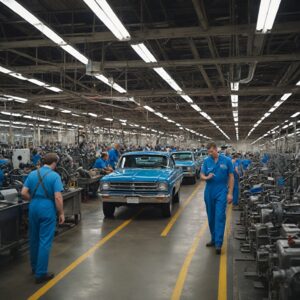
Industries such as IT services, media and entertainment, telecommunications, and electronics are prioritizing AI in their employee training strategies to remain competitive. Failure to equip workers with AI-related skills risks leaving companies behind in a rapidly transforming job market. Meanwhile, AI and robotics are expected to reduce the demand for manual labor-intensive roles by 2040, including positions like machine assemblers, postal workers, and farm laborers.
Taken together, these trends illustrate the complex and multifaceted impact of AI on employment, highlighting both the risks and opportunities that lie ahead for workers and employers alike.
Key Challenges Faced by Professionals
The rapid advancement of artificial intelligence (AI) and automation presents several significant challenges for professionals across various industries. One major concern is the susceptibility of “middle-skill” jobs—those requiring training but not necessarily a college degree—to automation. Roles such as data entry and basic IT support are particularly vulnerable, raising socioeconomic concerns as a large segment of the workforce may face displacement or limited job opportunities. As AI technologies evolve beyond simple task automation to more complex and versatile functions, even jobs once considered secure are increasingly at risk of being replaced.
Analysis of thousands of work activities shows that tasks involving physical activities in predictable, structured environments and those focused on data collection and processing are most automatable. These tasks constitute about half of the activities performed across sectors. Conversely, roles involving managing others, providing expertise, and stakeholder interaction are less likely to be automated. For instance, AI-driven tools are expected to handle up to 90% of proofreading tasks by 2030, and manufacturing jobs involving manual assembly line work are increasingly replaced by robotics and AI systems. In customer service, automation through chatbots, virtual assistants, and self-checkout technologies is reducing the need for human workers, impacting sectors like retail, grocery stores, and transportation services reliant on human drivers.
In addition to job displacement, professionals face the challenge of acquiring new skills to remain relevant. There is growing demand for expertise in data analysis, programming, AI development, and human-machine collaboration. Equally important are soft skills such as creativity, problem-solving, and emotional intelligence, which are less susceptible to automation and vital for adapting to evolving work environments. However, the development of these human skills requires intentional efforts, especially since many individuals have had limited opportunities for skill-building through education or employer support. Cross-skilling strategies, which enable employees to learn outside their core expertise, are predicted to gain traction as organizations seek to help workers transition into new AI-enabled roles and sectors.
Together, these factors underscore the complex landscape professionals must navigate, balancing the threat of automation with the need for continuous upskilling and adaptation to maintain their employability and job satisfaction in an AI-driven economy.
Ethical Considerations of AI-Driven Job Displacement
The rise of AI-driven automation has profound ethical implications, particularly regarding job displacement. Workers who lose employment due to automation often face significant financial hardship, diminished self-esteem, and a reduced sense of purpose. This displacement risks exacerbating existing socioeconomic inequalities, as wealth and power become increasingly concentrated among those who own and control AI technologies. The ethical responsibility of companies deploying AI is therefore critical; decisions made purely for profitability without regard for worker welfare can harm individuals and communities, raising serious questions about corporate accountability.
In industries like marketing, where AI adoption is notably high, concerns about job security are especially pronounced. For example, over 81% of digital marketers express anxiety about content writers potentially losing jobs due to AI tools such as chatbots capable of generating content from simple prompts. This highlights the human cost of AI competition, which is often unevenly distributed across age groups—older workers approaching retirement may experience less direct impact compared to younger workers deeply integrated into automated workflows.
Economic analyses suggest that while some workers whose tasks can be complemented by machines might benefit from automation, others supplying tasks easily replaced by machines are more vulnerable to job loss and wage stagnation. Historical precedents, such as the 19th-century Industrial Revolution’s “Engels’ Pause,” demonstrate that rising productivity does not automatically translate into higher wages or improved worker conditions; prolonged wage stagnation can occur despite economic growth. Addressing this challenge may require innovative policy responses, including conditional income transfers, support for labor mobility, universal basic income, and adapted social safety nets. These solutions must consider not only income replacement but also the broader roles work plays in providing meaning, dignity, and purpose to individuals.
Beyond displacement, AI raises other ethical concerns such as cybersecurity. AI systems often handle sensitive data, making them prime targets for cyberattacks. Organizations must implement resilient data protection measures within AI algorithms to safeguard information while balancing enhanced cybersecurity capabilities with strict adherence to data privacy norms.
Labor unions emerge as a key ethical and practical mechanism for addressing AI-driven disruptions. Rather than opposing AI outright, unions advocate for its responsible use to promote prosperity and improve working conditions. However, unchecked corporate deployment of AI risks deepening economic inequality and undermining workers’ rights and democratic participation. Strengthening union rights through legislation, such as the Protecting the Right to Organize (PRO) Act and the Public Service Freedom to Negotiate Act, can empower workers to negotiate fair terms in an AI-influenced workplace. These policies complement existing protections and reinforce workers’ ability to collectively address the ethical challenges posed by AI job displacement.
Three Essential Strategies to Stay Relevant
In an era where artificial intelligence (AI) is rapidly transforming the workplace, professionals must adopt proactive strategies to maintain their relevance and value. Three essential approaches—upskilling and cross-skilling, leveraging uniquely human capabilities, and integrating AI as a collaborative tool—stand out as critical for career longevity and success.
Upskilling and Cross-Skilling
Continuous learning is crucial as AI reshapes job roles and industries. Employees need to identify their strengths and areas for development to transition effectively into new AI-enabled roles or sectors. Upskilling efforts, particularly in essential skills like communication, critical thinking, and adaptability, enhance job satisfaction and employability. In the UK, 92% of workers express a desire to develop such skills, prompting organizations to adopt cross-skilling strategies that allow employees to expand beyond their core expertise and remain competitive in evolving markets. For instance, automation in education and healthcare frees time from administrative tasks, enabling professionals to focus more on student needs and patient care, respectively.
Leveraging Uniquely Human Capabilities
Despite advancements in AI, certain skills rooted in human judgment, emotional intelligence, and creativity remain irreplaceable. Roles requiring empathy, intuition, and complex decision-making—such as firefighting, therapy, and leadership—are inherently resistant to automation due to their unpredictable and high-stakes nature. Developing emotional intelligence, including self-awareness, emotional regulation, and interpersonal communication, strengthens personal and professional effectiveness. Specialized training and certifications in these areas not only demonstrate commitment but also build resilience and leadership qualities critical in collaborative and dynamic work environments.
Integrating AI as a Collaborative Tool
Rather than viewing AI solely as a competitor, embracing it as a digital workforce partner offers a path to enhanced productivity and innovation. Leaders are increasingly defining AI roadmaps to identify valuable opportunities and foster collaboration between humans and automated agents. Mastery of AI-related skills—such as prompt engineering, data analysis, and automation—complements human expertise, enabling workers to streamline workflows, generate creative ideas, and improve problem-solving. Surveys indicate that effective use of AI can save time and improve work-life balance, making AI literacy an indispensable component of future-ready skill sets.
By combining continuous skills development, nurturing irreplaceable human traits, and adopting AI as an empowering tool, workers can safeguard their roles and thrive amid technological change.
Practical Activities and Resources for Skill Development
To effectively adapt to the evolving workplace shaped by AI integration, employees must actively engage in skill development activities that target both technical and human-centered competencies. Given that 92% of UK workers express a desire to develop essential skills, organizations are increasingly adopting strategies such as cross-skilling to help employees expand their expertise beyond their core roles, enhancing their adaptability and job satisfaction.
Practical activities for skill enhancement include targeted upskilling and cross-training opportunities, which can be guided by frameworks like the Skills Builder Universal Framework. For example, in sectors such as education and healthcare, automation reduces time spent on administrative tasks, allowing workers to focus more on direct service delivery—student support or patient care—thereby emphasizing the importance of interpersonal and domain-specific skills. Moreover, certain creative and leadership functions—such as performing arts or nuanced decision-making—remain inherently human, underscoring the need to develop emotional intelligence and communication skills that AI cannot replicate.
Resources to support this development range from online coaching programs to specialized certifications. For instance, the E.I. Institute in Western Australia offers online emotional intelligence coaching and masterclasses tailored for all organizational levels, including business owners, managers, and team leaders. These programs help cultivate personal growth and professional capabilities in managing self and interpersonal relationships, often culminating in certificates that validate commitment to these critical soft skills. Additionally, career platforms like edX provide accessible resources for learners seeking to acquire new skills to advance their professional journeys.
Adopting a human-in-the-loop approach also encourages collaboration between AI tools and professionals, particularly in fields such as healthcare and legal services, where AI assists but does not replace human expertise. Employees can leverage AI to streamline workflows and enhance problem-solving capabilities, provided they develop the necessary competencies to use these technologies effectively. This holistic approach to skill development supports the creation of a digital workforce—an ecosystem where humans and AI-driven agents work synergistically to drive productivity and innovation.
Case Studies and Industry Examples
AI adoption is rapidly transforming various industries, with some sectors experiencing significant automation impacts while others remain relatively insulated. For example, the legal industry is among the most affected, with 44% of legal processes—such as contract analysis and even predicting court outcomes—expected to be automated soon. This shift challenges traditional legal roles and compels professionals to adapt to new technology-driven workflows.
Conversely, industries that rely heavily on manual labor, such as construction and extraction, are less likely to see extensive AI disruption due to the inherently human-driven nature of their tasks. Similarly, emergency services like firefighting require deep human judgment and intuition, making these roles resistant to automation despite technological advances.
Manufacturing and retail illustrate distinct challenges posed by AI integration. Manufacturing jobs have slowed growth in many economies partly because automation limits demand for traditional labor roles. Brick-and-mortar retail faces pressure as AI-powered online retailers leverage personalized marketing and efficient inventory management, diminishing the “personal touch” that physical stores historically offered. This creates ethical and practical concerns about the future viability of in-person retail experiences.
From a workforce perspective, the push toward AI integration compels businesses to prioritize employee training. Larger companies in sectors such as IT services, media, telecommunications, and electronics place AI skills development at the core of their training strategies to stay competitive. In fact, as of 2023, approximately 35% of businesses have already integrated AI, with another 42% actively exploring its adoption. By 2024, 75% of surveyed workers were using AI in their workplaces, highlighting the necessity for broad AI literacy among employees.
Certain job categories, especially “middle-skill” roles that require some training but not a college degree—such as data entry and basic IT support—are particularly vulnerable to AI-driven automation. This poses socioeconomic risks by potentially displacing a large portion of the workforce. To mitigate these risks, organizations are increasingly embracing cross-skilling and upskilling initiatives, enabling workers to adapt to changing job requirements and maintain relevance in evolving markets.
Ultimately, jobs that demand complex problem-solving and human-centric skills—such as those involving empathy, creativity, or critical thinking—remain less susceptible to AI replacement. While AI can automate simple, repetitive tasks, the growing versatility of the technology means even roles once considered safe may be at risk, urging both employers and employees to proactively prepare for the shifting employment landscape.
Future Outlook
The rapid advancement of artificial intelligence (AI) and automation technologies is profoundly reshaping the job market, creating uncertainty about the future of many professions. As AI systems become more capable, roles involving routine manual and administrative tasks are particularly vulnerable to automation. Reports suggest that by 2030, up to 50% of current work activities could be automated, especially in industries relying on repetitive tasks such as bookkeeping, assembly line labor, customer service, and warehousing. This shift is driving concerns among workers about
The content is provided by Jordan Fields, 9 Minute Read