
Summary
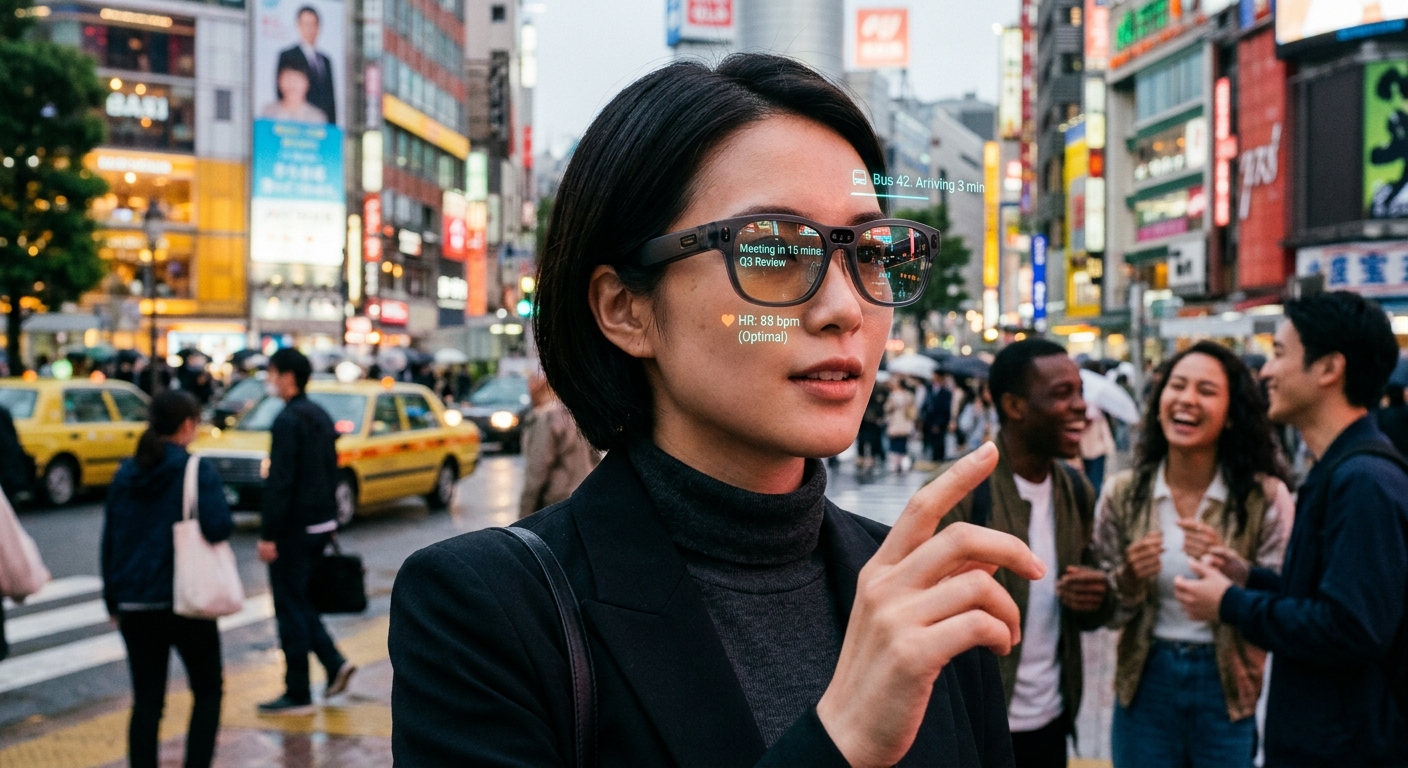
Smart glasses and AI wearables merge augmented reality, artificial intelligence, and wearable tech to enhance personal computing. They have evolved from bulky prototypes like Google Glass to sleek devices that support health monitoring, productivity, and interaction with digital content. This new generation incorporates advanced display technologies and AI-driven interfaces, enabling applications across healthcare, enterprise productivity, and everyday life, but also faces challenges concerning privacy, battery life, and social acceptance.
Historical Background
The idea of smart glasses emerged in the 1930s, with the first practical models developed in the 1960s by pioneers like Steve Mann. Over the decades, miniaturization and display technology improvements led to the emergence of useful head-worn displays, although early models remained impractical due to size and functionality constraints. Google Glass marked a turning point in 2013 with its intent to revolutionize computing, but high prices and public backlash limited its success, whereas Snap Spectacles found greater acceptance by focusing on niche applications for social media. Today’s smart glasses have benefited from technologies that enhance usability and personalization, paving the way for advanced wearable computing.
Technology Overview
The effectiveness of smart glasses hinges on their integration of sophisticated display technologies like OLED and MicroLED, which allow for lightweight and flexible designs. These devices also utilize augmented reality and sensors to dynamically project information into the wearer’s line of sight. Essential features include precise motion tracking and biosensing that deliver real-time data, while AI enhances user interactions through voice commands and context-sensitive functionalities. Despite these advancements, challenges persist in balancing battery life and aesthetic design with privacy considerations.
Applications
Smart glasses are being adopted across diverse sectors, enabling enhanced productivity in enterprise settings, real-time health monitoring in healthcare, and interactive experiences in daily consumer use. In industries like manufacturing, hands-free access and contextual data delivery boost efficiency while supporting remote assistance features through AI integration. Healthcare applications leverage continuous monitoring to provide personalized health insights, thus fostering early disease detection and management. Consumer applications span fitness tracking, navigation, and entertainment, with manufacturers focusing on privacy and ethical considerations to enhance acceptance and user experiences.
Enterprise and Productivity
In enterprise contexts, smart glasses facilitate hands-free data access and remote collaboration, driving efficiencies in various workflows. Companies like Vuzix have pioneered solutions that integrate navigation tools and translate languages in real-time, showcasing the role of AI in enhancing usability and productivity. Such advancements allow workers to focus on their tasks without disruption, offering a strategic advantage in competitive markets.
Healthcare and Wellness
AI-powered smart glasses in healthcare offer a unique advantage through constant health monitoring and early intervention capabilities. By integrating biosensors, they allow users to track vital signs seamlessly, which aids preventive care and chronic disease management. The real-time processing of health data enables tailored recommendations, improving patient outcomes and reducing healthcare costs by limiting hospital visits.
Consumer and Lifestyle
For consumers, smart glasses enhance experiences in navigation, fitness, and entertainment but often prioritize audio over visual functionalities in applications. As lessons from past products guide design choices, manufacturers increasingly focus on transparent user policies and visible functionalities to address privacy concerns. Advanced features like gesture control and AI assistants enrich interactions, making daily tasks easier and more connected.
Emerging Trends and Future Outlook
The smart glasses market is projected to experience robust growth, driven by increased consumer and enterprise demand. Technological advancements in AI, display technology, and connectivity position these devices as pivotal in personal computing. Future developments promise to enhance functionality and design while broadening their application in sectors like education and retail, ultimately leading to a paradigm shift in how digital information is integrated into everyday life.
Market and Industry Impact
The smart glasses market is on a rapid upward trajectory, with forecasts estimating substantial growth supported by technological advancements. Industry leaders, such as Meta and Vuzix, are reshaping the landscape with products that effectively balance aesthetics, functionality, and user privacy. Despite challenges related to data security and social norms, the focus on developing user-friendly ecosystems is key to fostering broader adoption and market stability.
User Experience and Functionalities
Smart glasses utilize generative AI to create highly personalized user experiences, adapting displays and functions based on individual activity and needs. Equipped to operate as standalone devices, many models still synchronize with smartphones, enhancing their communicative capabilities. The integration of AR and advanced interaction methods like eye-tracking and gesture control enables a more intuitive engagement, supporting hands-free navigation and immersive interactions without reliance on traditional screens.
Challenges and Limitations
Despite the transformative potential of smart glasses, issues surrounding data privacy and security remain significant obstacles. Continuous data collection can lead to concerns over surveillance and unauthorized recording, echoing the issues faced by earlier models. Addressing these challenges will be critical to gaining public trust and ensuring the responsible integration of these technologies into daily life.
Future Prospects
The future of smart glasses and AI wearables points towards significant innovations across various sectors, with expectations of increased market demand and enhanced functionalities. A strong focus on developing secure and user-friendly ecosystems will guide their mainstream acceptance, while advancements in AI and IoT will enable smarter, more context-aware devices. Ensuring ethical considerations and enhancing user experience will be pivotal in promoting broad adoption and trust in these emerging technologies.
The content is provided by Sierra Knightley, 9 Minute Read