Summary
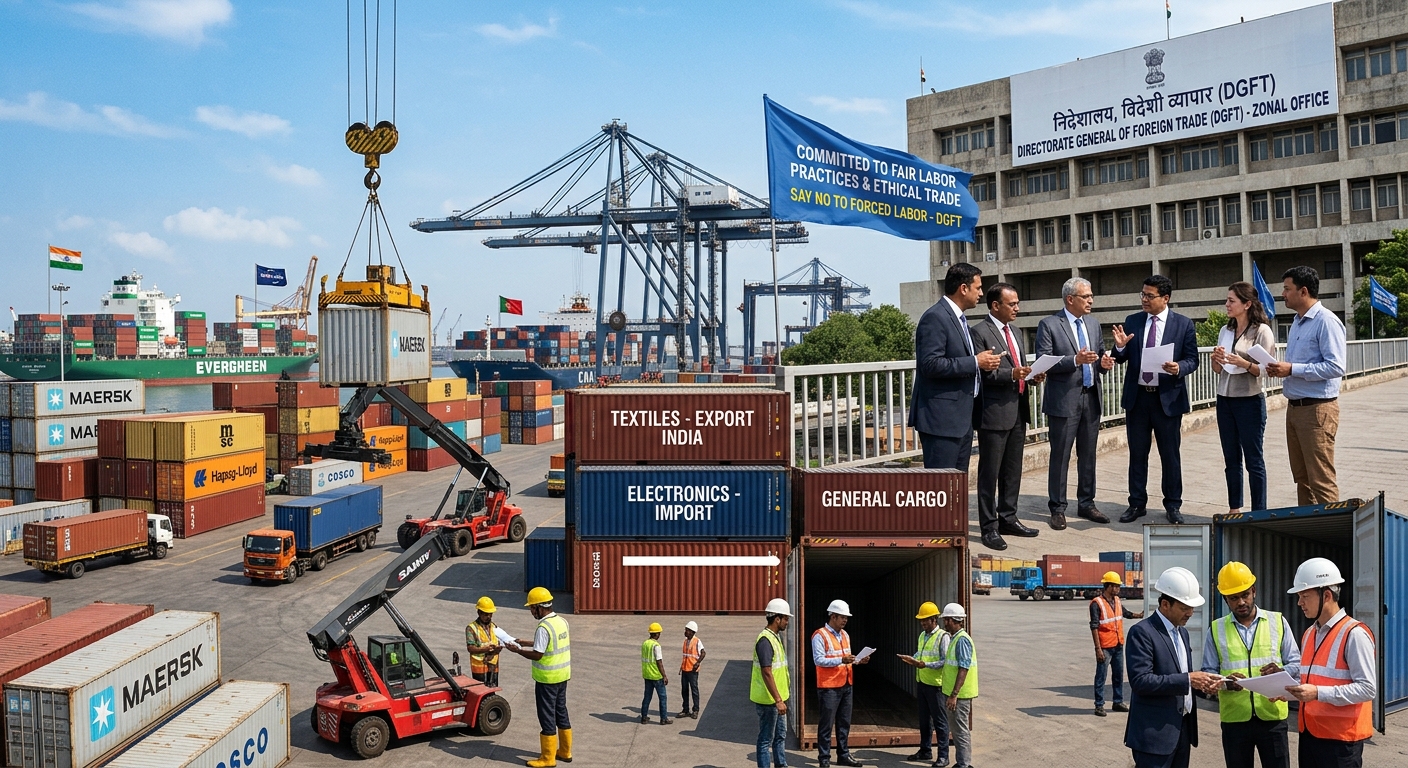
India Takes a Stand Blocking Imports Tied to Forced Labor Amid USTR Investigation is a recent development in international trade policy where India has enacted new regulatory measures to prohibit the importation of goods produced wholly or partly with forced labor. This move comes in response to an ongoing investigation initiated by the Office of the United States Trade Representative (USTR) under Section 301 of the Trade Act of 1974. The USTR’s probe targets India among 60 major trading partners, examining whether these countries have effectively enforced bans on imports linked to forced labor, with potential implications including the imposition of additional tariffs on Indian goods.
The USTR investigation highlights sectors such as textiles, apparel, electronics, and agricultural products where forced labor risks are prevalent, asserting that insufficient enforcement in India and other countries creates unfair advantages that burden U.S. commerce. In reaction, India has strengthened its domestic legal framework through amendments to its Foreign Trade Policy, empowering the Directorate General of Foreign Trade (DGFT) to investigate and restrict imports associated with forced labor in alignment with the International Labour Organization’s (ILO) definitions and standards. These measures reflect India’s commitment to combating forced labor while aiming to maintain compliance with World Trade Organization (WTO) rules and to safeguard its trade interests amid mounting international scrutiny.
The controversy surrounding the USTR investigation also involves disputes over the evidence and scope of the U.S. tariffs, with India contesting the broad classification of countries and the uniform 12.5% tariff rate imposed on alleged forced labor-linked imports. Indian officials and industry representatives argue that the USTR’s findings lack country-specific substantiation and call for resolution through bilateral trade negotiations rather than unilateral trade actions. This tension underscores the complex intersection of trade policy, human rights enforcement, and geopolitical considerations in global supply chains.
Looking forward, India faces the challenge of enforcing these new import prohibitions effectively amid complex, multinational supply chains while balancing trade facilitation and ethical labor standards. The outcome of the USTR investigation and India’s regulatory response will have significant implications for future trade relations between India and the United States, as well as for global efforts to eradicate forced labor in international commerce.
Background
The issue of forced labor in international trade has increasingly become a focal point within U.S. trade policy, particularly under investigations led by the Office of the United States Trade Representative (USTR). The USTR has explicitly identified sectors such as garments, textiles, thread, and yarn as high-risk areas for forced labor practices, signaling intensified scrutiny not only at U.S. borders but also through trade policy mechanisms that extend to sourcing countries. As part of a broader Section 301 investigation targeting around 60 economies, including India, the U.S. has examined allegations of forced labor and industrial overcapacity, which could lead to the imposition of fresh tariffs on Indian goods.
In response to these developments, India has taken legislative and regulatory steps to align its trade policy with international standards. The Directorate General of Foreign Trade (DGFT) has introduced amendments that empower the Central Government to investigate allegations of forced labor and recommend prohibitions on imports of goods produced wholly or partly through such practices. The government has adopted the International Labour Organization’s (ILO) definition of forced labor, describing it as work or service extracted under the threat of penalty and without voluntary consent. This framework establishes a legal basis for inquiry rather than imposing immediate import bans, with the effectiveness of these measures hinging on the thoroughness of investigations, evidentiary standards, and the scope of targeted products.
These efforts by India come amid growing international legal discourse regarding trade restrictions related to forced labor. For instance, Article XX(e) of the General Agreement on Tariffs and Trade (GATT) permits trade restrictions on products made with prison labor, highlighting the complexity of balancing trade law with human rights protections. India’s strengthened domestic framework aims to bolster its position in future trade negotiations by demonstrating commitment to combating forced labor while navigating the challenges posed by complex, multi-country supply chains.
USTR Investigation into Forced Labor-Linked Imports
In March 2026, the United States Trade Representative (USTR) initiated an investigation under Section 301 of the Trade Act of 1974 into the failure of certain countries, including India, to impose and effectively enforce prohibitions on the importation of goods produced with forced labor. The investigation sought to determine whether these countries’ policies and practices related to forced labor-linked imports were unreasonable and discriminatory, thereby burdening or restricting U.S. commerce.
The USTR identified India among 54 economies that had failed to implement and enforce a legal import ban on goods made with forced labor, highlighting sectors such as aluminium, cotton, electronics, lithium-ion batteries, and rice where India imported forced labor-linked inputs as well as similar finished products from the U.S. during 2021–2025. This failure was viewed by the USTR as creating an artificial cost advantage for foreign producers, disadvantaging U.S. industries.
In response, the USTR proposed additional tariffs—set at 12.5% for countries like India that did not meet certain enforcement conditions—on imports of goods suspected to be linked to forced labor. The USTR also proposed a textile mechanism allowing some apparel and textile imports from selected economies to enter the U.S. at a reduced Section 301 tariff rate. These measures were part of a broader effort to address forced labor in global supply chains through trade enforcement tools.
India, while having domestic laws prohibiting forced labor such as the Bonded Labour System (Abolition) Act, 1976, faced scrutiny due to the reliance of many Indian export industries on intermediate inputs imported from China, which the USTR also identified as problematic. To strengthen its position, India introduced revised import rules empowering the Director General of Foreign Trade (DGFT) to investigate, on its own initiative or based on credible information, whether imported goods were produced wholly or partially with forced labor. This legal framework aims to enable future import restrictions through government notifications, aligning with the International Labour Organization’s definition of forced labor.
Trade experts have noted that India’s new framework establishes a process-driven and reciprocal instrument that could be compatible with World Trade Organization (WTO) rules, providing flexibility in investigations and targeted enforcement rather than imposing an immediate import ban. However, India has challenged the USTR’s broad classification of countries and the rationale behind a uniform 12.5% tariff, arguing that the USTR has not presented country-specific or product-specific evidence to justify such measures. India has maintained that it will only formalize a trade deal with the U.S. once the Section 301 investigations are conclusively resolved.
Stakeholders and industry participants have been invited to submit comments and testimonies via the official USTR portal to provide perspectives on forced labor enforcement and the potential trade impacts across the affected economies. The ongoing investigation highlights the complexities of balancing trade enforcement with global supply chain realities and the international effort to eradicate forced labor in commerce.
India’s Policy and Regulatory Response
In response to the ongoing investigations by the United States Trade Representative (USTR) into forced-labor practices in global supply chains, India has taken significant steps to strengthen its domestic legal framework aimed at prohibiting imports produced or manufactured using forced labor. The Directorate General of Foreign Trade (DGFT) amended the Foreign Trade Policy (FTP), 2023, by inserting Paragraph 2.20B, which empowers the Central Government to prohibit the importation of goods that are wholly or partly produced with forced labor. This amendment is aligned with internationally accepted labor standards, particularly the International Labour Organization (ILO) Forced Labour Convention, 1930 (No. 29).
The new provision came into effect 30 days after its publication in the Official Gazette and includes a formal definition of forced labor as “all work or service which is exacted from any person under the menace of any penalty and for which the said person has not offered himself voluntarily”—a definition consistent with the ILO framework. Additionally, Paragraph 11.64 under Chapter 11 of the FTP was introduced to provide clarity on the terminology and scope of forced labor in the context of foreign trade regulations.
This policy development marks a substantial shift in India’s trade framework, reflecting an increased willingness to integrate labor concerns with trade policy. It grants the government authority to specify goods subject to import prohibitions following inquiries conducted by the DGFT, with procedures outlined in the Handbook of Procedures, 2023. Enforcement mechanisms involve cooperation with various national enforcement bodies, including police authorities, anti-trafficking units, labor departments, and the judiciary, which collectively work to uphold labor rights and combat forced labor practices.
While this regulatory change signals progress, experts emphasize that the credibility and effectiveness of India’s measures will ultimately depend on robust enforcement. The complexity of global supply chains poses challenges in tracing the origin of forced labor, especially when production spans multiple countries with opaque sourcing practices. Furthermore, many Indian export sectors rely on imported intermediate goods from countries such as China, which could complicate compliance and enforcement efforts. India has contested USTR findings that questioned its policies, arguing that it has adequate measures in place to prevent forced labor, though enforcement remains the critical hurdle.
India’s amendment also positions the country more favorably in ongoing and future trade negotiations, aligning its trade policy with international norms and potentially mitigating tariff risks under USTR investigations conducted under Section 301 of the Trade Act of 1974. These investigations assess whether countries have and enforce import bans on goods made with forced labor and are part of broader US efforts to address unfair foreign trade practices affecting American workers and businesses.
Impact and Reactions
The United States Trade Representative’s (USTR) investigation into the failure of key trading partners, including India, to effectively prohibit imports produced with forced labor has generated significant repercussions and responses from multiple stakeholders. The investigation, launched under Section 301 of the Trade Act of 1974, targets 60 economies responsible for over 99% of U.S. imports, scrutinizing their enforcement of forced labor prohibitions and considering the imposition of additional tariffs ranging from 10% to 12.5% on goods linked to such practices.
Indian Government and Industry Response
India has strongly contested the USTR’s findings, emphasizing that Washington has not provided sufficient evidence to prove inadequate policies against forced labor within the country. During public hearings held in Washington, Indian officials argued that labor issues should be addressed within the framework of ongoing trade negotiations, maintaining that the evidence does not establish a direct connection between Indian exports and forced labor inputs. Industry representatives, including major bodies such as the Confederation of Indian Industry and the Federation of Indian Chambers of Commerce and Industry, also appeared before the USTR to challenge allegations related to forced labor and concerns over industrial overcapacity. They highlighted that India’s production is market-driven and globally competitive, countering assertions of unfair trade advantages.
Legal and Regulatory Implications
The USTR’s move signals an intensification of trade enforcement linked to labor rights, adding complexity to India’s trade discussions with the United States. This development introduces a new compliance dimension alongside traditional issues like tariffs and market access, placing labor-linked supply chain regulations more prominently on the negotiation agenda. Indian experts note that strengthening domestic legal frameworks in alignment with international standards could enhance India’s position in future trade talks, though effective enforcement remains critical to credibility. India’s existing prohibitions on forced labor under the Bonded Labour System (Abolition) Act, 1976, form part of this compliance narrative, yet challenges remain due to reliance on imported intermediate goods from countries like China, which themselves face heightened scrutiny under U.S. forced labor policies.
Broader Industry and Trade Effects
The investigation and its potential outcomes have wider ramifications for Indian exporters, particularly those involved in sectors heavily integrated into global supply chains subject to evolving international regulations. Indian companies may be affected by various foreign regulatory frameworks addressing forced labor, such as the EU’s Corporate Sustainability Due Diligence Directive, the German Supply Chain Due Diligence Act, and the U.S. Uyghur Forced Labor Prevention Act (UFLPA). The UFLPA’s presumption that all goods from China’s Xinjiang region are produced with forced labor unless proven otherwise exemplifies the kind of rigorous enforcement India’s trade partners are increasingly adopting. These developments underscore the need for enhanced supply-chain transparency and due diligence, which could become critical components of bilateral trade agreements and compliance regimes.
Strategic and Diplomatic Considerations
The USTR’s Section 301 investigation and proposed trade actions underscore broader geopolitical and economic tensions regarding forced labor and human rights in trade policy. India’s efforts to rebut U.S. claims not only involve legal and trade policy arguments but also demand practical verification at the production level—a challenge complicated by limited multilateral dispute resolution mechanisms following the WTO Appellate Body’s inactivity. Experts observe that this scenario places India at a crossroads where demonstrating compliance in practice will be essential to counteract tariff threats and safeguard market access. Furthermore, these developments illustrate the increasing interlinkage of trade policy with labor and human rights concerns, signaling a shift toward incorporating non-trade issues into trade negotiations.
Legal and Diplomatic Implications
India’s opposition to U.S. measures targeting imports allegedly tied to forced labor has significant legal and diplomatic ramifications. At the core of the dispute is the U.S. Uyghur Forced Labor Prevention Act (UFLPA), enacted in 2021, which operates on a “rebuttable presumption” that all goods from the Xinjiang region are produced with forced labor unless importers can provide evidence to the contrary. This legal framework has led to widespread detentions of shipments by U.S. Customs, affecting numerous industries including textiles, agriculture, electronics, and minerals, with an estimated 20% of the world’s cotton coming from the region.
India challenges the UFLPA and related U.S. findings on grounds that they lack an evidence-based foundation and serve as disguised non-tariff barriers that unfairly restrict Indian exports under the guise of humanitarian concern. India has formally objected to these measures at the World Trade Organization (WTO), arguing they violate WTO norms and multilateral trade principles. However, the dispute settlement mechanism at the WTO is currently hampered, as the Appellate Body has been non-functional since 2019 due to the U.S. blocking new appointments, leaving rulings difficult to enforce.
The dispute also intersects with broader U.S. trade policy goals. Under Section 301 of the Trade Act of 1974, the United States Trade Representative (USTR) has launched investigations into sixty major trading partners—including India—over their enforcement of prohibitions on goods produced with forced labor. The USTR determined that these countries’ failures to adequately address forced labor-related imports are unreasonable and burdensome to U.S. commerce, thus justifying trade actions under Section 301(b). This adds a compliance dimension to ongoing India-U.S. trade negotiations, raising concerns about the impact of labor-linked supply chain rules on market access and tariff discussions.
Diplomatically, India has urged that such trade issues be resolved within the framework of bilateral trade negotiations rather than through unilateral investigations or measures, emphasizing willingness for constructive engagement and dialogue with the USTR. India maintains that its trade policies do not encourage forced labor and that the U.S. approach risks politicizing labor concerns to erect tariff barriers. This stance reflects a broader tension between national sovereignty in trade regulation and growing international pressure to enforce labor standards through trade instruments.
Enforcement, Monitoring, and Future Outlook
India’s amended Foreign Trade Policy (FTP) introduces a legal framework to prohibit imports of goods produced using forced labour, aligning with international standards such as the ILO Forced Labour Convention. Enforcement of this policy involves multiple agencies, including police authorities, specialized anti-trafficking units, labour departments responsible for workplace inspections, and the National Human Rights Commission. Judicial enforcement is also critical, with Indian courts playing an important role in upholding labour rights and adjudicating related disputes.
The Directorate General of Foreign Trade (DGFT) is tasked with conducting inquiries into the use of forced labour in the production of goods, following procedures outlined in the Handbook of Procedures, 2023. Based on these inquiries or other relevant materials,
The content is provided by Avery Redwood, 9 Minute Read