
Summary
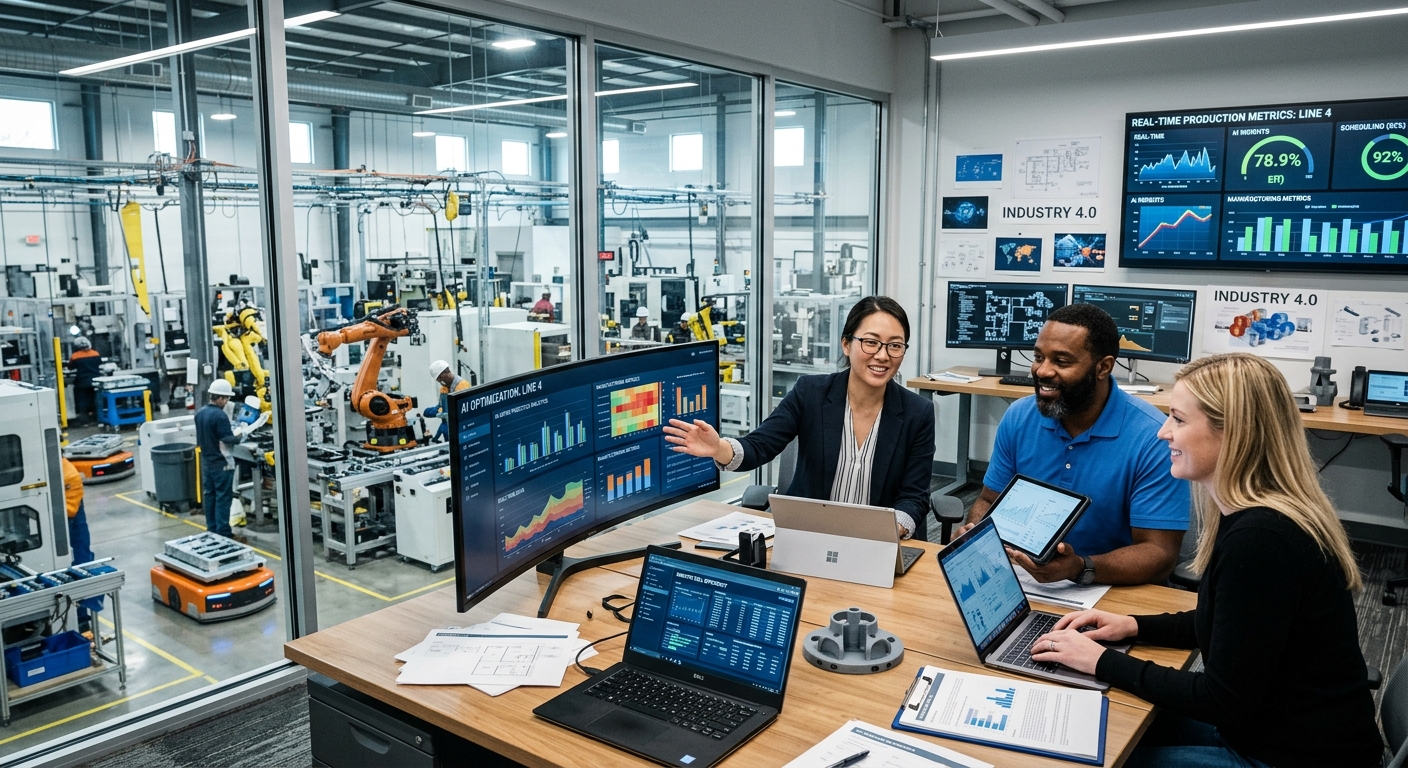
The AI revolution is significantly transforming the field of industrial engineering, driving notable increases in salaries and reshaping traditional roles within the profession. Industrial engineers, who traditionally focus on optimizing complex production systems, are now increasingly integrating artificial intelligence (AI) and automation technologies to enhance operational efficiency, predictive maintenance, and smart system design across industries such as manufacturing and energy. This technological shift has elevated the demand for engineers skilled in AI, machine learning, and data analytics, resulting in a growing premium on hybrid expertise that combines classical engineering knowledge with advanced AI competencies.
As AI automates routine, rule-based tasks, industrial engineers are transitioning toward roles emphasizing strategic decision-making, system integration, and innovative problem-solving. Emerging AI-related positions within the discipline are projected to grow by over 40% in the coming decade, reflecting the critical importance of interdisciplinary skills that bridge engineering and data science. This evolution has not only expanded career opportunities but also led to salary boosts of approximately 20% for engineers proficient in AI technologies compared to their peers without such expertise.
Salary trends further underscore the impact of AI adoption, with industrial engineers and AI specialists—particularly in the United States—commanding substantially higher compensation packages that include performance bonuses and equity incentives. While these increases highlight the lucrative nature of AI integration, disparities persist across sectors and regions, and concerns remain about job displacement risks, uneven benefits distribution, and challenges in workforce adaptation to rapidly evolving technologies.
Looking ahead, the future of industrial engineering is closely tied to continuous upskilling and human-AI collaboration, emphasizing roles that complement automation rather than compete with it. As industries advance toward the fifth industrial revolution, professionals who effectively harness AI to optimize complex systems and drive sustainable innovation are expected to experience sustained job growth, enhanced remuneration, and expanded career pathways, positioning the field at the forefront of technological and economic change.
Background
Industrial engineering is a dynamic field focused on designing, developing, testing, and evaluating integrated systems to manage industrial production processes. These processes encompass human work factors, quality control, inventory control, logistics and material flow, cost analysis, and production coordination. As of early 2026, industrial engineers in the United States earn an average annual salary of approximately $83,498, which translates to around $40.14 per hour. However, salaries can vary widely depending on factors such as experience, industry sector, and specific skill sets.
Experience plays a significant role in salary differences within industries for industrial engineering graduates. Entry-level positions typically offer lower wages, but as professionals gain experience, their earning potential can increase substantially. Many industries reward specialized expertise and leadership skills with higher compensation over time. Additionally, mastery of particular technical skills, such as proficiency in analytical methods or supply chain management, can lead to significant pay increases. For example, expertise in analytical methods may boost earnings by about 6%, while skills with Linux systems could add an additional 2% salary bump.
The integration of automation and artificial intelligence (AI) within industrial engineering has further influenced the field’s evolution and compensation trends. Industrial engineers increasingly apply AI to minimize operational costs and accelerate delivery speeds. In sectors like energy, AI supports predictive maintenance, resource allocation, and smart grid optimization, emphasizing the critical need for operational resilience and sustainability. As the industry embraces these technological advancements, professionals must continuously update their technical skills to remain competitive and capitalize on emerging opportunities.
Impact of AI Revolution on Industrial Engineering
The rapid adoption of artificial intelligence (AI) technologies is significantly reshaping the field of industrial engineering, creating new specialized career opportunities and altering traditional roles. Demand for AI-related engineering positions within industrial engineering is projected to increase by more than 40% over the next decade, driven by the integration of data science, machine learning, and automation skills alongside conventional engineering expertise.
Transformation of Roles and Skills
AI is automating predictable, rule-based tasks such as reporting, inspections, and data logging, which historically required manual management. While these jobs face risk of displacement, many are evolving rather than disappearing, with professionals shifting their focus toward strategic decision-making, system-level design, and creative problem-solving. This transition encourages industrial engineers to develop hybrid skill sets that combine traditional engineering knowledge with AI competencies, thereby enhancing their competitive advantage and earning potential.
Emerging roles include AI system design, management, and integration, where engineers collaborate closely with software developers and IT specialists to embed AI models seamlessly into existing industrial processes. Interdisciplinary learning involving programming, machine learning, and data science is becoming essential, as it broadens problem-solving capabilities and fosters innovation in sectors like advanced manufacturing and energy.
Industry Applications and Innovation
AI technologies are advancing robotics automation, predictive maintenance, quality control, and smart grid optimization across manufacturing and energy industries. Industrial engineers with AI expertise contribute to optimizing production efficiency, minimizing equipment downtime, and designing intelligent systems that enhance operational resilience and sustainability. As industrial systems grow increasingly complex, AI-driven software for simulation and testing is transforming engineering workflows, enabling faster and more accurate development cycles.
Economic Impact and Salary Trends
The AI revolution is influencing salary structures within industrial engineering by elevating the value of professionals skilled in AI integration. Studies indicate that industrial engineers possessing AI and automation expertise earn approximately 20% more than their counterparts without such skills. Additionally, experience and industry-specific leadership further amplify earning potential over time. AI engineers, in particular, command high salaries due to their specialized technical knowledge and cross-industry demand, with compensation rising significantly between 2024 and 2025.
Future Outlook
The future outlook for industrial engineers in the context of AI integration is highly promising, driven by rapid technological advancements and increasing adoption of AI across multiple sectors. Demand for industrial engineers skilled in AI-related competencies is projected to grow significantly, with some estimates indicating a more than 40% increase in AI-focused engineering roles over the next decade. This growth is largely fueled by the need to blend traditional industrial engineering expertise with data science, automation, and AI proficiency to optimize workflows and enhance operational efficiency in increasingly automated environments.
Key industries such as advanced manufacturing and energy are at the forefront of this transformation. In advanced manufacturing, AI enhances robotics, predictive maintenance, and quality control, enabling industrial engineers to innovate in factory automation and minimize equipment downtime. Similarly, in the energy sector, AI facilitates predictive maintenance, smart grid optimization, and resource allocation, where industrial engineers design intelligent, resilient systems that promote sustainability. These sectors exemplify the growing importance of continuous skill development in AI tools to maintain competitiveness and relevance.
The integration of AI is also reshaping compensation structures within industrial engineering. Professionals combining traditional engineering knowledge with AI and automation expertise command salaries approximately 20% higher than those without such skills. Furthermore, AI professionals in the United States tend to earn significantly more than their international counterparts, bolstered by additional performance bonuses and equity incentives. This trend underscores a competitive market where hybrid expertise offers a strong bargaining advantage for higher compensation and enhanced benefits.
While AI automation may displace roles involving predictable, rule-based tasks, demand remains robust for industrial engineers with capabilities in strategic decision-making and creative problem-solving. The evolving landscape encourages industrial engineering graduates and professionals to pursue AI certifications, attend industry conferences, and engage in continuous learning to capitalize
Salary Trends Post-AI Adoption
The adoption of artificial intelligence (AI) has significantly influenced salary trends for industrial engineers and AI professionals, driving notable increases across various regions and industries. In the United States, AI-related roles such as Machine Learning Engineers now command total compensation ranging from $180,000 to over $350,000, reflecting a sharp rise fueled by intense competition for talent in specialized fields like Generative AI, Large Language Models (LLMs), and MLOps. This surge in compensation is coupled with comprehensive packages that often include performance bonuses, stock awards, and long-term equity incentives, further enhancing overall earnings.
Salary growth in AI and industrial engineering is also linked to industry-specific factors. Sectors embracing digital transformation and advanced automation report annual wage increases exceeding 5%, outpacing traditional fields. For example, technology and finance companies typically offer higher salaries to AI engineers, correlating with the high demand for specialized skills in these domains. Conversely, entry-level industrial engineers’ salaries vary internationally, with an entry-level engineer in Germany earning approximately €57,129 (about $61,000), influenced by factors such as education and additional skills.
Looking ahead, salary projections continue to rise robustly. According to the Robert Half 2026 Salary Guide, AI/ML engineers in mainstream tech firms are expected to start at $134,000, with midpoints and high-end salaries reaching $170,750 and $193,250, respectively. These roles are anticipated to experience a 4.1% starting salary increase in 2026, the highest among all tech specialties tracked, substantially outpacing the overall tech salary growth rate of 1.6%. Similarly, AI engineer salaries saw a dramatic jump to an average of $206,000 in 2025, marking a $50,000 increase from the previous year, even as companies face challenges filling these high-demand positions.
Geographical factors also play a critical role in salary disparities. The United States offers some of the highest AI engineer salaries globally due to a dense network of tech companies, startups, and strong demand for AI expertise. However, these salaries often come at a premium of 20–40% higher than other regions, accounting for both demand and living costs. Europe maintains a strong talent base supported by research and development capabilities, while Latin America is rapidly expanding its AI expertise through improved education and favorable communication advantages with North America.
The increased integration of AI across industries such as advanced manufacturing, energy, fintech, and healthcare has further elevated the demand for AI and industrial engineering skills. Industrial engineers leveraging AI tools contribute to robotics automation, predictive maintenance, smart grid management, and financial technology applications, enhancing operational efficiency and creating new high-paying roles. This expansion is reflected in the emergence of numerous AI-related positions, many of which did not exist 25 years ago, indicating a transformative shift in workforce composition and compensation structures driven by AI adoption.
Factors Contributing to Salary Boosts
The significant salary boosts experienced by industrial engineers in the era of AI adoption are driven by multiple interrelated factors. One of the primary drivers is the rapidly growing demand for specialized AI and automation skills across various industries. As AI technologies become integral to manufacturing, supply chain management, and other engineering workflows, professionals proficient in AI, machine learning, and data analytics are increasingly sought after, leading to higher compensation levels.
A critical factor is the shift in job roles caused by AI automation. Routine, rule-based tasks traditionally performed by industrial engineers are increasingly handled by AI systems and robotics, allowing engineers to focus on complex problem-solving, strategic decision-making, and creative innovation. This shift elevates the importance of advanced technical expertise and results in roles with greater responsibility and enhanced salary packages. Furthermore, emerging positions related to designing, implementing, and managing AI-driven systems offer substantial salary potential to engineers who develop these niche competencies.
The competitive global market for AI talent also plays a significant role. Particularly in regions like the United States, AI professionals—including industrial engineers with AI expertise—command significantly higher base salaries supplemented by performance bonuses, stock awards, and long-term equity incentives. This trend is reinforced by intense competition among employers to attract and retain top talent in specialized fields such as Generative AI, Large Language Models (LLMs), MLOps, and AI infrastructure.
Continuous learning and certification are additional contributors to salary growth. Industrial engineers who actively pursue up-to-date AI and automation certifications, engage in hands-on projects, and participate in industry events or developer communities can enhance their skills rapidly, increasing their market value and negotiating power for higher salaries. The importance of strong programming capabilities—especially in Python—and mastery of frameworks relevant to AI development are frequently highlighted as crucial for career advancement.
Moreover, interdisciplinary expertise that combines traditional industrial engineering knowledge with AI, data science, and programming skills creates a competitive advantage. Employers value professionals who can integrate domain knowledge with AI technologies to optimize systems and processes, which further boosts compensation.
Finally, the broader industry context, including the rise of AI-driven organizations and the expanding role of data science, has elevated the strategic importance of engineering roles. As AI becomes embedded across sectors such as software, manufacturing, energy, fintech, and healthcare, the demand for AI engineers with versatile technical and soft skills continues to grow, underpinning sustained salary increases.
Case Studies
One illustrative case involves a graduate from an Industrial Engineering program who initially found the rapid evolution of AI overwhelming. She described the challenge of balancing traditional coursework with emerging AI topics but emphasized that certifications and hands-on projects significantly helped bridge the gap between theory and practical application. This practical experience boosted her confidence in using AI-driven tools during her internship, highlighting the importance of continuous learning and applied skills in adapting to AI’s growing role in industrial engineering.
In another example, traditional industrial firms have increasingly hired machine learning engineers to optimize robotics, forecasting, and supply chain operations. These companies often possess substantial financial resources, allowing them to offer salary packages comparable to those found in Big Tech, thereby raising compensation standards within the industrial engineering sector. This trend demonstrates how established firms are leveraging AI expertise to remain competitive and reward hybrid engineering-AI skills.
Additionally, the broader industry context shows that AI engineers working in sectors such as software engineering, manufacturing, fintech, and medical technology are commanding significantly higher salaries due to the critical demand for programming, cybersecurity, data science, machine learning, and robotics expertise. This cross-industry demand has driven salary increases between 2024 and 2025, underscoring the value of AI proficiency in various career paths. For industrial engineers, combining traditional expertise with AI capabilities has led to roughly a 20% salary increase compared to peers without AI skills, further highlighting the premium placed on AI integration.
Challenges and Criticisms
The AI revolution, while driving significant salary growth and demand for industrial engineers, also presents several challenges and criticisms. One major concern is the uncertain impact of automation and AI technologies on employment. Studies examining the effects of industrial robots and related technological disruptions offer conflicting conclusions, and the overall scale of job displacement attributed to such factors remains debated. This ambiguity complicates workforce planning and policy-making.
Jobs characterized by high repetition or rule-based tasks—such as reporting, inspections, or data logging—are considered most at risk of automation. However, rather than outright elimination, these roles are often being transformed and reshaped. In contrast, positions requiring design, complex decision-making, and human interaction tend to grow in importance and value. Nonetheless, employment trajectories for other white-collar occupations, including some in computer science, legal, business, financial, and engineering fields, remain uncertain in the face of rapid AI adoption.
Another challenge arises from the uneven distribution of benefits across industries and roles. While salaries for AI-related professions such as machine learning engineers and specialists in generative AI and large language models have surged—particularly in technology and finance sectors—other areas experience slower growth or job stagnation. Furthermore, industries like healthcare and autonomous systems, which rapidly adopt AI technologies, face talent shortages that exacerbate compensation disparities.
Additionally, there is concern over rising unemployment among college graduates and tepid job growth in several white-collar sectors, which some attribute to AI’s increasing role in the workforce. This trend highlights broader economic and social implications as AI reshapes employment landscapes beyond just salary increases.
Future Outlook
The future outlook for industrial engineers in the context of AI integration is highly promising, driven by rapid technological advancements and increasing adoption of AI across multiple sectors. Demand for industrial engineers skilled in AI-related competencies is projected to grow significantly, with some estimates indicating a more than 40% increase in AI-focused engineering roles over the next decade. This growth is largely fueled by the need to blend traditional industrial engineering expertise with data science, automation, and AI proficiency to optimize workflows and enhance operational efficiency in increasingly automated environments.
Key industries such as advanced manufacturing and energy are at the forefront of this transformation. In advanced manufacturing, AI enhances robotics, predictive maintenance, and quality control, enabling industrial engineers to innovate in factory automation and minimize equipment downtime. Similarly, in the energy sector, AI facilitates predictive maintenance, smart grid optimization, and resource allocation, where industrial engineers design intelligent, resilient systems that promote sustainability. These sectors exemplify the growing importance of continuous skill development in AI tools to maintain competitiveness and relevance.
The integration of AI is also reshaping compensation structures within industrial engineering. Professionals combining traditional engineering knowledge with AI and automation expertise command salaries approximately 20% higher than those without such skills. Furthermore, AI professionals in the United States tend to earn significantly more than their international counterparts, bolstered by additional performance bonuses and equity incentives. This trend underscores a competitive market where hybrid expertise offers a strong bargaining advantage for higher compensation and enhanced benefits.
While AI automation may displace roles involving predictable, rule-based tasks, demand remains robust for industrial engineers with capabilities in strategic decision-making and creative problem-solving. The evolving landscape encourages industrial engineering graduates and professionals to pursue AI certifications, attend industry conferences, and engage in continuous learning to capitalize on emerging opportunities. Overall, the intersection of AI and industrial engineering promises sustained job growth, higher wages, and expanded career pathways, particularly for those who embrace the AI revolution and adapt to its dynamic demands.
The content is provided by Avery Redwood, 9 Minute Read