Summary
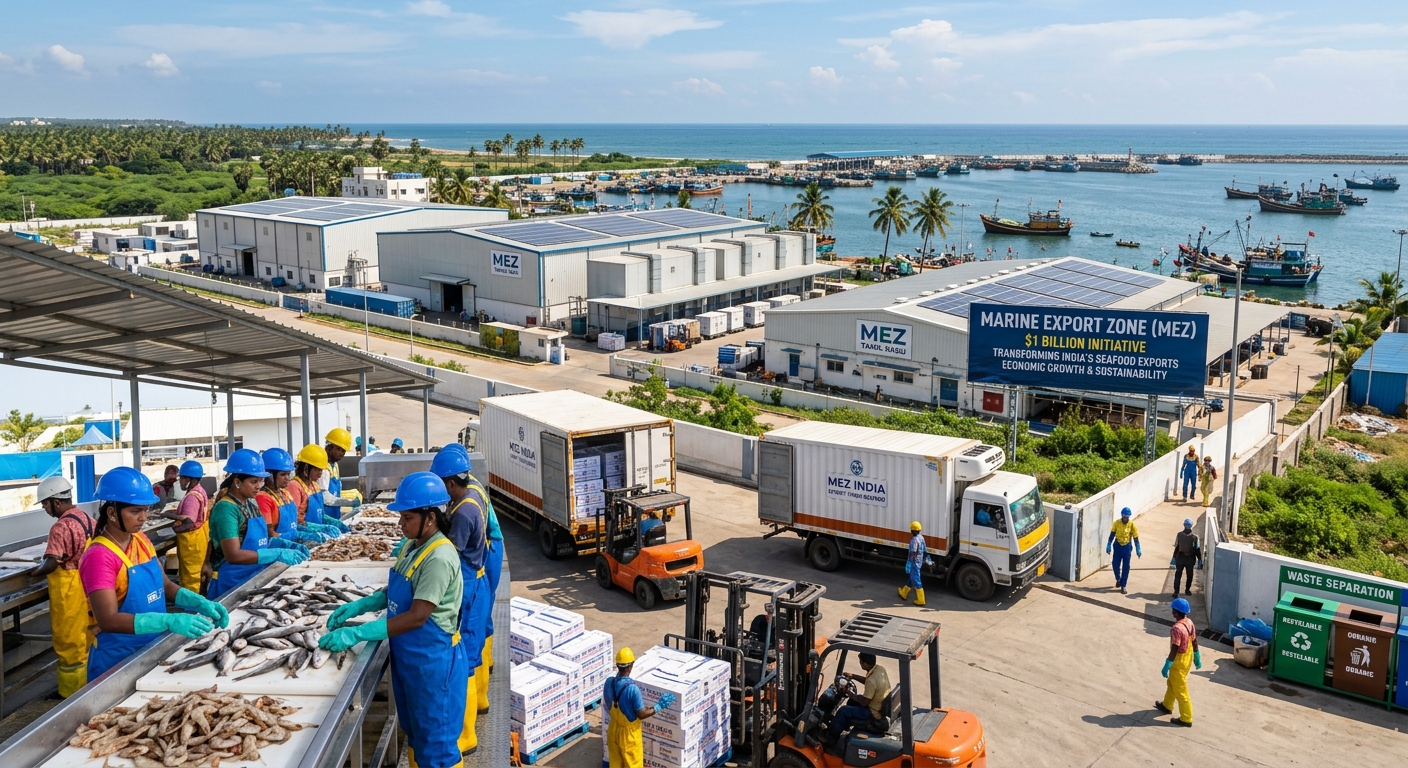
Unlocking 1 Billion in SEZs: A Game Changer for Seafood Export Growth details a landmark initiative in India to develop five Marine Export Zones (MEZs) as Special Economic Zones (SEZs) along the Tamil Nadu coast. Spearheaded by the Madras Export Processing Zone under the Union Ministry of Commerce and Industry, this $1 billion project aims to enhance seafood export capacity by establishing integrated infrastructure such as feed mills, processing units, cold storage, packaging, and logistics hubs. Covering approximately 2,500 acres across five coastal districts, the initiative is expected to generate export revenues of around ₹32,000 crore and create substantial employment opportunities, marking a strategic effort to capitalize on India’s vast marine resources and global seafood demand.
SEZs are designated areas with favorable economic, regulatory, and trade policies designed to stimulate industrial growth, attract foreign direct investment, and boost exports. Globally, SEZs have been instrumental in transforming economic landscapes, with China’s 1980s SEZ model serving as a benchmark. In India, the SEZ framework has evolved since the 1960s, with recent policy emphasis on sector-specific zones like the MEZs to address complex supply chain and export challenges faced by the seafood industry. The Tamil Nadu MEZs seek to modernize seafood processing, improve supply chain efficiencies, and enhance competitiveness in key international markets such as the US and EU.
Despite their promise, the development of seafood SEZs faces significant challenges including regulatory complexities, environmental sustainability concerns, and the need to maintain cold chain integrity for perishable products. Balancing investor incentives with social and environmental responsibilities remains a critical policy focus, alongside ongoing reforms addressing duty treatments, operational flexibility, and SEZ-to-Domestic Tariff Area (DTA) transactions. Moreover, ensuring compliance with international sustainability and traceability standards is vital for maintaining market access in an increasingly competitive and regulated global seafood trade.
Looking forward, the MEZ initiative represents a pivotal step in strengthening India’s seafood export ecosystem by integrating infrastructure development, fiscal incentives, and stakeholder collaboration. Its success could serve as a model for other regions seeking to harness SEZs for export-led growth in marine sectors. Continued attention to logistical innovations, public-private partnerships, and environmental stewardship will be essential to sustain long-term competitiveness and inclusive economic benefits in the evolving global seafood marketplace.
Background
Special Economic Zones (SEZs) are specially designated geographical areas where governments implement altered economic, legal, and trade regulations to accelerate economic activities. The fundamental rationale behind SEZs is to create a “business bubble” that fosters industrialization, job creation, and export growth by providing an ecosystem conducive to business development and foreign direct investment (FDI). These zones often operate under frameworks such as duty-free imports, lower tariffs, and expedited customs clearance, making them ideal hubs for export-oriented industries including IT, medical equipment manufacturing, aviation, and automotive production.
The concept of SEZs has been instrumental globally in transforming economic landscapes, with China’s development of SEZs in the 1980s being one of the most notable success stories. China leveraged SEZs to attract global capital and foreign firms, significantly boosting its economic growth. In India, the journey began with the establishment of the first Export Processing Zone (EPZ) in Kandla, Gujarat in 1965, followed by seven additional EPZs. The formal SEZ policy was introduced in April 2000 with the vision of making SEZs a major driver of economic growth by providing quality infrastructure and attractive incentive packages at both the central and state levels.
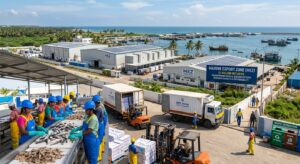
More recently, India has initiated the development of SEZs dedicated specifically to marine exports along the coastal regions of Tamil Nadu. These five Marine Export Zones (MEZs) are designed as integrated clusters with common infrastructure facilities such as feed mills, processing units, cold storage, packaging, and export logistics. This initiative aims to boost seafood processing, increase employment opportunities, and enhance seafood exports, marking a strategic effort to tap into the country’s seafood export potential.
The establishment and expansion of SEZs reflect broader trends in the Asian seafood industry, where exporters face an increasingly complex global trade architecture. Countries like India, Vietnam, Indonesia, and Thailand are navigating revenue resilience, supply chain efficiencies, and policy interventions to mitigate trade and operational risks in the seafood sector, underscoring the importance of supportive economic frameworks like SEZs in sustaining growth.
The Unlocking of 1 Billion in SEZs
Tamil Nadu is set to become the first state in India to establish five Marine Export Zones (MEZs) as part of a $1 billion Special Economic Zone (SEZ) initiative aimed at boosting seafood export growth across five coastal districts. This ambitious project, led by the Madras Export Processing Zone (MEPZ) under the Union Ministry of Commerce and Industry, involves the development of integrated infrastructure including feed mills, processing units, cold storage, packaging units, hatcheries, and export logistics hubs designed to support marine ancillary Micro, Small and Medium Enterprises (MSMEs).
Approximately 2,500 acres of salt pan lands currently owned by the Salt Commissioner’s Organisation (SCO) have been identified for this project and are proposed to be transferred to MEPZ, with formal requests submitted to the Department for Promotion of Industry and Internal Trade (DPIIT) for approval. The five districts involved—Thiruvallur, Villupuram, Thanjavur, Pudukkottai, and Ramanathapuram—present a diverse economic landscape that ranges from highly industrialized zones to historically agrarian and coastal regions. For example, Thiruvallur benefits from SIPCOT’s Category A industrial zone status, offering superior infrastructure and connectivity to accelerate SEZ rollout, while Thanjavur and Pudukkottai mark significant diversification by introducing export-oriented marine processing in traditionally agrarian and underdeveloped industrial areas.
The initiative is projected to generate an export potential of ₹32,000 crore and attract an estimated investment of ₹8,000 crore from the five SEZs, further strengthening the seafood export ecosystem in the region. This development aligns with the broader government policy framework supporting SEZs, which includes attractive incentives such as exemption from IGST and CGST for SEZ developers and substantial income tax benefits on export income under Section 10AA of the Income Tax Act. These fiscal incentives are designed to attract both domestic and foreign investment, catalyzing economic growth through improved infrastructure and enhanced competitiveness.
The unlocking of this $1 billion SEZ package not only promises to create substantial employment opportunities but also aims to balance the benefits of export promotion with the needs and concerns of host communities and other local stakeholders. Policymakers are also actively engaging in stakeholder consultations to address operational challenges, including duty treatment, manufacturing incentives, and SEZ-to-Domestic Tariff Area (DTA) transactions, to ensure the long-term viability and success of the SEZs.
Through this comprehensive and strategically located development, Tamil Nadu’s MEZs are poised to serve as a game changer in seafood export growth, providing critical infrastructure and regulatory support to capitalize on India’s vast marine resources and the global demand for seafood.
Key Stakeholders and Governance
Special Economic Zones (SEZs) involve a complex network of stakeholders whose roles and responsibilities are critical to the zones’ efficient functioning and long-term success. At a minimum, the SEZ programme comprises five key stakeholder groups: the government, the zone authority (regulator), developers or investors, operators, and licensees—businesses operating within the SEZ. Additionally, employees of these entities and the host communities also form part of the broader stakeholder ecosystem.
Clear separation and clarification of roles among these stakeholders are essential to minimize conflicts of interest and enhance operational efficiency. For example, the government typically sets policy and regulatory frameworks, the zone authority acts as the regulator, while developers and operators are responsible for infrastructure and facility management within the zone. This delineation ensures accountability and supports transparent governance mechanisms.
Governments face the challenge of balancing measures to make SEZs attractive to investors and licensees with optimizing benefits for the country and local communities. While short-term costs may be substantial, the benefits often materialize over the medium to long term, necessitating calibrated expectations and transparent communication with all stakeholders.
A significant feature of successful SEZ governance is the involvement of the private sector, often through Public-Private Partnerships (PPPs). Private firms generally possess greater expertise and incentives in managing commercial projects compared to government entities. PPPs, particularly in build-operate-transfer (BOT) models, enable strong private sector participation while safeguarding public interests. Various PPP models exist, such as the landlord model, which distinctly outlines public and private sector roles in ownership and operations, adapting to contextual parameters and project specifics.
Impact on Seafood Export Growth
The establishment and expansion of Special Economic Zones (SEZs) have played a significant role in accelerating seafood export growth, particularly in regions with strong aquaculture and processing capabilities. In India, SEZ initiatives focusing on seafood have leveraged tax incentives and improved ease-of-doing-business conditions to attract foreign direct investment (FDI) and facilitate technological advancements, thereby boosting export volumes and values.
India’s seafood exports reached an all-time high in 2025–26, with volumes touching 1,972,018 metric tonnes and export earnings of $8.5 billion, driven largely by ready-to-cook products destined for markets such as the US and EU. The modernization and expansion of existing factories in Tamil Nadu and Andhra Pradesh within SEZs have been instrumental in enhancing value-added production, improving supply chain efficiencies, and ensuring resilience against global trade complexities.
Infrastructure development within these zones is projected to receive investments estimated at ₹9,470 crore, targeting facilities such as feed mills, processing units, cold storage, packaging, export logistics, hatcheries, and marine ancillary MSMEs. Approximately 2,500 acres of salt-pan land across districts including Tiruvallur, Villupuram, Thanjavur, Pudukkottai, and Ramanathapuram have been earmarked to support these projects. Once fully operational, the SEZs are expected to facilitate annual seafood exports worth around ₹32,000 crore and generate employment for 1.4 to 1.8 lakh people.
Beyond direct economic gains, the SEZs contribute to sustaining and growing export relationships by supporting the production and export of higher value-added seafood products, which is essential for maintaining competitiveness in international markets. This aligns with trade policy goals aimed at enhancing export growth through the survival and enhancement of existing trade ties, especially under preferential arrangements such as those offered by the EU.
Regionally, Southeast Asia continues to be a dominant seafood exporter, accounting for approximately 28% of global exports. However, intensifying competition from Latin American countries like Ecuador and Chile highlights the importance of strategic interventions like SEZs to maintain and grow export market shares. The growth of seafood exports is further supported by strong international import demand, underpinning the significance of efficient export infrastructure and policy frameworks.
Incentives and Infrastructure Supporting Export Growth
Special Economic Zones (SEZs) play a critical role in driving export growth by leveraging a range of tax and tariff incentives designed to attract foreign direct investment (FDI) and promote technological advancement. These incentives typically include exemptions from duties, reduced tariffs, and preferential trade guidelines such as those under the Generalized System of Preferences, which collectively reduce operational costs and encourage higher export volumes. By creating a favorable business environment, SEZs not only boost exports for the host country but also benefit other nations supplying products to these zones.
In the context of seafood exports, the development of specialized SEZs is expected to generate significant economic impact. For instance, a proposed seafood export zone project aims to attract investments worth Rs 9,470 crore and create employment for approximately 150,000 people. Once fully operational, these zones could facilitate annual seafood exports valued around Rs 32,000 crore, underscoring the transformative potential of such infrastructure on the industry.
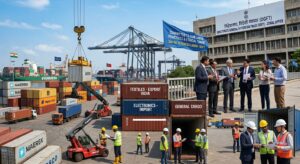
Beyond fiscal incentives, infrastructure that supports efficient logistics is vital to ensuring the quality and competitiveness of seafood exports. Maintaining a cold chain at zero degrees Celsius from vessel to processing facilities is essential to preserve product freshness and safety. Specialized equipment like fish loaders accelerates the loading process, minimizing handling times and preserving the cold chain integrity throughout transit. Robust logistics systems encompassing temperature control, quality sampling before export, and regulated transportation modes are crucial components that underpin the export ecosystem within these zones.
Moreover, adherence to sustainability and regulatory compliance measures, particularly traceability documentation, provides exporters with a significant market advantage. Suppliers able to demonstrate compliance gain broader market access, while those lacking proper certification risk exclusion. Traceability thus acts as a vital link connecting sustainability commitments with regulatory frameworks, further reinforcing the importance of comprehensive infrastructure and procedural standards in seafood SEZs.
Case Studies and Regional Comparisons
China’s cross-border e-commerce (CBEC) exports have demonstrated significant growth over the past six years, with their proportion of the country’s total foreign trade rising from 2.2% to 11.3%. This growth is closely linked to the strategic development of special economic zones (SEZs), which provide targeted regulatory frameworks and infrastructure to boost exports and investments. However, measuring the direct impact of SEZs remains challenging due to limited data availability and the difficulty in identifying appropriate control groups for comparative analysis.
India presents a noteworthy example of leveraging SEZs to enhance seafood exports through the establishment of Marine Export Zones (MEZs). Tamil Nadu is spearheading this initiative by developing five MEZs across its coastal districts, structured as clusters of SEZs with shared infrastructure including feed mills, processing units, cold storage, and logistics hubs. This $1 billion project, driven by the Madras Export Processing Zone under the Union Ministry of Commerce and Industry, aims to boost seafood processing, employment, and export capacity. The initiative is expected to significantly benefit existing factories in Tamil Nadu and Andhra Pradesh by offering ease-of-doing-business advantages typical of SEZs. India’s seafood exports reached a record 1,972,018 metric tonnes valued at $8.5 billion in 2025–26, highlighting the sector’s potential and the strategic importance of formalizing and scaling export infrastructure through MEZs.
Regionally, Southeast Asia remains a dominant player in global seafood exports, accounting for approximately 28% of the total share due to its extensive coastline and developed aquaculture infrastructure. However, the region faces growing competition from Latin American countries such as Ecuador and Chile, which have successfully marketed themselves as premium and sustainable seafood suppliers. This competitive landscape underscores the necessity for Southeast Asian countries to innovate and invest in specialized export zones to maintain their market position.
Globally, China leads the seafood export market, supported by its vast marine resources, advanced aquaculture industry, and robust processing capabilities. Other leading exporters include Norway, Vietnam, and India, each leveraging their unique advantages to capture significant shares of the global seafood trade. The success of these countries often correlates with the effective utilization of SEZs and related economic zones designed to attract investment and enhance export competitiveness.
Economic and Social Implications
Special Economic Zones (SEZs) serve as powerful catalysts for economic development, particularly by attracting foreign direct investment (FDI), promoting technological advancement, and boosting exports. The growth driven by SEZs has been instrumental in lifting hundreds of millions out of poverty, as evidenced by the rapid economic transformation witnessed in countries like China. By offering tax incentives, duty-free imports and exports, streamlined regulations, and enhanced infrastructure, SEZs create a favorable business climate that stimulates investment and industrial growth.
In the context of seafood exports, the establishment of new SEZ facilities aims to enhance value-added production, especially for ready-to-cook products destined for major markets such as the US and EU. This development is expected to benefit existing seafood processing factories in regions like Tamil Nadu and Andhra Pradesh by enabling modernization and expansion, further supported by the ease-of-doing-business advantages typically associated with SEZs.
However, governments face the challenge of balancing competitiveness with maximizing benefits to the host country and local communities. While the initial costs of developing SEZs may be significant in the short term, the benefits tend to accrue over the medium to long term. It is therefore crucial for governments to calibrate expectations realistically and maintain transparent communication with all stakeholders, including host communities, to ensure that the social and economic costs remain acceptable. Additionally, the
Challenges and Limitations
Seafood export growth within Special Economic Zones (SEZs) faces a complex set of challenges that span regulatory, environmental, operational, and trade-related domains. One of the primary difficulties is balancing the short-term costs of establishing competitive SEZs with the medium- to long-term benefits to the country and local communities, requiring transparent communication and calibrated expectations among stakeholders. Policymakers are also grappling with broader structural reforms, such as the treatment of SEZ-to-Domestic Tariff Area (DTA) transactions, which involve debates on duty treatment, competitiveness, manufacturing incentives, and operational flexibility.
Operationally, the seafood supply chain suffers from fragmentation, with multiple intermediaries that reduce transparency and increase risks of quality degradation during transportation. This complexity, combined with stringent certification requirements, creates significant barriers to entry for smaller exporters trying to participate in international markets. Maintaining cold chain integrity, ensuring pre-export quality sampling, and managing transit limitations are critical logistics challenges that affect export reliability and product quality.
Environmental factors also pose substantial limitations. Climate change—manifested through rising sea temperatures and extreme weather events—disrupts traditional fishing patterns and aquaculture operations, further straining the availability and sustainability of seafood resources. Overfishing, pollution, illegal, unreported, and unregulated (IUU) fishing, and harmful fisheries subsidies exacerbate resource depletion, complicating efforts to stabilize supply chains. These environmental pressures have forced shifts in roles among farmers, processors, and brokers, who must adapt to evolving market and operational demands.
Regulatory and trade policy environments continue to evolve rapidly, adding another layer of complexity. There has been a growing integration of environmental sustainability and traceability requirements into trade regulations, which suppliers must comply with to maintain market access. Failure to demonstrate sustainable sourcing practices and provide traceability documentation can result in lost opportunities and closed markets. This shift has been particularly impactful for sectors such as fresh tuna, where scrutiny is high and sustainability credentials are essential for competitiveness.
Furthermore, seafood exporters must navigate fluctuating currency rates, geopolitical tensions, trade barriers, and the risks associated with unfair trade practices and unsafe imports. The United States, for example, has implemented executive orders aimed at promoting seafood competitiveness, addressing unfair practices, and combating IUU fishing, which underscores the regulatory pressures on exporters worldwide.
Current SEZ Policies Addressing Challenges
Special Economic Zones (SEZs) are designed to generate additional economic activity by promoting exports, attracting both foreign and domestic investment, and creating employment opportunities while developing infrastructure facilities. To address the challenges inherent in establishing and operating SEZs, current policies emphasize a balance between the benefits to the host economy and the costs borne by governments and local stakeholders, including communities directly impacted by the zones.
One of the primary policy approaches focuses on providing a conducive business environment within SEZs by offering regulatory, tax, and investment incentives that are generally unavailable elsewhere in the country. These include tax and tariff benefits such as exemption from duties, reduced tariffs, and preferential guidelines under schemes like the Generalized System of Preferences, which significantly lower costs and encourage higher export volumes. The simplification of customs procedures and advanced infrastructure also facilitate efficient logistics and global supply chain integration, crucial for sectors such as seafood exports.
Moreover, initiatives spearheaded by bodies like the Madras Export Processing Zone (MEPZ) under the Union Ministry of Commerce and Industry aim to develop state-of-the-art infrastructure across multiple SEZs. These projects include feed mills, processing units, cold storage, packaging facilities, hatcheries, and support for marine ancillary MSMEs, all of which are vital to overcoming logistical and operational challenges in seafood export. The focus on infrastructure not only enhances cold chain integrity and transit efficiency but also aligns with broader export promotion schemes and stakeholder consultations led by government agencies to reform SEZ regulations and improve their effectiveness.
Finally, SEZ policies are increasingly aligned with trade performance criteria that emphasize the survival and growth of value-added exports from developing countries. This includes leveraging preferential trade arrangements to sustain existing trade relationships and enhance export growth, addressing both global market competitiveness and local economic development goals. Through these comprehensive policy measures, SEZs aim to overcome challenges while maximizing their role as catalysts for export-led growth.
Future Prospects and Developments
The establishment of five Marine Export Zones (MEZs) as Special Economic Zones (SEZs) along the coastal regions of Tamil Nadu marks a significant step forward in transforming India’s seafood export sector. These MEZs, envisioned as integrated clusters with common infrastructure such as feed mills, processing units, cold storage, packaging facilities, hatcheries, and export logistics, are designed to enhance seafood processing capabilities, generate employment, and substantially boost export volumes. With an estimated investment of approximately $1 billion dedicated to infrastructure development and a projected annual export potential of ₹32,000 crore, the MEZs represent a transformative initiative spearheaded by the Madras Export Processing Zone (MEPZ) under the Union Ministry of Commerce and Industry.
Looking ahead, policymakers are exploring broader structural reforms that go beyond incremental changes, focusing on issues such as SEZ-to-Domestic Tariff Area (DTA) transactions, duty treatments, manufacturing incentives, and operational flexibility within SEZs. These discussions aim to create a more competitive and investor-friendly environment that can further catalyze growth in the seafood export industry. The modernization and expansion of existing factories in Tamil Nadu and neighboring Andhra Pradesh are expected to complement these developments by leveraging the ease of doing business offered by the SEZ framework.
Moreover, improving the seafood supply chain logistics remains a critical area for future development. Ensuring cold chain integrity, temperature-controlled transit, and the use of specialized equipment like fish loaders are essential to maintaining product quality from catch to export. Advances in traceability and quality control are also poised to play a crucial role in enhancing the sustainability and competitiveness of seafood exports.
The success of the MEZs and associated reforms will likely depend on the effective integration of public and private sector partnerships, with several models available to optimize such collaborations. Drawing on lessons learned from regional fisheries management organizations and sustainability programs, there is potential to adapt innovative practices to support long-term growth and resilience in the seafood export sector.
The content is provided by Blake Sterling, 9 Minute Read