
Summary
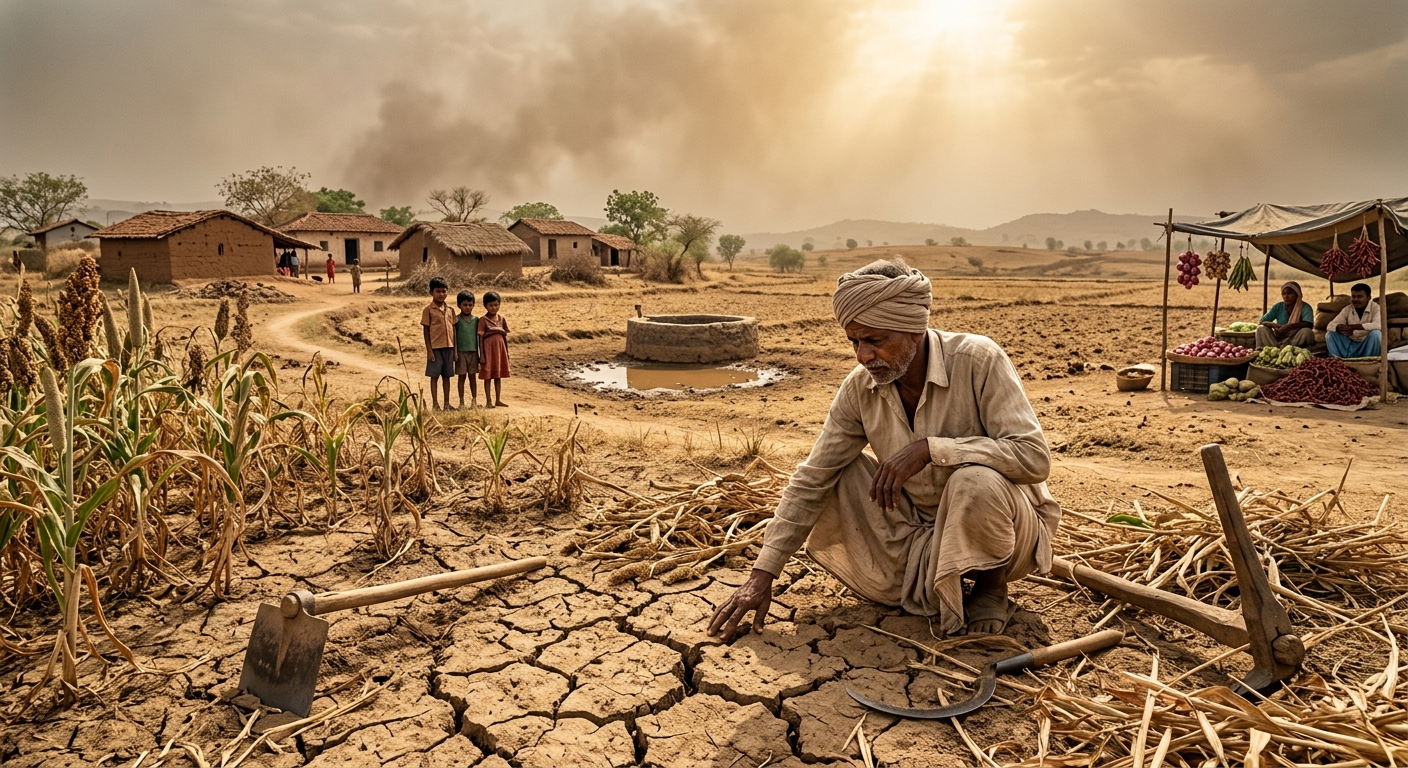
El Niño is a climate phenomenon characterized by the warming of sea surface temperatures in the central and eastern tropical Pacific Ocean, which disrupts global atmospheric circulation patterns and frequently weakens the Indian monsoon system. The Indian monsoon, a seasonal wind reversal delivering around 70% of the country’s annual rainfall, is crucial for sustaining agriculture, water resources, and the broader economy. El Niño’s interference often leads to reduced monsoon rainfall, delayed onset, and increased variability, posing significant risks to crop production, rural livelihoods, and food security across India.
The 2026 monsoon season is forecasted by the India Meteorological Department (IMD) to be one of the weakest in over two decades, with rainfall expected at 90–92% of the long period average, largely due to an emerging moderate-to-strong El Niño event. This has triggered government alerts and preparations for drought contingencies, emphasizing the need for climate-resilient agriculture, water management, and socio-economic mitigation strategies to cope with anticipated deficits in precipitation and its cascading impacts. Although some factors like a positive Indian Ocean Dipole may partially offset rainfall declines, the overall prognosis underscores heightened vulnerability for India’s agrarian economy.
Compared to geopolitical concerns such as the US-Iran tensions, which affect India mainly through energy markets and are potentially transient, the threat posed by a weak monsoon driven by El Niño is considered more direct, persistent, and multifaceted. A deficient monsoon can reduce agricultural yields by over 10% in affected areas, intensify food inflation, strain rural incomes, and undermine national economic growth, thereby exacerbating social and environmental stresses in vulnerable communities. This interplay of climatic and socio-economic challenges positions El Niño-induced monsoon failure as a critical concern for India’s stability and development in the near term.
India’s response to this threat includes evolving from reactive drought relief toward proactive disaster risk management, involving coordinated planning at national and local levels, integration of early warning systems, and promotion of drought-tolerant cropping and water conservation practices. Despite these efforts, experts caution that existing preparedness may be insufficient to fully avert widespread agrarian distress, making the upcoming monsoon season a critical test of India’s resilience to climate variability and change.
Background
El Niño is a climatic phenomenon characterized by the warming of sea surface temperatures (SSTs) in the central and eastern tropical Pacific Ocean. This warming disrupts the normal pattern of easterly trade winds, which either weaken or reverse direction, altering global weather patterns. The term “El Niño” translates from Spanish as “the Christ Child,” reflecting its tendency to occur around Christmas time, though the event recurs irregularly, typically every two to ten years, with varying intensity and effects.
The Indian monsoon system, which dominates India’s climate, is marked by a seasonal reversal of prevailing winds and alternating wet and dry seasons. The southwest monsoon, occurring from mid-June to September, is crucial as it delivers the majority of the annual rainfall vital for agriculture and the economy. This monsoon is primarily driven by the northward shift of the Inter-Tropical Convergence Zone (ITCZ), a narrow belt near the Equator where winds from the northern and southern hemispheres converge, creating low pressure and rising warm air that leads to cloud formation and precipitation. The ITCZ’s position and movement are critical in shaping the timing and strength of the monsoon.
During El Niño events, weakened or reversed easterly winds and warmer SSTs in the Pacific disrupt atmospheric circulation patterns. For India, this often translates into weaker monsoons, resulting in reduced rainfall, higher temperatures, and increased water scarcity. Such conditions pose significant challenges for agriculture and the broader economy, as a deficient monsoon affects crop yields and can trigger inflationary pressures due to food shortages. Historical data have shown that major El Niño episodes correspond with below-average monsoon rainfall and consequent agricultural downturns.
In contrast to the global scale at which El Niño operates, the Indian monsoon also responds to more localized meteorological factors. For instance, monsoon winds at the surface typically blow from heat sink areas, such as the relatively cloud-free southern Indian Ocean where air cools by emitting long-wavelength radiation, towards heat sources created by condensation heat release atop towering cumulonimbus clouds along the advancing ITCZ. This delicate balance can be disrupted by El Niño-induced atmospheric changes.
While geopolitical tensions, such as the US-Iran conflict, have raised concerns about economic and environmental impacts in India, experts emphasize that El Niño’s influence on the monsoon presents a more direct and persistent risk to India’s climate and economy. Although the war-related disruptions may exacerbate already hotter summers and unpredictable weather, the monsoon’s failure due to El Niño is seen as a more significant threat, potentially undermining agricultural output and domestic demand with long-lasting effects.
Influence of El Niño on the Indian Monsoon
El Niño is a climate phenomenon characterized by the warming of sea surface temperatures in the central and eastern equatorial Pacific Ocean, particularly along the coast of South America near Peru. This warming disrupts normal oceanic and atmospheric circulation patterns, notably weakening the trade winds and altering the Walker Circulation. These changes have far-reaching impacts on global weather, including significant effects on the Indian monsoon system.
The Indian monsoon, a critical driver of agriculture and water resources across the subcontinent, is closely linked to these ocean-atmosphere interactions. Typically, El Niño events weaken the monsoon winds that bring moisture to India, resulting in reduced rainfall and delayed onset of the monsoon season. This weakening occurs because the atmospheric teleconnections connected to El Niño dampen the moisture transport and disrupt the regular monsoon circulation over the Indian subcontinent.
However, the influence of El Niño on Indian monsoon rainfall (ISMR) is not uniform and depends on the type of El Niño event. Two main variants have been identified: canonical El Niño and El Niño Modoki. Canonical El Niño events are associated with warming in the eastern Pacific and tend to cause below-average monsoon rainfall, particularly during early summer. This is largely attributed to delayed monsoon onset driven by double peaks in sea surface temperature (SST) warming in the northern Indian Ocean (NIO). In contrast, El Niño Modoki events, characterized by central Pacific warming and cooling in the western tropical Indian Ocean (TIO), have been linked to increased monsoon rainfall. The cooling in the western TIO strengthens the meridional SST gradient, which can lead to an earlier onset of the monsoon and enhanced precipitation over India.
The variability in El Niño’s impact is further complicated by the increasing influence of climate change. Rising global temperatures and ocean heat content may disrupt the traditional teleconnections between El Niño–Southern Oscillation (ENSO) and regional climate patterns, potentially causing more erratic monsoon behavior in the future. Additionally, the warming of the Indian Ocean itself may weaken the strength of monsoon depressions, reducing their penetration into northern India and altering rainfall distribution.
While historically El Niño has been associated with weaker monsoon seasons, resulting in droughts and agricultural stress, recent studies indicate that the pattern can produce unpredictable outcomes, including sporadic extreme rainfall events amid overall deficient precipitation. This unpredictability poses significant challenges for monsoon forecasting and agricultural planning in India, as the monsoon’s variability under El Niño conditions can lead to both crop failures and localized flooding.
Socio-Economic Impacts of a Weak Monsoon in India
A weak monsoon, especially one influenced by El Niño conditions, poses significant socio-economic challenges for India, impacting agriculture, rural livelihoods, inflation, and the broader economy. The monsoon season contributes approximately 70% of the country’s annual rainfall, which is critical for replenishing water sources and sustaining agriculture—an economic sector that supports nearly half of India’s population.
Agricultural Output and Crop Vulnerability
More than 50% of India’s agricultural land remains rainfed, making the sector highly sensitive to variations in monsoon rainfall. A deficient monsoon disrupts sowing schedules, reduces soil moisture, and adversely affects the yields of key kharif crops such as rice, pulses, sugarcane, oilseeds, paddy, maize, and soybeans. Historical data reveal that El Niño years have led to more than a 10% decline in output of major crops across multiple districts. Reduced agricultural productivity not only threatens food security but also compromises irrigation reservoir levels and hydroelectric power generation, thereby affecting energy security.
Inflation and Food Prices
A weak monsoon has a direct bearing on food prices due to reduced agricultural output. Food inflation escalates as shortages in staples like cereals, pulses, vegetables, and edible oils push up prices, disproportionately affecting low-income households and rural consumers. This inflationary pressure can erode household purchasing power, necessitating tighter monetary policies that may constrain economic growth. For instance, during El Niño years, slower growth in rural indicators such as tractor sales and government spending has been observed, reflecting diminished rural demand.
Rural Livelihoods and Employment
Since a large segment of India’s workforce depends on agriculture for income, a poor monsoon season directly threatens rural livelihoods. Delays in monsoon onset or early withdrawal interfere with timely sowing and harvesting, leading to lower yields and income uncertainty for farmers. The decline in agricultural prosperity can trigger unemployment, migration, and social discontent, further exacerbating socio-economic vulnerabilities in rural areas.
Water Scarcity and Environmental Concerns
Excessive groundwater extraction to compensate for deficient rainfall has caused drastic declines in water tables in key agricultural states, compounding the effects of drought. Additionally, shifts from traditional drought-resistant crops to water-intensive commercial crops have increased vulnerability to erratic monsoon patterns. These environmental stresses contribute to socio-economic drought, where the scarcity of water affects not only agriculture but also the broader societal fabric, including health, sanitation, and livelihoods.
Broader Economic Implications
The ramifications of a weak monsoon extend beyond agriculture, influencing national economic growth and inflationary trends. Reduced rural incomes dampen demand for goods and services, impacting industrial and service sectors linked to the rural economy. Moreover, shortages of fodder and water during dry spells adversely affect livestock productivity, thereby reducing outputs of milk and meat and affecting nutrition and rural incomes. These factors collectively risk slowing India’s economic momentum amid other challenges such as global crude oil price shocks and geopolitical tensions.
Mitigation and Adaptation
While El Niño poses a serious risk, mitigation strategies including adoption of climate-resilient crop varieties, improved water management, and enhanced irrigation infrastructure can help reduce vulnerability. Contingency measures are being prepared in vulnerable districts, especially within the monsoon core zone, to better manage the anticipated impacts of reduced rainfall. Such proactive steps are essential to safeguard agricultural output, rural livelihoods, and the broader socio-economic stability of the country during weak monsoon years.
Indian Government Response and Disaster Management Strategies
India faces significant challenges from monsoon variability, particularly in the context of recurring droughts exacerbated by climate change and phenomena like El Niño. The Indian government has traditionally employed a reactive disaster response approach to monsoon-related crises, focusing on relief and recovery after the onset of droughts or deficient rainfall. However, there has been a gradual shift toward more proactive and integrated disaster management strategies aimed at prevention, mitigation, and preparedness.
The Disaster Management Act of 2005 mandates the formulation of National and State Disaster Management Plans, with district-level plans also required to address localized vulnerabilities. Despite this legal framework, the National Plan was not formally updated for over a decade until its release in June 2016. This delay has hampered systematic preparedness efforts, particularly given the dynamic nature of drought risks and the evolving climate scenario.
To improve drought resilience, the government emphasizes climate-resilient planning that integrates ecological, infrastructural, and community adaptation measures. Districts prone to drought are urged to develop detailed drought management plans prior to the monsoon season. These plans incorporate assessments of water availability, mapping of vulnerable villages, arrangements for drinking water and fodder, crop advisories, health preparedness, employment generation, and relief mechanisms. Community-based disaster management (CBDM) activities are increasingly integrated into these plans at district, mandal, and village levels to foster local engagement and ownership.
The Department of Agriculture & Cooperation (DAC), State Drought Monitoring Cells (DMCs), and State Disaster Management Authorities (SDMAs) coordinate contingency planning for late monsoon onset and dry spells. Such efforts include recommending appropriate cropping patterns aligned with expected rainfall and promoting the adoption of drought-tolerant and short-duration crop varieties to reduce water dependence.
Moreover, the government’s approach has evolved from a relief-centric model to one that prioritizes proactive prevention and mitigation. Various central government programmes focus on building community resilience against drought impacts by conserving natural resources and supporting sustainable agricultural practices.
The India Meteorological Department’s (IMD) warnings of a potential Super El Niño and consequent weak monsoon have prompted heightened vigilance. The government has placed approximately 150 to 200 districts under priority watch to better coordinate early warning dissemination and preparedness activities. However, concerns remain regarding the adequacy of current readiness levels to avert a widespread agrarian crisis and associated socio-economic fallout.
Comparative Analysis: Weak Monsoon vs. US-Iran Tensions
The ongoing US-Iran conflict has raised global concerns, particularly regarding its impact on energy markets and geopolitical stability. However, for India, the direct economic consequences of this conflict appear to be relatively limited and transient, provided peace talks succeed and key maritime routes like the Strait of Hormuz remain open. In contrast, the looming threat of a weak monsoon driven by El Niño conditions poses a more profound and multifaceted risk to the country’s socio-economic fabric.
While the geopolitical tensions dominate headlines, the Indian economy is primarily vulnerable to domestic climatic factors that influence agricultural output. The India Meteorological Department (IMD) has forecasted below-average monsoon rainfall—around 92% of the Long Period Average—with some estimates marking it as the lowest since 2002. This weak monsoon scenario threatens to exacerbate existing challenges such as high crude oil prices and fertilizer supply disruptions, thereby amplifying inflationary pressures and impacting food security.
Agriculture remains the backbone of rural India, employing more than 50% of the workforce and directly affecting about 70% of the population that depends on it either wholly or partially. A deficient or delayed monsoon disrupts sowing and crop yields, which cascades into reduced rural incomes and heightened social vulnerabilities. The impact transcends economic metrics, influencing cultural and social structures in rural areas that are intrinsically linked to agricultural cycles. This contrasts with the more indirect and short-lived effects of the US-Iran conflict on India’s economy.
Furthermore, a weak monsoon can trigger food inflation by pushing up prices of staples like cereals, pulses, and edible oils, thereby reducing household purchasing power and compelling the Reserve Bank of India to adopt tighter monetary policies. This could constrain overall economic activity and growth, potentially having more sustained negative effects than the geopolitical tensions alone.
Current Alerts and Forecasts
The India Meteorological Department (IMD) has issued one of the weakest initial forecasts for the 2026 southwest monsoon in the last 26 years, predicting below-normal rainfall at approximately 90–92% of the Long Period Average (LPA), which is 87 cm based on data from 1971 to 2020. This forecast signals a likely end to the two consecutive years (2024–25) of above-normal monsoon rainfall that India experienced. The probability of a deficient monsoon season has been estimated at 35%, which is significantly higher than the historical average of 16%.
A key factor influencing this weak monsoon forecast is the development of an El Niño event in the equatorial Pacific Ocean. The warming sea-surface temperatures, currently predicted to have a 63% chance of exceeding 2 degrees Celsius, are expected to intensify into a moderate or strong El Niño, possibly evolving into a ‘super’ El Niño later in the year. El Niño conditions typically suppress monsoon rainfall in India by altering atmospheric circulation patterns. Consequently,
The content is provided by Jordan Fields, 9 Minute Read