Summary
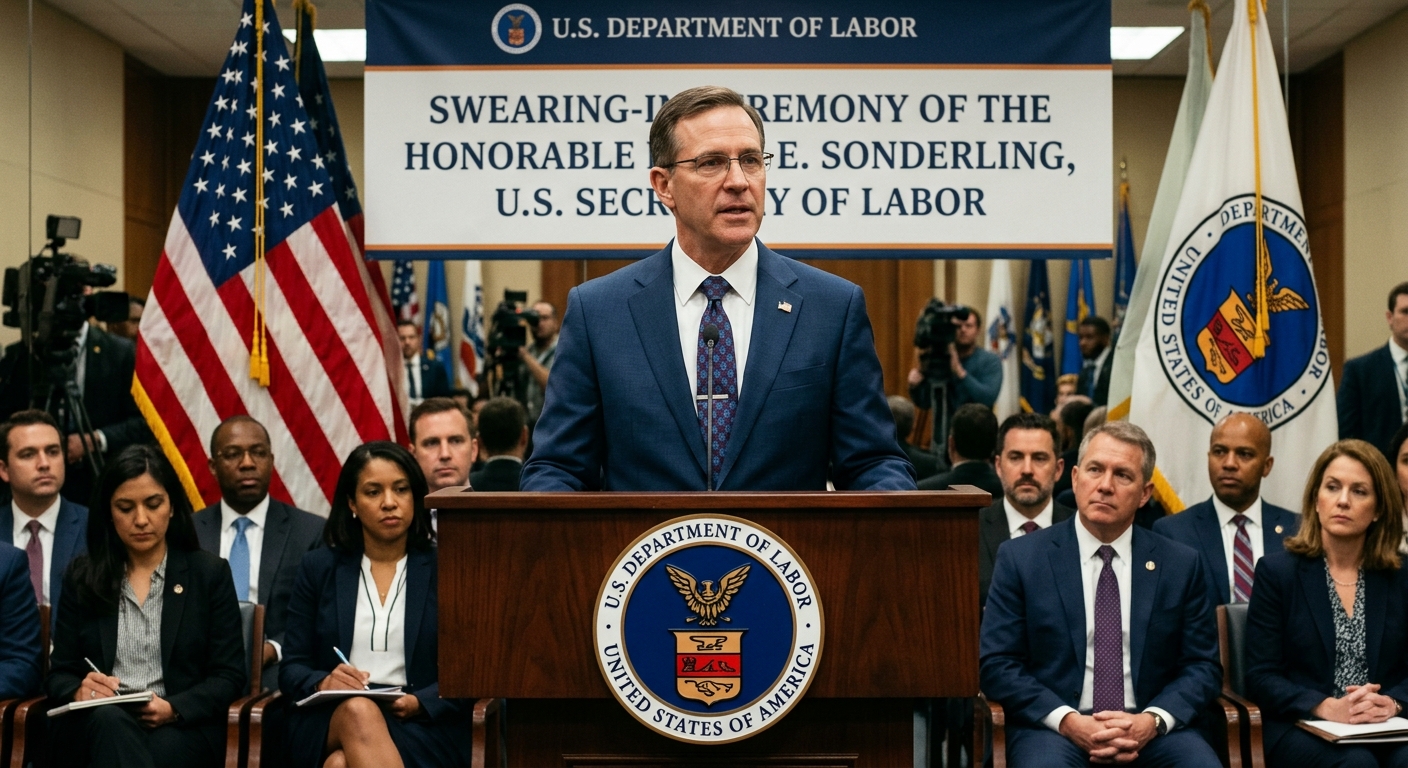
Keith E. Sonderling is an American attorney and government official who was nominated by President Donald Trump to serve as the United States Secretary of Labor in 2026. Prior to his nomination, Sonderling served as acting Secretary of Labor beginning in April 2026 following the resignation of former Secretary Lori Chavez-DeRemer amid investigations into alleged misconduct. Having held multiple key roles within the Department of Labor and other federal agencies—including Deputy Secretary of Labor, Acting Administrator of the Wage and Hour Division, and Commissioner of the Equal Employment Opportunity Commission (EEOC)—Sonderling brought extensive experience in labor and employment law to the position.
Sonderling’s nomination was notable for its timing during a politically charged environment ahead of the midterm elections, and for his strong backing from business groups such as the U.S. Chamber of Commerce, who praised his expertise and pro-employer stance. However, his nomination also faced scrutiny from labor unions and worker advocacy organizations, which expressed concerns about his views on labor rights and the implications of his leadership for worker protections. The Senate Health, Education, Labor, and Pensions (HELP) Committee narrowly approved his nomination, reflecting the contentious political dynamics surrounding his confirmation process.
Throughout his tenure as acting Secretary, Sonderling focused on enforcing federal labor laws and advancing the administration’s employment agenda, emphasizing regulatory clarity and a “pro-America” approach to labor policy. His leadership was marked by efforts to balance the interests of workers and employers, continuing policies that were viewed as business-friendly and aimed at modernizing labor regulations, particularly within the Department’s Wage and Hour Division.
Sonderling’s rise to the Labor Department’s top position followed a period of instability marked by Chavez-DeRemer’s resignation and succeeded predecessors with varied backgrounds and controversies. His appointment underscored a preference for experienced government officials with deep labor law expertise, setting him apart from earlier nominees whose confirmations were derailed amid political and public controversies. The combination of his administrative background and legal acumen positioned Sonderling as a significant figure in shaping labor policy during the late Trump administration.
Background
Keith Sonderling began serving as acting Labor Secretary on April 20, 2026, following the resignation of former Secretary Lori Chavez-DeRemer amid investigations into alleged misconduct involving her and her husband. Prior to assuming the acting role, Sonderling had been Chavez-DeRemer’s deputy for over a year and previously served as acting administrator of the Labor Department’s Wage and Hour Division during President Trump’s first term. Sonderling quickly garnered support from the business community as President Trump’s nominee to permanently lead the Labor Department, where he had already been influencing policy and personnel decisions in his acting capacity. His nomination comes amidst a complicated political environment influenced by the approaching midterm elections. If confirmed by the Senate, Sonderling would formally take on the Cabinet position and continue overseeing the department’s enforcement of federal labor laws, administration of workforce programs, and implementation of the administration’s employment agenda.
Announcement
On Truth Social, President Donald Trump officially announced his intention to nominate Keith E. Sonderling, who was serving as the Acting United States Secretary of Labor, to be the permanent Secretary of Labor. Trump praised Sonderling as “outstanding” and expressed confidence in his ability to lead the department effectively. In response, Sonderling expressed his gratitude toward President Trump for the trust and confidence placed in him, describing his service during both of Trump’s administrations as “the greatest honor of my life.” He also emphasized his commitment to advancing the President’s agenda in support of American workers, families, unions, and job creators if confirmed by the Senate. Prior to the announcement, Sonderling had already garnered experience within the Labor Department and related agencies, including a previous nomination by Trump to the Equal Employment Opportunity Commission (EEOC) in 2019. His confirmation to the EEOC was initially delayed due to procedural issues but eventually proceeded with a motion for cloture filed by Senate Majority Leader Mitch McConnell in 2020. U.S. Senator Bill Cassidy, M.D. (R-LA) and chair of the Senate Health, Education, Labor, and Pensions (HELP) Committee, delivered remarks supporting Sonderling’s nomination, highlighting the nominee’s qualifications during committee hearings. While Sonderling has successfully navigated Senate confirmations for his prior roles, some analysts noted that the confirmation process for a permanent Cabinet position could present additional challenges. Nonetheless, business groups such as the U.S. Chamber of Commerce expressed support for leadership experienced in labor policy and committed to balancing the interests of workers and the business community.
Biography of the Nominee
Keith E. Sonderling was born on November 25, 1982, in New York City, New York. His family background includes grandparents who survived the Holocaust, shaping aspects of his personal history. He pursued a career in law, establishing himself as an attorney with a focus on labor and employment issues. Sonderling’s career in public service has been extensive and multifaceted. He has held several significant roles within the federal government, including serving as Deputy Administrator and Acting Administrator of the Wage and Hour Division at the Department of Labor during the Trump administration. He was also a Commissioner of the U.S. Equal Employment Opportunity Commission (EEOC) from 2020 to 2024, where he contributed to the agency’s enforcement of anti-discrimination laws. Additionally, Sonderling served as Acting Director of the Institute of Museum and Library Services and Acting Under Secretary of Commerce for Minority Business Development, demonstrating a breadth of administrative experience across different federal agencies. On July 8, 2019, President Donald Trump nominated Sonderling to serve as a Republican member of the EEOC. His nomination faced delays due to the administration’s hold on appointing a Democratic counterpart, but eventually proceeded through Senate processes with motions for cloture filed in September 2020. In 2025, Sonderling was appointed as the United States Deputy Secretary of Labor, and in 2026, he became Acting Director of the United States Office of Government Ethics, overseeing ethics compliance within the executive branch. Following the resignation of former Labor Secretary Lori Chavez-DeRemer in April 2026 amid investigations into alleged misconduct, Sonderling was appointed acting United States Secretary of Labor. He had previously served as her deputy for over a year, making him a natural successor to lead the department on an interim basis while his own nomination for the permanent secretary position awaited Senate confirmation. Throughout his career, Sonderling has been recognized for his dedication to labor law enforcement and administrative leadership, with a focus on delivering results for American workers and upholding regulatory standards. His varied roles across the Department of Labor and other federal agencies have positioned him as a seasoned public official in labor and employment policy.
Nomination Process
Keith Sonderling’s nomination as Labor Secretary by President Donald Trump was officially announced following the departure of former Secretary Lori Chavez-DeRemer in April. Sonderling had been serving as acting Labor Secretary prior to the nomination and was tasked with overseeing the department’s enforcement of federal labor laws, administration of workforce programs, and implementation of the administration’s employment agenda. The formal nomination was sent to the United States Senate on June 20, 2017, where it was referred to the Senate Committee on Health, Education, Labor, and Pensions (HELP) for review. Sonderling appeared before the HELP Committee on February 27, where his hearing was overshadowed by concerns regarding personnel firings at the Department of Labor. During questioning, he stated that he was unaware of the exact number of workers who had been dismissed. Despite these concerns, the committee voted narrowly to report his nomination favorably, with a 12 to 11 vote in support. Following the committee’s recommendation, the nomination proceeded to a full Senate vote. On March 12, Sonderling was confirmed along party lines to serve as Deputy Secretary of Labor. Concurrently, President Trump nominated Sonderling on July 8, 2019, to serve as a Republican member of the Equal Employment Opportunity Commission (EEOC), though this nomination faced delays related to the administration’s failure to immediately name a Democratic counterpart. Senate Majority Leader Mitch McConnell filed a motion of cloture to advance the confirmation vote on this EEOC nomination in September 2020. Throughout the confirmation process, Sonderling received early support from the business community; however, unions and labor advocates expressed apprehension about his record and views on labor rights, reflecting the contentious political environment surrounding his appointments. Nonetheless, Sonderling successfully navigated these hurdles, ultimately serving until the end of the Trump administration on January 20, 2021.
Tenure and Responsibilities
Keith Sonderling served as Acting Secretary of Labor beginning April 20, following the resignation of former Secretary Lori Chavez-DeRemer amid investigations into alleged misconduct involving her and her husband. Prior to this appointment, Sonderling had been Chavez-DeRemer’s deputy for more than a year. His tenure as acting secretary involved overseeing the Department of Labor’s enforcement of federal labor laws, administration of workforce programs, and implementation of the administration’s employment agenda. Before ascending to acting secretary, Sonderling held several key positions within the federal government. From 2017 to 2020, he served as Deputy Administrator of the Wage and Hour Division of the Department of Labor, including a period as Acting Administrator. Concurrently, he was Commissioner of the U.S. Equal Employment Opportunity Commission from 2020 to 2024 and also acted as Director of the Institute of Museum and Library Services and Acting Under Secretary of Commerce for Minority Business Development. During his tenure, Sonderling was recognized for his dedication to delivering results for workers and was viewed as highly qualified due to his extensive experience implementing labor policy. His nomination for the permanent position of Labor Secretary was approved narrowly by the Senate HELP Committee by a vote of 12 to 11, reflecting some political contention around his appointment. Sonderling’s responsibilities as acting secretary encompassed leading the department’s efforts to enforce labor regulations, manage workforce development programs, and advance the administration’s employment priorities, while navigating the complexities of political and public scrutiny inherent in his role.
Comparison to Previous Labor Secretaries
Tony Sonderling’s appointment as acting Labor Secretary marks a continuation of leadership with strong labor and employment law expertise, distinguishing him from some of his recent predecessors. Unlike Andrew Puzder, who was known primarily for his private-sector credentials and withdrew his nomination in 2017 amid controversies, Sonderling brings extensive government experience, including prior service at the National Labor Relations Board (NLRB) and the Equal Employment Opportunity Commission (EEOC), as well as continuity as a confirmed deputy since 2025. Sonderling’s background contrasts with that of Patrick Pizzella, who served as acting Labor Secretary before him and is noted for his long tenure in federal service with nominations by four different presidents, including two by President Obama, and three Senate confirmations. Pizzella’s leadership was characterized by efforts to strengthen performance management and limit union business time within the department, reflecting a more management-focused approach developed during the George W. Bush and Obama administrations. Observers within the Department of Labor and employer groups widely regard Sonderling as a natural choice due to his strong support from employer-side attorneys and business stakeholders, signaling a continuation of business-friendly policies in contrast to some previous secretaries who had more varied backgrounds and priorities. His seamless transition from deputy to acting secretary is seen as providing stability following the resignation of Lori Chavez-DeRemer amid investigations, further underscoring his role as a steadying presence within the department.
Policies and Initiatives
During Patrick Pizzella’s tenure as acting Labor Secretary, the Department of Labor demonstrated reluctance to endorse more aggressive policies aimed at limiting unions’ rights, despite advocacy from groups like the National Right to Work Foundation. It remains uncertain whether Pizzella could have fully supported initiatives such as reviving former George W. Bush-era labor policies. Critics expressed concern that Pizzella’s leadership would accelerate rollbacks of Obama-era worker protections and impose new rules targeting organized labor. His history of opposing worker rights and unions, including his past lobbying to allow goods made under exploitative labor conditions in the Northern Mariana Islands to carry a “Made in the U.S.A.” label, raised alarm among labor organizations. Following Pizzella, Keith Sonderling took over as acting Labor Secretary and was later nominated for Senate confirmation. Sonderling committed to clarifying Department of Labor regulations to ensure worker protections while providing employers with legal clarity regarding federal labor laws. He emphasized implementing a “pro-America agenda” to secure a better future for workers and employers alike. Under Sonderling’s leadership, the Wage and Hour Division remained active, advancing key initiatives such as the revamped Overtime Rule, updated regular rate requirements, revisions to retail and service establishment exemptions, and increased flexibility for the fluctuating workweek. Pizzella’s approach to labor relations reflected his long-standing views on federal employee unions and management accountability, as evidenced in his prior roles and public writings. He advocated for stronger performance management, reduced time allocated to union business, and increased accountability for officials within the department. Employers, anticipating Pizzella’s impact, sought to establish business-friendly contacts within the department and the broader administration during the transition period.
Reactions and Reception
The announcement of Patrick Pizzella as acting Labor Secretary and the consideration of Patrick Pizzella and Patrick Pizzella’s contemporaries for Labor Department leadership elicited mixed reactions from various stakeholders. The U.S. Chamber of Commerce, the nation’s largest business lobby, praised Pizzella’s experience and understanding of the department’s importance to both workers and the business community. Glenn Spencer, the Chamber’s senior vice president for employment policy, expressed optimism about collaborating with Pizzella on issues aimed at advancing the economy and enhancing America’s competitiveness. Employers, however, expressed concern regarding President-elect Donald Trump’s unconventional choices and sought to ensure they maintained business-friendly contacts within the Labor Department and the broader administration. Despite some support from business groups, unions and labor advocates voiced significant opposition. The Communications Workers of America criticized Pizzella for a controversial history, particularly highlighting his lobbying efforts related to policies in the Northern Mariana Islands that allowed goods made under exploitative labor conditions to be labeled as “Made in the U.S.A.”. The American Federation of State, County and Municipal Employees (AFSCME) president Lee Saunders underscored a long-standing record of hostility to working people, dating back to Pizzella’s college journalism days, calling him one of the worst possible choices to lead the Labor Department. Pizzella’s track record includes a focus on curbing union influence within federal agencies. He applauded a court decision overturning a Federal Labor Relations Authority (FLRA) ruling that had permitted agencies and unions to bargain over inspector general investigations. Through op-eds in Government Executive magazine, he advocated for stronger performance management, reducing official time spent on union activities, and promoting accountability among officials. These initiatives reportedly led to a reduction in grievances and arbitration cases, as well as the implementation of alternative dispute resolution programs aimed at resolving conflicts early and avoiding litigation. Meanwhile, some observers saw another candidate, presumably Patrick Pizzella’s peer, as the obvious choice for secretary due to a background in labor and employment law and broad support from employer-side attorneys and business groups. Political figures like Senator Bill Cassidy (R-LA), chair of the Senate HELP Committee, also engaged with nominees such as Sonderling, indicating ongoing Senate deliberations over leadership nominations. Overall, the reception of Trump’s Labor Department nominees reflected a clear divide between business-aligned entities endorsing their experience and labor organizations criticizing their perceived anti-worker stances.
Controversies and Criticisms
Patrick Pizzella, nominated as Acting Secretary of the U.S. Department of Labor, has faced significant scrutiny and criticism related to his past views and professional history. Unions and labor advocates have expressed discomfort with his stance on workers’ rights, pointing to writings from his college years that they describe as hostile to working people. Lee Saunders, President of AFSCME, remarked that Pizzella’s long record of antagonism toward labor, apparently dating back to his student journalism days, makes him an ill-suited choice to lead the Labor
Aftermath and Legacy
Keith Sonderling’s appointment as Deputy Secretary of Labor and his potential elevation to Secretary attracted attention for his unique background, which includes prior service with the National Labor Relations Board (NLRB) and experience at the Equal Employment Opportunity Commission (EEOC). His seamless continuity as a confirmed deputy since 2025 distinguished him from other candidates such as Andrew Puzder, who withdrew amid controversies and later transitioned to a diplomatic role as EU ambassador. Despite his significant influence within the administration, Sonderling’s impact remained largely under the radar outside specialized workplace policy circles.
Sonderling successfully navigated the Senate confirmation process twice, first for the EEOC and then for the Deputy Secretary role, underscoring his bipartisan acceptance and expertise in labor and employment law. His nomination was initially delayed due to procedural issues concerning party representation on the EEOC but ultimately proceeded following Senate Majority Leader Mitch McConnell’s motion for cloture. Observers within the Department of Labor and among business groups regarded Sonderling as a logical choice to lead, citing his extensive background and support among employer-side attorneys.
However, his tenure was met with apprehension from labor unions and worker advocacy groups. For instance, the American Federation of State, County and Municipal Employees (AFSCME) criticized the appointment of acting Secretary Patrick Pizzella, whose views mirrored some of the broader administration’s stances, including those potentially aligned with Sonderling’s approach to labor relations. AFSCME President Lee Saunders highlighted concerns over a history perceived as antagonistic to workers’ rights and collective bargaining, signaling ongoing tensions between the department’s leadership and organized labor.
Sonderling’s legacy is characterized by a nuanced balancing act between fostering employer-side policies and navigating the complexities of labor law enforcement. His administration influence, while significant, remained understated publicly, reflecting the intricate dynamics of labor policy development during the late Trump administration. The combination of his governmental experience and legal expertise positioned him as a notable figure within the Department of Labor’s evolving leadership landscape.
The content is provided by Jordan Fields, 9 Minute Read