
Summary
Key Considerations for Choosing a Backup Generator
Backup generators provide essential power during outages, ensuring safety and continuity in homes and businesses. With the rise of extreme weather and grid issues, selecting a reliable backup power source is becoming increasingly important. Your choice should consider whether you need portable generators for flexibility and short-term use or standby generators for automatic, whole-house power restoration. Evaluating aspects such as power capacity, fuel type, installation requirements, safety features, and maintenance needs can guide you to the right option. Awareness of common mistakes, like undersizing or poor installation, can enhance safety and effectiveness.
Understanding Backup Generators
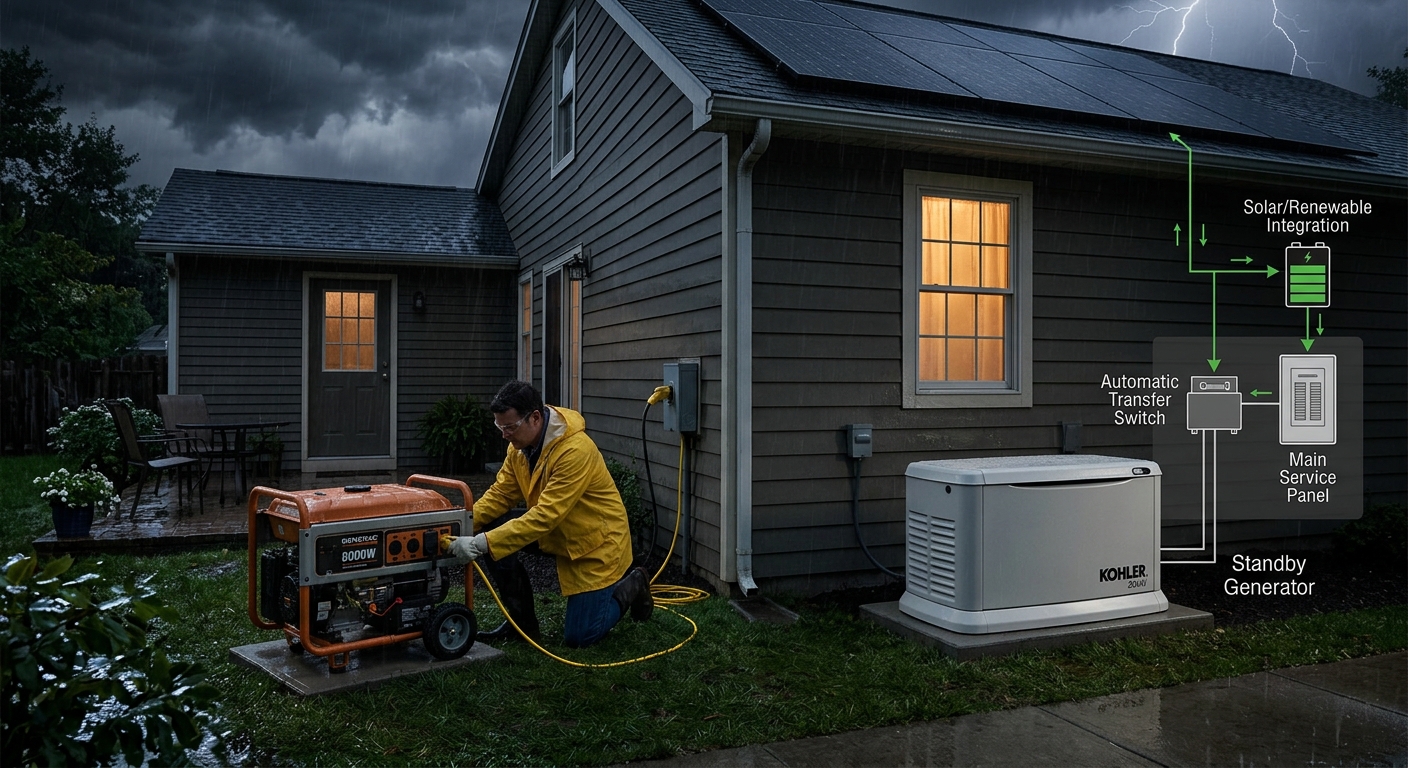
Backup generators maintain power during outages, ensuring that both essential home systems and commercial operations function normally. In residential settings, these generators can automatically supply power to critical appliances, helping families stay safe and comfortable. In business environments, they support crucial systems, including fire alarms and emergency lighting, safeguarding assets and lives. Integration with solar systems can further optimize energy use and enhance resilience against interruptions, but proper installation by qualified technicians is vital to navigate regulations and safety protocols.
Types of Backup Generators
Backup generators generally fall into two categories: portable and standby. Portable generators are budget-friendly and require manual setup, making them suitable for temporary power needs but necessitating careful safety measures. Standby generators, however, offer automatic operation, higher capacities, and seamless power transfer, ideal for ensuring uninterrupted service but typically involve higher installation costs. A thorough evaluation of your power needs, maintenance willingness, and safety considerations will help in selecting between these two types.
Key Components of Backup Generators
The functionality of backup generators relies on key components, including the prime mover, alternator, and transfer switch. The prime mover serves as the engine converting fuel into power. The alternator converts this mechanical energy into electricity, so it’s crucial for the generator to handle modern electrical loads effectively, including those with high-frequency currents. Fuel type greatly impacts performance and can range from diesel, known for stability, to propane, which offers clean combustion. The transfer switch is vital for managing power transitions safely, with manual options for portable units and automatic types for standby generators, each requiring proper installation to prevent hazards.
Selecting the Right Generator
Choosing the most suitable backup generator involves assessing several factors. Primary among these is power capacity: determining the total running watts needed for essential appliances and accounting for starting surges is critical. Fuel type significantly influences operational costs and convenience, with options including gasoline, propane, and natural gas. You should also consider installation requirements, with portable generators needing manual handling versus standby generators needing professional installation to integrate with existing electrical systems. Safety features such as backfeed prevention and adherence to electrical codes enhance operational safety, while ease of maintenance influences long-term reliability.
Installation and Compliance
Proper installation of backup generators is paramount for safe operation. Adhering to local regulations during installation helps prevent legal issues and ensures safety. The generator must be placed in well-ventilated areas, and exhaust systems should direct harmful gases away from living spaces. Compliance with standards such as NFPA 110 and the National Electrical Code is crucial for hospitals and commercial buildings, necessitating regular training for operators and mechanics to maintain operational compliance throughout its life.
Safety Standards and Testing
Compliance with safety standards like NFPA 110 is essential for reliable generator operation. Routine testing of generators, such as monthly load checks and annual maintenance, ensures they remain functional and safe during power interruptions. Newer models incorporate advanced safety features to mitigate carbon monoxide risks, such as automatic shut-off mechanisms. Maintaining awareness of evolving regulations further enhances safety and performance standards in backup generator operation.
Enhancing Power Reliability
Integrating backup generators with hybrid systems, such as battery storage, can optimize power usage during outages. These hybrid configurations allow for instantaneous power restoration while leveraging both generator and solar energy. Energy management controllers optimize operations, enhancing efficiency while providing real-time monitoring. However, successful integration requires careful selection of compatible components to ensure seamless power transfer and overall system effectiveness.
Addressing Carbon Monoxide Risks
Carbon monoxide produced by backup generators poses serious health risks, necessitating effective monitoring and mitigation strategies. Implementing CO safety technologies, such as automatic shut-offs, can significantly reduce poisoning risks. Ensuring generators are operated outdoors in well-ventilated areas is crucial, along with maintaining and installing proper CO alarms throughout residential or commercial spaces to ensure early detection during emergencies.
Generator Sizing for Homes and Businesses
Correctly sizing a backup generator is vital for meeting power demands. For residential setups, classifying electrical loads into essential and non-essential categories allows for accurate wattage calculations, ensuring the generator can handle starting loads and future demands. Commercial setups typically require more complex analyses to accommodate larger power needs, necessitating thorough understanding and predictions of operational continuity demands.
Cost Considerations
Understanding the costs associated with backup generators is essential for informed decision-making. Standby generators usually involve higher upfront costs due to installation complexity, whereas portable generators are less expensive but incur ongoing fuel and maintenance costs. Evaluating the trade-offs in installation, fuel choice, and anticipated upkeep will help create a comprehensive budget and inform your selection process.
Avoiding Common Entanglements
Neglecting safety measures, particularly regarding electrical connections and generator capacity, can lead to serious issues. Ensuring proper installation of transfer switches and accurately estimating power needs prevents risks related to backfeeding and overloads. Regular maintenance and testing are vital in avoiding operational failures during emergencies, while careful site selection helps mitigate risks associated with carbon monoxide exposure.
Choosing Reliable Brands and Models
Selecting reputable brands with strong dealer support can greatly influence the reliability and maintenance of your backup generator. Generac remains a popular choice for its diverse range of solutions and after-sales support. Comprehensive training for operators and adherence to regulatory requirements form the foundation of effective generator operation and compliance, ensuring long-term reliability during outages.
The content is provided by Avery Redwood, 9 Minute Read