
Summary
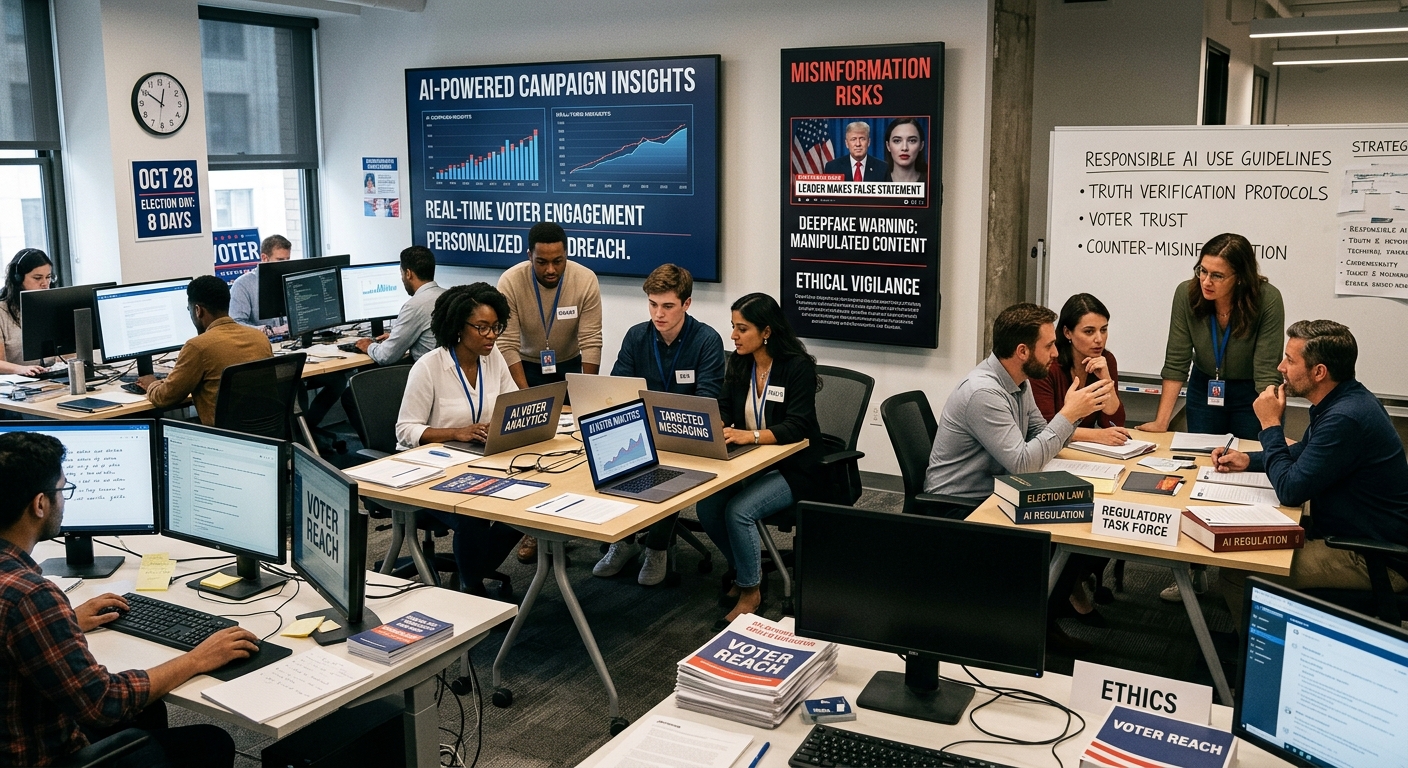
Artificial intelligence (AI) is reshaping political campaigns, offering new methods for voter engagement while also posing risks to democratic integrity. Campaigns utilize AI for personalized messaging and voter mobilization, but this also heightens concerns about misinformation and ethical issues, such as deepfakes and voter data privacy. Incidents involving AI-generated disinformation highlight its potential to disrupt elections, prompting calls for responsible AI usage and tools that can combat such threats. As regulations struggle to keep pace with technology, experts stress the importance of coordinated efforts to balance AI benefits with electoral safeguards.
AI’s Evolution in Political Campaigns
The use of AI in political campaigns signifies a major shift influenced by advances in digital communication and data analytics. Historically, campaigns adapted to new media, and recent AI developments broaden the scope of voter engagement techniques. Notable shifts began with the Obama campaigns, which leveraged data analytics to enhance outreach and mobilization, a precedent now expanded by generative AI tools. However, along with these advancements comes the need to address challenges associated with misinformation and ethical implications of AI technologies.
AI Applications in Campaigns
AI applications are transforming campaign operations, enabling more sophisticated interactions with voters. By enhancing content creation, political advertisements can now be tailored through generative AI, allowing campaigns of all sizes to produce effective messaging. However, this capability brings risks such as deepfakes, which undermine credibility and authenticity, thus necessitating precautionary measures to ensure transparency and accountability in political advertising.
Voter Engagement and Communication
The integration of AI into voter communication enables campaigns to conduct efficient, scalable interactions with constituents. Chatbots powered by advanced AI can address voter inquiries more effectively than traditional methods, although their impact may not fully replace human interaction. Additionally, AI tools create detailed voter profiles using various data sources, facilitating more precise targeting and responsive engagement strategies to enhance overall voter participation.
Campaign Management and Strategic Insights
Internally, AI streamlines various campaign tasks, such as drafting targeted messages and analyzing voter data to improve outreach. These tools allow campaigns to focus resources on strategic priorities, thereby enhancing efficiency and effectiveness. Moreover, AI tools leveraged for predictive analytics have begun to provide insights into voter behavior, refining campaign strategies with data-driven approaches.
Ethical and Regulatory Considerations
The deployment of AI in campaigns brings forth critical ethical and regulatory considerations, particularly surrounding data privacy and transparency. As AI drives significant shifts in political strategy, the need for compliance with existing regulations becomes essential to preventing misuse. Furthermore, the potential for algorithmic bias necessitates heightened scrutiny of AI systems to ensure fair and ethical treatment of voter data and communication.
Challenges to Electoral Integrity
While AI has the potential to enhance electoral processes, it also introduces substantial risks, particularly around misinformation and voter manipulation. Campaigns that adopt AI technologies must navigate challenges related to accuracy, as erroneous AI-generated content can mislead voters regarding critical information. Additionally, the rise of AI-driven disinformation campaigns poses a significant threat to democratic integrity by creating confusion and distrust among the electorate.
Regulatory Landscape
The current regulatory framework for AI in political campaigns remains uneven and evolving, with distinct challenges at both the federal and state levels. Federal guidelines in the U.S. are still developing, with no clear regulations specifically addressing AI-generated content. State-level initiatives have emerged, aiming for transparency in AI usage while facing constitutional challenges surrounding free speech rights. This fragmented regulatory environment poses concerns about accountability and the integrity of electoral processes as reliance on AI in campaigns becomes more pronounced.
Responses toward Regulation and Ethical Use
<pStakeholders across the political spectrum are advocating for responsible AI usage in campaigns, calling for transparency and ethical standards. Professional organizations recognize the importance of industry norms while policymakers discuss regulatory measures to mitigate the adverse effects of AI misuse. By establishing clearer guidelines and promoting ethical conduct, the goal is to ensure that AI supports rather than undermines democratic processes.
Future Perspectives
Looking forward, the role of AI in elections is expected to expand, necessitating careful consideration of its implications on voter trust and election integrity. As political actors increasingly employ AI-generated content to reach voters, ensuring robust regulatory frameworks and ethical standards is critical. Balancing innovation with protective measures remains paramount in preserving democratic values amid rapid technological change.
The content is provided by Jordan Fields, 9 Minute Read