
Understanding Open vs. Controlled AI Models
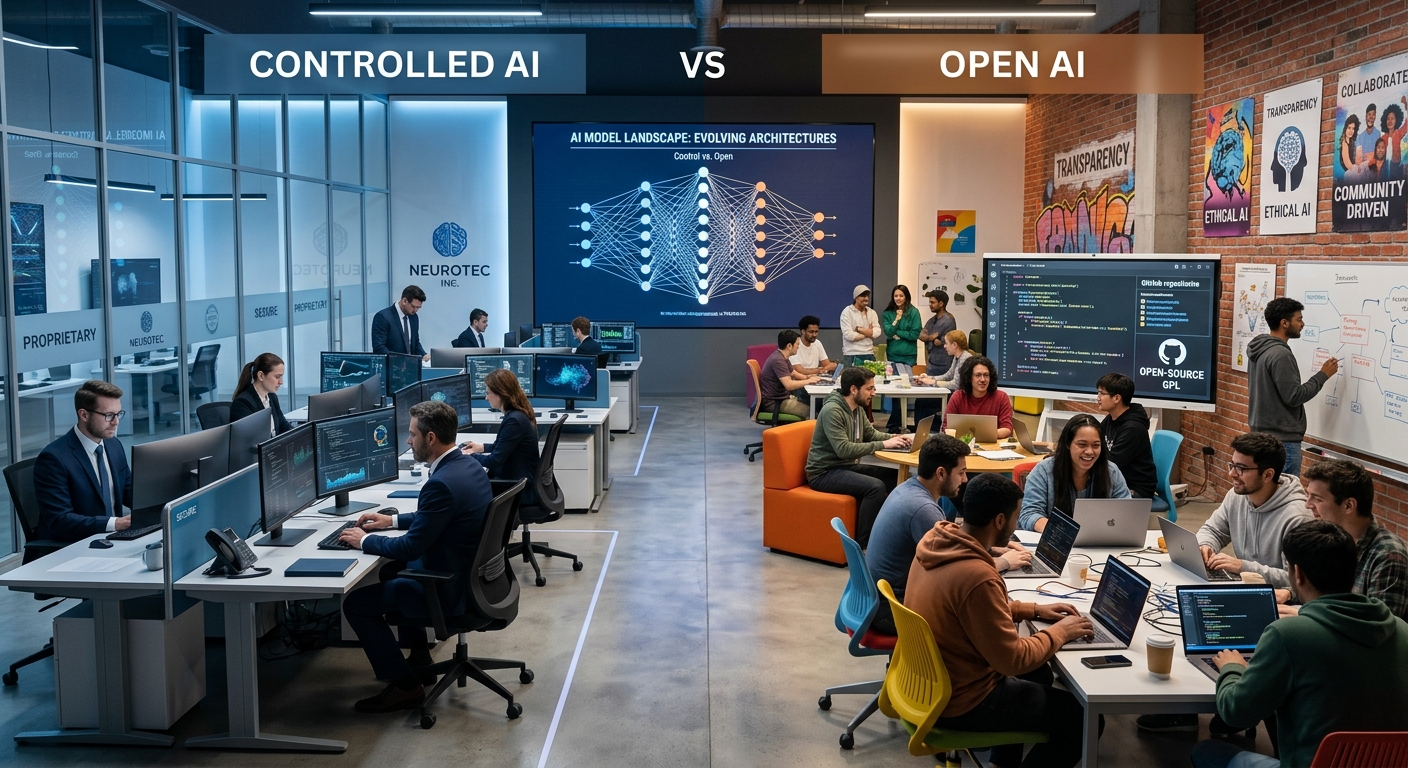
When considering artificial intelligence (AI) models, it’s important to recognize the two main approaches: controlled and open. Closed systems, such as OpenAI’s GPT-4, provide centralized safety controls and proprietary mechanisms that facilitate performance but limit external scrutiny. On the other hand, open models, like Meta’s Llama 2, emphasize transparency and offer a platform for community-driven improvements, making them attractive for those who value customization and innovation.
This distinction has significant implications for users deciding which model to adopt. While closed models often achieve higher performance metrics, they demand trust in the vendor without the option for independent evaluation. In contrast, open models can lower costs and enhance economic accessibility, appealing to users looking to explore or modify AI technologies. However, they also present challenges in terms of security and accountability, as their transparency can expose them to greater risks.
Evaluating Transparency and Security
The choice between open and controlled AI models often hinges on concerns related to transparency and security. Open AI models allow users to inspect code and identify potential biases, fostering trust and facilitating quicker response to vulnerabilities. In contrast, closed models maintain hidden architectures that rely on vendor claims for safety, which can obscure risks but also minimize certain vulnerabilities.
<pSecurity experts generally advocate that the transparency of open models, while exposing them to potential attack surfaces, enhances collaborative defenses and accelerates the identification of issues. Users should weigh the importance of independent audits and community engagement against the controlled environments of proprietary models. This evaluation can clarify which model aligns best with their security and innovation priorities.
Adoption Trends and User Preferences
<pMarket preferences currently illustrate a notable inclination towards closed AI models, with many organizations relying on proprietary systems that promise high performance and comprehensive safety controls. Research indicates that a significant portion of AI tokens processed are handled by leading providers like OpenAI and Anthropic, suggesting a tendency for businesses to favor closed models driven by brand trust and resource backing.
<pHowever, rapidly advancing open models are increasingly closing the performance gap, making them viable options for innovation-driven users and researchers, especially those focused on deploying models on personal devices. These trends indicate a shifting landscape that could encourage further exploration of the strengths of open-source systems in real-world applications.
Navigating Governance and Accountability
<pThe governance of AI systems, particularly open-source models, introduces challenges in establishing clear accountability. Regulatory frameworks must evolve to address concerns that arise when multiple actors can modify AI models, complicating traditional liability models. The EU’s AI Act exemplifies a proactive approach, recognizing the societal benefits of open-source models while enforcing safety standards to mitigate potential harms.
<pIn this context, users must consider how governance structures will apply to their chosen AI model. Effective oversight that balances transparency with security can aid in fostering trust and ensure responsible use, making it essential for stakeholders to engage with the evolving regulatory landscape.
Innovation and Social Impact Considerations
<pBoth open and closed AI models play distinct roles in fostering innovation and societal benefits. Open models lower barriers for researchers, promoting collaboration and transparency within the community, which can lead to beneficial advancements. However, this openness can potentially be exploited, raising concerns over misuse and security vulnerabilities.
<pClosed models provide centralized control that can streamline oversight and reduce certain risks. However, these benefits come at the potential cost of limiting innovation and external scrutiny. As users consider the ethical implications of their choices, a nuanced understanding of how open and closed systems impact their objectives is crucial for facilitating responsible AI development.
Future Directions in AI Development
<pThe future of AI will likely hinge on balancing innovation with safety across both open and controlled frameworks. Policymakers and organizations are encouraged to develop comprehensive governance models that integrate safety practices from the outset, promoting both technological progress and risk management. As AI capabilities evolve, safety efforts should encompass longer time horizons and focus on scalable safety measures that align with evolving ethical standards.
<pEmerging trends suggest that hybrid strategies that blend the strengths of open and closed systems may offer the most promise for effective AI governance. Such strategies can harness the benefits of transparency while maintaining necessary controls, encouraging collaborative innovation without compromising on safety or accountability. As these discussions progress, staying informed on market dynamics and regulatory shifts will remain critical for stakeholders aiming to navigate this complex landscape responsibly.
The content is provided by Avery Redwood, 9 Minute Read