
Summary
Trumps’ $14 Billion Crypto Windfall: Unleashing the Power of Digital Currency in America
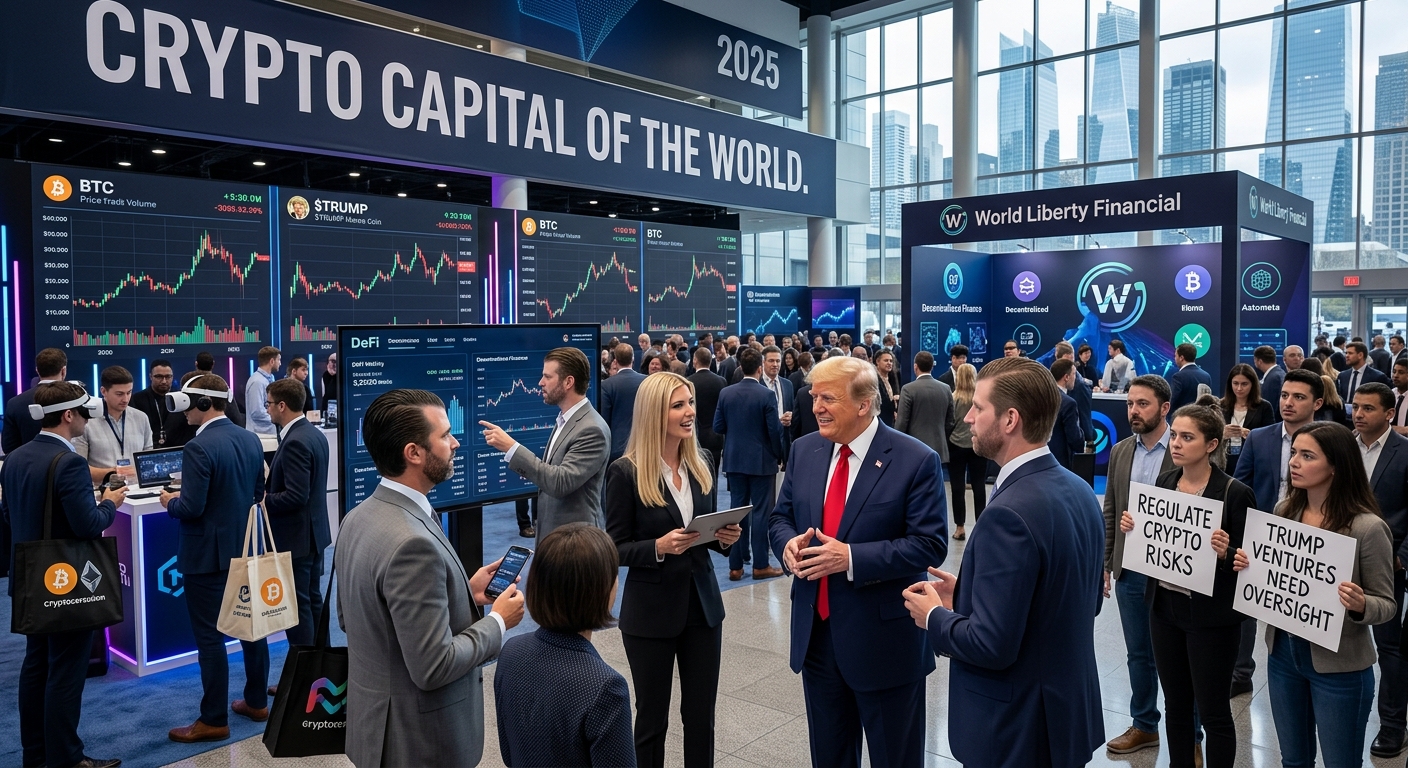
The Trump family’s emergence as major players in the cryptocurrency industry marks a striking transformation in both their business portfolio and the broader U.S. digital asset landscape. After initially expressing skepticism toward cryptocurrencies during his first term as president, Donald Trump pivoted dramatically by 2025, championing the United States as the “crypto capital of the world” and overseeing an expansive series of ventures that generated more than $14 billion in revenue within that year alone. Central to this windfall was the explosive growth of the Trump-branded meme coin $TRUMP, alongside associated token sales and crypto enterprises such as World Liberty Financial, a decentralized finance platform co-founded by Trump family members.
These ventures have redefined the Trump business empire, eclipsing traditional income sources like real estate and media royalties. The family’s crypto activities encompass multiple projects, including Bitcoin mining operations and stablecoins, with leadership roles formally designated to various Trump family members as “chief crypto advocate,” “Web3 ambassadors,” and “DeFi visionary.” The growing prominence of these holdings coincides with significant legislative and regulatory changes under the Trump administration, which have favored deregulation and eased federal oversight of cryptocurrency markets, drawing both investor interest and heightened scrutiny.
However, the Trump family’s deep entanglement in the crypto sector has generated substantial controversy and criticism. Allegations of conflicts of interest, foreign influence—particularly from state-linked entities in the United Arab Emirates—and ethical concerns have prompted multiple Congressional investigations and bipartisan calls for stricter oversight. Critics argue that these developments reflect an unprecedented mingling of private financial gain with public policy, raising questions about regulatory capture and national security risks.
As the United States grapples with integrating digital currencies into its financial system, the Trump family’s crypto ventures embody both the potential and pitfalls of this rapidly evolving market. Their unprecedented financial gains have spotlighted the intersection of politics, technology, and finance, underscoring the challenges of governance, transparency, and ethical conduct in America’s burgeoning digital economy.
Background
The Trump family’s involvement in the cryptocurrency industry has grown substantially in recent years, becoming a significant component of their business empire. While Donald Trump initially expressed skepticism toward digital currencies during his first term—describing cryptocurrency as “not money” and “based on thin air”—his stance evolved notably after his return to the White House in 2025. By the start of 2025, Trump had announced ambitions for the United States to become the “crypto capital of the world,” signaling a major strategic pivot toward embracing digital assets. This shift coincided with a surge in the Trump family’s investments and ventures within the crypto sector. Trump and his family launched various initiatives, including the meme coin $Trump, which experienced a dramatic price increase following its initial coin offering (ICO), soaring over 300% overnight and reaching a valuation that placed it among the top 20 cryptocurrencies globally within days. The first lady also launched her own meme coin, and the family established World Liberty Financial, a crypto platform focused on trading and investment. Additionally, Trump Media and Technology Group, where Trump is a majority shareholder, announced collaborations with major crypto trading platforms to provide related investment products.
These crypto ventures have eclipsed the earnings from Trump’s traditional business interests, such as real estate and royalty deals, and became a critical driver of the family’s financial growth, with reported earnings surpassing $1.2 billion in 2025 alone. The president’s latest financial disclosures emphasize the centrality of cryptocurrency to his business empire. However, this burgeoning footprint has also attracted scrutiny and concern among industry watchdogs and some political figures, who warn about potential conflicts of interest and the risks of foreign and corporate influence through digital currencies linked to the Trump administration. Security procedures around events related to these ventures, including memecoin gatherings, involve varying levels of scrutiny. Enhanced background checks by the Secret Service are typically reserved for areas such as the president’s private quarters, while larger event spaces like ballrooms primarily undergo physical screening and sweeps. The growing prominence of the Trump family’s cryptocurrency activities marks a significant chapter in the intersection of politics, finance, and emerging digital assets in America.
The $14 Billion Crypto Windfall
In 2025, President Donald Trump and his family amassed more than $14 billion through a series of cryptocurrency ventures, marking a significant shift in their business portfolio and underscoring the growing prominence of digital assets within their empire. This windfall was driven primarily by the explosive rise of the Trump-branded memecoin, $TRUMP, alongside related token sales and the activities of family-linked firms such as World Liberty Financial.
The $TRUMP memecoin experienced a meteoric rise shortly after its initial coin offering (ICO), with its price surging over 300% overnight and peaking at more than $75 per token in January 2025 from an initial value of approximately $10. Within two days of its launch, it became the 19th most valuable cryptocurrency globally, achieving a total trading volume close to $29 billion based on 200 million tokens issued. Although the token later suffered a steep decline, dropping more than 95% from its peak to trade around $1.66 by mid-2025, the Trump family nevertheless secured over $636 million through CIC Digital, the Trump Organization affiliate behind the $TRUMP coin, from sales and related mechanisms.
Complementing the $TRUMP memecoin earnings were substantial revenues from World Liberty Financial, a decentralized finance (DeFi) venture co-founded by Eric Trump, Donald Trump Jr., and associates including special envoy Steve Witkoff. The company, in which a Trump business entity holds 60% ownership and is entitled to 75% of coin sale revenues, generated nearly $600 million in income during the same period. Notably, a significant transaction in 2025 involved the sale of tokens to an investment firm tied to the United Arab Emirates, yielding approximately $500 million for the Trump family despite a subsequent collapse in that firm’s share price.
The Trump family’s cryptocurrency holdings extend beyond memecoins and token sales. Their ventures include four distinct crypto-related companies, among them American Bitcoin Corp, a Bitcoin mining firm formed through a merger in 2025 by Eric and Donald Jr.. The family’s involvement encompasses leadership roles with Donald Trump titled “chief crypto advocate,” Eric and Donald Jr. as “Web3 ambassadors,” and Barron Trump designated as the project’s “DeFi visionary,” highlighting a broad and strategic embrace of the digital currency space.
Despite the extraordinary profits reported, these ventures have raised concerns regarding ethical and national security implications. Substantial investments from foreign nationals and state-linked entities, such as the Emirati-backed influx into World Liberty Financial, have prompted scrutiny over potential conflicts of interest and the blurring of lines between private enterprise and foreign policy. These developments coincide with a regulatory environment that some experts believe favors crypto expansion, partially driven by policies enacted during the Trump administration that have reduced federal oversight and disclosure requirements for the crypto sector.
Cryptocurrency Projects and Technologies
The Trump family has become deeply entrenched in the cryptocurrency industry, leveraging various digital assets and platforms to generate substantial income. One of the cornerstone ventures is World Liberty Financial (WLFI), a DeFi project co-founded by former President Donald Trump, his sons, and the family of special envoy Steve Witkoff during the 2024 presidential campaign. WLFI reportedly generated nearly $600 million in income, with 75 percent of net profits funneling directly to the Trump family. The platform operates on Aave’s v3 protocol, utilizing its established infrastructure, which suggests a secure but non-innovative approach. Unlike other DeFi governance tokens, WLFI’s tokens are non-transferable and do not entitle holders to protocol revenues, limiting investor benefits beyond a voice in business plans.
Another prominent asset is the “Trump meme coin” ($TRUMP), launched just prior to Trump’s inauguration in January 2025. This speculative memecoin, often described as “crypto’s stupidest bubble,” is largely controlled by two Trump-aligned companies, with the majority of tokens allocated to CIC Digital LLC, a Trump Organization affiliate. These tokens are subject to a structured release schedule to avoid market volatility from large sell-offs. The $TRUMP coin is distributed via a partnership with Crypto.com and operates on the Cronos blockchain, adding to the Trump family’s expanding crypto portfolio.
In addition to memecoins, the Trump crypto ventures include stablecoins like USD1, which ties directly to the U.S. dollar, offering investors a means to mitigate volatility when moving in and out of cryptocurrency markets. USD1 has been described as stable, secure, and transparent, with its unique appeal resting largely on its presidential association rather than technical innovation. For instance, USD1 was the currency used by Abu Dhabi’s MGX to finance a $2 billion investment in Binance, routing substantial liquidity and fees through WLFI and benefiting the Trump family financially.
These ventures have raised questions regarding regulatory oversight and conflicts of interest. The U.S. Securities and Exchange Commission (SEC) and other regulatory bodies have issued new guidelines that may benefit the Trump family’s crypto projects, narrowing securities definitions in a way that potentially favors these enterprises. Concurrently, Congress has advanced legislative efforts focused on establishing regulatory frameworks for stablecoins and clarifying jurisdictions across the cryptocurrency market. These include the Senate-passed GENIUS Act, signaling a shift toward more comprehensive crypto regulation. Despite this, the current administration’s dismantling of certain financial safeguards, such as dissolving the DOJ’s National Cryptocurrency Enforcement Team and repealing investor protections, has been criticized as advancing the President’s personal financial interests.
Concerns extend beyond regulation to national security, with lawmakers like Ro Khanna demanding detailed records and communications from WLFI. This inquiry centers on potential conflicts of interest, the role of WLFI’s USD1 stablecoin in international investments, and broader risks linked to emerging technologies such as AI chip exports.
Market Performance and Dynamics in 2025
The cryptocurrency market in 2025 experienced significant activity, notably influenced by the Trump family’s crypto ventures. The OFFICIAL TRUMP token, ranked as the #46 most popular cryptocurrency on Coinbase, demonstrated substantial trading volumes despite a modest market dominance of 0% in terms of total market capitalization. Over a recent 24-hour period, its trading volume reached approximately $249.7 million, with a weekly volume averaging around $285.2 million, reflecting a slight decrease compared to previous daily figures. The token’s price hovered near $1.64 to $1.65 USD, experiencing minor fluctuations including a 1.95% decline within one day.
This vibrant market activity occurs alongside a broader context where substantial income from meme coins, token sales, and direct cryptocurrency holdings has attracted heightened investor attention, particularly regarding forthcoming policy and regulatory decisions. The Trump administration’s regulatory approach has been characterized by measures perceived to ease disclosure requirements and regulatory oversight, potentially fostering increased institutional interest and expanding crypto-based financial activities.
However, this dynamic has raised concerns about conflicts of interest and undue influence within the crypto sector. Reports indicate that foreign actors and corporate interests have strategically invested in the Trump family’s cryptocurrency businesses, securing access and favors through significant political donations. These contributions reportedly yielded rapid returns such as regulatory rollbacks, policy concessions, and the quiet cessation of federal investigations into major crypto industry players. Such developments highlight allegations of presidential self-dealing, foreign influence, and obstruction of justice tied to the administration’s crypto policies, which appear designed to advance private financial interests at the expense of regulatory integrity and national security.
The overall market landscape in 2025 thus reflects a complex interplay of high trading volumes, evolving regulatory frameworks, and political-economic dynamics centered around the Trump family’s expanding presence in the digital currency arena. This environment continues to shape investor behavior and the trajectory of U.S. cryptocurrency markets.
Political and Regulatory Context
Since early 2025, the political and regulatory environment surrounding cryptocurrency in the United States has been marked by significant shifts influenced heavily by the Trump administration and its allies in Congress. Following the inauguration of President Donald Trump’s second term, a concerted effort was made to establish a crypto-friendly regulatory landscape aimed at positioning the U.S. as a global leader in digital finance.
Congress prioritized legislation on stablecoins, focusing on developing regulatory frameworks that would clarify jurisdictions and reduce regulatory complexity for crypto markets. The Senate passed the GENIUS Act, a stablecoin bill that eventually overtook the House’s original proposal, reflecting a strategic legislative approach to stabilize the sector before expanding broader crypto regulation. Meanwhile, regulatory agencies were actively considering exemptions and issuing clarifications to facilitate the growth of emerging crypto products, complemented by anticipated White House policy proposals originating from Executive Orders.
The Trump administration’s regulatory stance was characterized by appointments of crypto-friendly officials and a marked reduction in enforcement actions against crypto firms, including high-profile companies such as Coinbase, Gemini, Ripple, and Crypto.com. Investigations and regulatory safeguards that had been instituted under previous administrations were systematically dismantled, including the dissolution of the Department of Justice’s National Cryptocurrency Enforcement Team (NCET) and the repeal of investor protection rules, actions which critics argue directly benefited the President’s personal financial interests. This approach extended to significant policy moves such as rescinding the SEC’s Staff Accounting Bulletin 121, which had limited traditional financial institutions from offering crypto custody services, thereby opening avenues for institutional participation in the crypto market.
The administration’s crypto policies sparked controversy, with allegations that foreign actors, including state-linked entities from the United Arab Emirates, invested heavily in Trump family crypto ventures. Notably, a $500 million investment from an Abu Dhabi-linked entity into World Liberty Financial—a company co-owned by the Trump family—just prior to the 2025 inauguration, raised concerns over conflicts of interest and national security risks. This deal funneled substantial funds to Trump-controlled entities and became the subject of multiple Congressional inquiries aimed at determining whether these investments influenced U.S. policy decisions on arms sales, AI chip access, and regulatory enforcement.
Furthermore, the administration’s crypto-friendly regulatory environment has been criticized as enabling profit-driven but socially valueless crypto activities, with some experts suggesting that the regulatory rollbacks may entrench long-term structural changes in financial markets beyond the Trump presidency. This has also raised ethical questions regarding presidential self-dealing and foreign influence, as major donors and foreign investors reportedly received favorable regulatory treatment and a curtailment of federal investigations into their crypto operations.
Despite ongoing scrutiny and bipartisan calls for increased oversight, the Trump administration maintained its aggressive promotion of cryptocurrency, including plans for a national strategic cryptocurrency reserve and hosting White House cryptocurrency summits attended by controversial figures from the crypto industry. Critics warn that these events and policies risk security lapses and ethical violations, highlighting a fraught political and regulatory context that continues to shape the trajectory of digital currency in America.
Controversies and Criticisms
The involvement of former President Donald Trump and his administration in the cryptocurrency industry has sparked significant controversy and criticism. Central to these concerns is the potential for conflicts of interest, foreign influence, and self-dealing that critics argue have undermined regulatory integrity and national security.
A major point of contention has been the Trump family’s ventures into digital assets, including projects like the TRUMP meme-coin and World Liberty Financial’s token, which have generated substantial profits. Critics warn that these ventures have created avenues for corporate actors and foreign entities to exert influence over the administration, raising alarms about the propriety of such entanglements. Lisa Gilbert, co-president of the watchdog group Public Citizen, described the situation as “so inappropriate” and cautioned against becoming complacent with these developments.
Foreign investments have been particularly scrutinized. A reported $500 million investment in World Liberty Financial by an Abu Dhabi-backed entity has led Senate Democrats to call for hearings and investigations into whether this infusion of capital influenced U.S. policy decisions, including arms sales and artificial intelligence (AI) chip export controls related to the United Arab Emirates. These inquiries also extend to potential impacts on regulatory decisions, such as the Securities and Exchange Commission’s dismissal of a fraud case against Justin Sun, a significant backer of World Liberty Financial, and presidential pardons connected to major
Economic and Financial Implications
President Donald Trump’s involvement in the cryptocurrency industry has led to significant economic and financial ramifications, both for his personal business empire and the broader U.S. financial landscape. His crypto ventures have become some of his most lucrative enterprises, marking a dramatic shift from his previous critical stance on digital currencies. These ventures include income from meme coins, token sales, and direct cryptocurrency holdings, which have collectively contributed to a reported windfall exceeding $14 billion.
The financial disclosures reveal that beyond crypto, Trump holds thousands of investments across various financial markets, with his Mar-a-Lago Club alone generating over $77 million in income and valued at more than $50 million. Additionally, Trump reported settlements totaling more than $86 million from legal actions against major media companies such as ABC, CBS, Meta, YouTube, and X, alongside gifts valued at over $370,000 received during the year.
Foreign actors and corporate interests have reportedly funneled substantial funds into the Trump family’s cryptocurrency ventures, effectively buying access and influence with the administration. In return, these backers have benefited from regulatory rollbacks, policy giveaways, and the quiet termination of federal investigations into key players within the crypto industry. This dynamic has raised concerns about conflicts of interest and the intersection of political power with financial gain in the burgeoning crypto market.
The Trump administration’s regulatory approach has further impacted the crypto sector’s economic landscape. New rules introduced under his leadership have the potential to significantly reduce existing regulatory and disclosure requirements for cryptocurrency firms. Experts suggest these changes may spur increased institutional investment in crypto activities, facilitating the continued expansion of crypto issuance and trading free from many federal restrictions. Such policy shifts are likely to attract heightened attention from investors, who closely monitor regulatory developments affecting digital assets.
Moreover, while the Trump family’s crypto ventures have amassed substantial wealth domestically, the cryptocurrency market exhibits greater penetration internationally. Legal experts note that foreign investors have engaged more extensively in token purchases compared to American investors, partly due to previous restrictive regulations during the last administration, which made initial token sales less accessible to U.S. buyers.
Legacy and Future Prospects
The Trump administration’s involvement in the cryptocurrency sector marks a significant turning point in the United States’ digital asset landscape. Once a vocal skeptic of cryptocurrencies, President Trump’s stance evolved dramatically starting in 2024, culminating in a proactive agenda to position the U.S. as the “crypto capital of the world” by 2025. This transformation has been characterized by the installation of crypto-friendly regulators and the promotion of landmark digital assets legislation designed to integrate cryptocurrencies into mainstream finance.
Trump’s deep financial interests in digital assets, including substantial holdings in meme coins like the $TRUMP token and various crypto ventures backed by his family, have contributed to an estimated $14 billion windfall. These ventures have attracted significant investment from both domestic and foreign actors, some linked to state entities, raising complex constitutional, ethical, and national security concerns. Critics argue that such entanglements have created potential conflicts of interest, especially given the administration’s swift rollback of Biden-era crypto regulations and the apparent alignment of Congressional leadership with the Trump administration’s pro-crypto agenda.
Regulatory shifts under Trump’s leadership have largely favored the expansion of crypto markets with fewer disclosure and oversight requirements, a development that many experts believe could spur increased institutional investment but also facilitate profit-making at the expense of social value. Legal scholars and industry insiders suggest that these relaxed regulations may accelerate market growth while simultaneously exposing investors to heightened risk, as evidenced by significant losses experienced by retail investors in crypto projects affiliated with the Trump family.
Looking ahead, the legacy of Trump’s crypto policies appears twofold: on one hand, fostering innovation and greater integration of digital currencies within the American financial system; on the other, raising ongoing concerns about regulatory capture, transparency, and the influence of private financial interests on public policy. The future trajectory of U.S. cryptocurrency regulation will likely hinge on political developments and the balance between encouraging technological progress and safeguarding market integrity. As digital assets become increasingly central to the Trump business empire and broader economic discourse, scrutiny from regulators, lawmakers, and the public is expected to intensify, shaping the evolution of this rapidly growing sector in the years to come.
The content is provided by Jordan Fields, 9 Minute Read