Summary
Champagne and Bullets is a 1993 independent cult film notable for its status as an ambitious vanity project helmed by John De Hart, a full-time lawyer with no prior filmmaking experience who co-directed, wrote, produced, starred in, and composed the soundtrack for the film. Shot on 16mm film over a 20-day period in the Los Angeles area, the movie blends elements of action thriller, supernatural horror, and bizarre camp, featuring themes of corruption, revenge, and occultism set against a backdrop of contrasting motifs symbolized by its title—the luxury of champagne and the violence of bullets.
Despite its low budget and unconventional production, Champagne and Bullets enlisted professional actors Wings Hauser and William Smith, whose performances contribute significantly to the film’s cult appeal, particularly Hauser’s unhinged portrayal that has been widely noted among fans and critics alike. The film’s raw aesthetic, improvised dialogue, and eclectic soundtrack—including the director’s own “Shimmy Slide” dance number—combine to create a distinctive, if uneven, viewing experience that has drawn comparisons to other infamous outsider projects such as Tommy Wiseau’s The Room and Neal Breen’s films.
The movie underwent a protracted post-production phase, resulting in multiple edited versions released under different titles like Get Even and Road to Revenge, each varying in pacing, content, and graphic material. While it never achieved mainstream success, the film gained notoriety and a cult following through niche festival screenings, direct-to-video distribution, and exposure on platforms like RedLetterMedia’s Best of the Worst, which helped solidify its reputation as a fascinating example of “so-bad-it’s-good” outsider cinema.
Critically, Champagne and Bullets is frequently cited for its ambitious but flawed execution, marked by narrative incoherence, uneven performances, and low production values that both hinder and enhance its appeal. Its status as a vanity project—reflecting De Hart’s multi-faceted yet inexperienced involvement—has made it a subject of ongoing discussion about the limits of independent filmmaking, the allure of cult B-movies, and the peculiar charm of cinematic misfires.
Background
Champagne and Bullets is a 1993 independent film notable for being a comprehensive vanity project helmed by John De Hart, who served as co-director, writer, producer, lead actor, and composer. De Hart, a full-time lawyer with no prior filmmaking experience, financed the movie himself and sought to showcase his talents across multiple disciplines, resulting in a highly personal but uneven cinematic work. Co-directed alongside James Paradise, the film was shot over a 20-day period primarily in the Los Angeles area, including Riverside County, which loosely inspired elements of the story’s satanic cult subplot.
Produced on 16mm film, Champagne and Bullets employed a crew of roughly 100 people, including professional actors Wings Hauser and William Smith, treating the shoot with a professional approach despite the low budget. The production was marked by a mix of scripted and improvised scenes—such as Hauser ad-libbing during a swimming pool sequence—and practical location use, including De Hart’s personal game room repurposed as a bar set. Challenges during filming included De Hart’s physical health issues, notably a bad back that impacted his performance in the line-dancing “Shimmy Slide” scene, which required hired choreographers for authenticity. De Hart also composed much of the soundtrack, contributing to the film’s eclectic, low-fi sound design, including the titular “Shimmy Slide” song and dance sequence.
The film’s post-production spanned several years, resulting in multiple versions and edits. The original 99-minute cut, Champagne and Bullets, was never commercially released but later re-edited and distributed under alternate titles such as Get Even and Road to Revenge, primarily on direct-to-video formats in North America. Distribution was minimal and relied heavily on niche channels, including genre film festivals and direct mail-order VHS sales, which contributed to the film’s cult status but limited its mainstream visibility. Marketing efforts focused on the movie’s blend of action sequences and supernatural elements, targeting cult film audiences interested in B-movie oddities.
Critically, Champagne and Bullets has been described as a quintessential cult vanity project akin to the works of Neal Breen and Tommy Wiseau, with De Hart’s ambitious but amateurish approach resulting in a film that is simultaneously baffling, indulgent, and fascinating. The performances of veteran actors Wings Hauser and William Smith add layers of camp and unintentional humor, with Hauser’s role later recognized as one of his most unhinged performances. The film’s bizarre narrative elements—including satanic cults and baby sacrifice—are often overshadowed by its erratic tone and low production values, lending it a distinctive place in the canon of cult B-movies.
Plot Summary
Champagne and Bullets centers on a group of protagonists whose lives have been shattered by personal betrayal and corruption. Motivated by a desire to reclaim their lives and seek justice, they reunite after several years to confront a dark underworld controlled by Normad, a man who has ascended to the position of judge while secretly leading a satanic cult involved in illicit activities. The narrative explores their perilous journey as they infiltrate this shadowy world to expose the cult’s operations and the rampant corruption festering beneath a veneer of respectability.
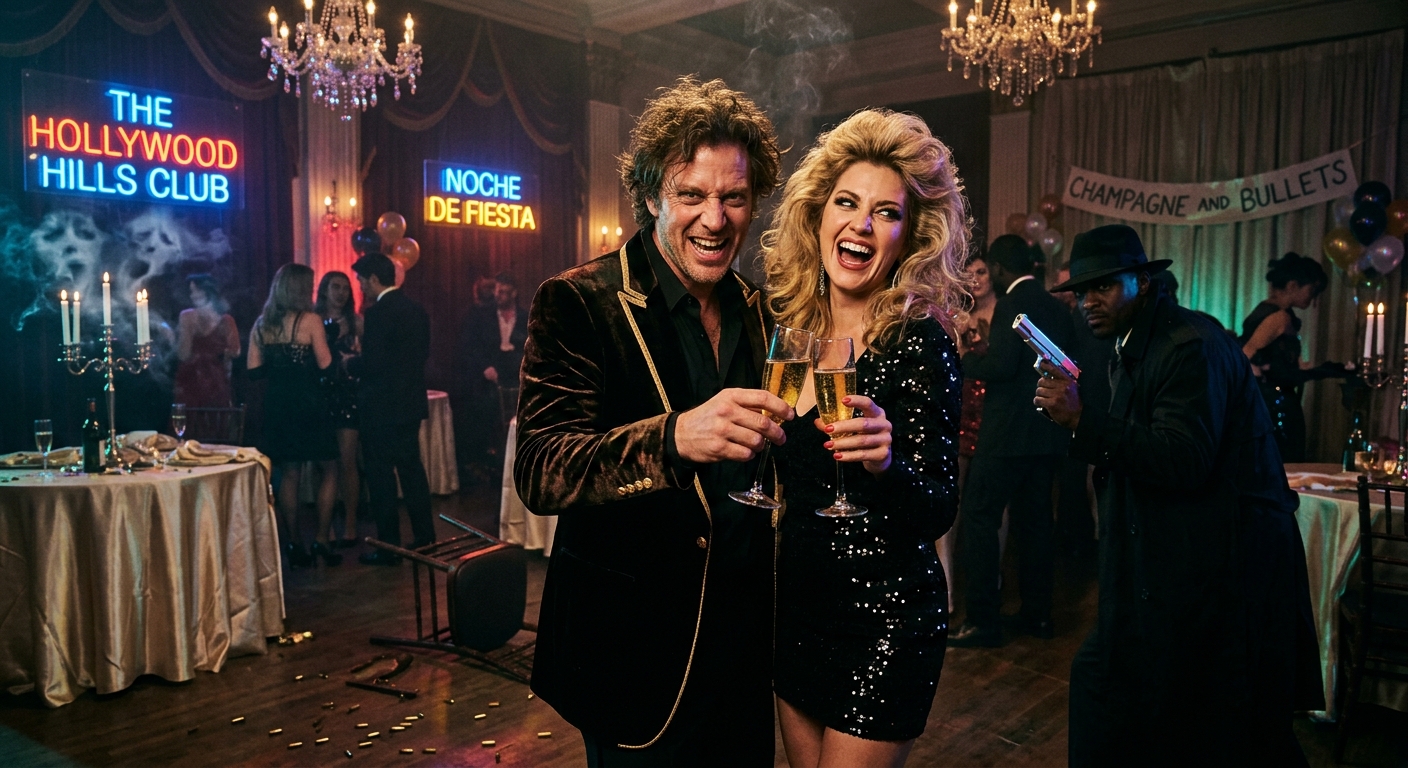
The story is rich with themes of excess and moral ambiguity, symbolized through recurring motifs such as champagne—representing fleeting luxury, romance, and celebratory indulgence—juxtaposed against bullets, which embody sudden retribution and violence. This duality underscores the contrast between glamour and brutality that permeates the film. Romantic interludes, including honeymoons and intimate dinners, are starkly contrasted with sinister cult rituals involving sacrifice and malevolence, highlighting the film’s tension between surface-level charm and underlying menace.
Adding a layer of eccentricity and absurdity, the film blends sincere dramatic intent with moments of improvisation, such as religious epiphanies and unorthodox coping mechanisms. One notable feature is a dance sequence set to a song titled “Shimmy Slide,” written and performed by the director John de Hart, who also stars in the film. The director’s unique background as a full-time lawyer who self-financed the movie contributes to its distinctive cult appeal.
Multiple versions of the film exist, with varying degrees of graphic content, including controversial scenes that have been edited differently across cuts, reflecting the filmmakers’ experimental approach to narrative and audience reception.
Themes and Stylistic Elements
Champagne and Bullets intertwines themes of excess, moral ambiguity, and personal redemption within a raw and unconventional stylistic approach. Central to the narrative is the duality symbolized by the film’s title: “champagne” represents fleeting luxury, romance, and the façade of high society, while “bullets” embody sudden retribution and violent upheaval. This juxtaposition is explored through motifs such as celebratory indulgence contrasted against brutal cult rituals, highlighting a world where glamour masks underlying danger and corruption.
The story follows Rick Bode, a disgraced detective, who embarks on a perilous quest to dismantle a satanic cult responsible for personal betrayals and systemic corruption. This plotline allows the film to explore themes of revenge, justice, and the blurred lines between good and evil. The protagonists’ journey is fraught with deception, danger, and surreal moments—including improvised religious epiphanies and eccentric coping mechanisms—that contribute to the film’s offbeat tone. Romantic interludes and lavish settings are interspersed with scenes of violence and cult sacrifice, amplifying the film’s tension between surface glamour and hidden menace.
Stylistically, Champagne and Bullets exhibits a distinctive micro-budget aesthetic derived from its 16mm film origins, lending the visuals a raw, grainy texture that complements the gritty and surreal narrative. The production’s use of practical locations, such as the director’s own game room repurposed as a bar, enhances the sense of an intimate yet chaotic world. The film blends scripted dialogue with moments of improvisation—most notably Wings Hauser’s ad-libbed lines during a swimming pool scene—adding to the unpredictable and sometimes disjointed feel of the story.
The soundtrack, largely composed by director John De Hart, underscores the film’s eclectic nature. Original songs and customized tracks like the “Shimmy Slide” are integrated into the narrative, contributing a lo-fi, experimental sound design that mirrors the film’s tonal shifts between earnest drama and absurdity. The “Shimmy Slide” sequence, featuring choreographed line dancing, highlights the film’s commitment to blending sincerity with camp.
Multiple versions of the film, including the original Champagne and Bullets cut and later recuts titled Get Even and Road to Revenge, reflect evolving editorial decisions aimed at emphasizing different thematic elements such as retribution and justice. These re-edits also showcase variations in pacing, explicit content, and additional scenes that contribute to the film’s cult status as an unconventional artifact of outsider cinema.
Critical Reception
Champagne and Bullets has garnered a cult following and is often celebrated as a quintessential B-movie, earning recognition alongside infamous vanity projects such as Tommy Wiseau’s The Room and James Nguyen’s Birdemic: Shock and Terror. Contemporary reviewers and cult film enthusiasts have praised its unique blend of action, camp, and low-budget ingenuity, with Vinegar Syndrome describing it as a “classic” within the genre. Despite its rough edges, the film’s humor and memorable one-liners have been highlighted as genuinely funny moments, while its underlying commentary on bureaucratic corruption adds an unexpected layer of thematic depth.
The film’s multiple versions, including Get Even and Road to Revenge, have contributed to its mystique and cult status. The third cut, which features additional scenes such as the protagonist practicing martial arts and an original dance sequence choreographed to a song written by director John De Hart, became particularly popular after being featured on RedLetterMedia’s Best of the Worst series. The 2021 Blu-ray release by Vinegar Syndrome compiled all three cuts, though only the original Champagne and Bullets edit was available in high definition, underscoring the film’s complicated production and distribution history.
Critics have noted the film’s ambitious yet uneven qualities, reflecting De Hart’s multifaceted role as writer, director, star, and financier—a full-time lawyer who self-funded the project. This DIY spirit aligns Champagne and Bullets with a lineage of hubristic auteur-driven vanity projects, earning it a place in the “RiffTrax Pantheon” of cult films made by creators with little prior cinematic experience. While its production challenges and limited marketing hindered mainstream success, its bold blend of champagne-fueled extravagance and bullet-riddled action has left a lasting impression on fans of cult cinema.
Notable Flaws and Criticisms
Champagne and Bullets has been widely criticized for its numerous shortcomings, many of which have contributed to its reputation as a quintessential example of a flawed cult film. Upon its release in 1993, the film received predominantly negative feedback, with early viewers targeting its amateurish acting, sluggish pacing, and convoluted dialogue. Critics often described it as an unfocused vanity project lacking self-awareness, drawing parallels to other notorious works of cinematic missteps.
A recurring critique centers on the film’s central antagonist, Normad, whose implausible level of influence strains credibility. The character amalgamates roles ranging from corrupt police superior to judge and secret satanic cult leader, creating a disjointed and awkward narrative thread that many found unintentionally hilarious rather than menacing. This composite villain serves as a focal point for the movie’s narrative inconsistencies and uneven tone, which some reviewers argue undermines the film’s intended thriller and horror elements.
The production values have also been a significant point of contention. Originating from a micro-budget, 16mm shoot with guerrilla-style planning, the film’s raw and grainy aesthetic is often perceived as symptomatic of its limited resources rather than a deliberate artistic choice. Editing was reportedly handled in-house by the director and a small team, resulting in multiple versions of the film and contributing to its uneven pacing and tonal shifts. The low-budget origins are also evident in the use of personal spaces, such as the director’s own game room, repurposed as set locations.
Beyond technical flaws, the film’s self-indulgent nature has been a frequent subject of derision. The director’s extensive on-screen presence, despite lacking conventional charisma or acting ability, has drawn unfavorable comparisons to infamous vanity projects by filmmakers like Tommy Wiseau and Neal Breen. This casting choice contributes to perceptions of Champagne and Bullets as a “movie fantasy camp” that allowed an amateur filmmaker to lead alongside seasoned actors, resulting in an uneven ensemble performance.
While some viewers have found moments of unintentional humor and memorable one-liners, these instances are often overshadowed by the film’s narrative incoherence and muddled thematic intentions. Critics have noted that despite multiple re-releases under different titles—such as Get Even and Road to Revenge—the marketing efforts failed to clarify the film’s identity or improve its reception, with the retitling attempts viewed as a desperate search for a viable angle rather than a solution to core deficiencies.
Cultural Impact and Legacy
Champagne and Bullets has garnered a distinctive reputation within cult film circles, often cited as a quintessential example of a “vanity project” that embodies both the ambition and shortcomings of low-budget filmmaking. Its erratic narrative, characterized by a bizarre blend of revenge thriller, occult horror, and absurdist elements, has made it a frequent subject of fascination and ridicule among genre enthusiasts and film scholars alike.
The film’s multiple releases under different titles—originally as Champagne and Bullets, then re-edited and distributed as Road to Revenge and Get Even—have contributed to its mystique. The Get Even cut, in particular, is notorious for its extensive edits and the controversial addition and removal of explicit content, drawing attention from niche distributors like Vinegar Syndrome and discussions on platforms such as Red Letter Media. This patchwork history of versions highlights the film’s struggle to find a definitive identity but simultaneously cements its status as a cult oddity.
Critics and fans often compare Champagne and Bullets to other celebrated “so-bad-it’s-good” films, placing it alongside works by Neal Breen and Tommy Wiseau for its unpolished yet earnest attempt at filmmaking despite the apparent lack of conventional talent and resources. The film’s director and star, John De Hart, who also financed the project himself while maintaining a career as a full-time lawyer, exemplifies the archetypal outsider artist whose overreach fuels both the film’s charm and its flaws. This phenomenon has invited parallels to other vanity projects noted for their unintended humor and idiosyncratic vision, adding Champagne and Bullets to a lineage of cult movies appreciated for their sheer audacity and oddball creativity.
The performances, especially by Wings Hauser—whose role is considered one of the most unhinged of his career—have also been singled out as memorable highlights within the film’s chaotic framework. The movie’s thematic interplay between glamour and violence, alongside its eccentric narrative choices such as improvised religious epiphanies and ritualistic horror, further contribute to its lasting impression on fans of exploitation and B-movie cinema.
Trivia and Behind-the-Scenes
Champagne and Bullets is notable for the extensive involvement of John De Hart, who not only co-directed the film alongside James Paradise but also served as writer, producer, lead actor, and composer. This multifaceted participation allowed De Hart to imprint his personal vision throughout the production, from the narrative to the musical score. The film was shot on 16mm film, contributing to its raw and grainy aesthetic, with cinematography by Eric J. Swanson, known for his work on low-budget genre
The content is provided by Blake Sterling, 9 Minute Read