Summary
The Trump administration’s announcement in 2026 of a temporary 0% tariff on imported generic medicines for two years, followed by a steep increase to 100% and then 200%, marked a significant and controversial shift in U.S. pharmaceutical trade policy. Implemented under Section 232 of the Trade Expansion Act of 1962, the phased tariff regime was designed to incentivize domestic manufacturing of generic drugs by providing a grace period for companies to relocate production to the United States before facing punitive tariff rates. This policy aimed to reduce national security risks associated with reliance on foreign pharmaceutical supply chains and to strengthen the U.S. pharmaceutical industry’s global competitiveness.
Generic medicines constitute over 90% of prescriptions dispensed in the United States, making this sector critical to healthcare affordability and access. However, the policy sparked widespread concern among industry experts, healthcare providers, and patient advocates about potential negative consequences. Critics warned that the drastic tariff hikes after the two-year exemption period could lead to significant drug price increases, supply shortages, and disruption of an already fragile generic drug market, which operates on thin profit margins and complex supply chains. Some manufacturers reportedly began stockpiling supplies in anticipation of the tariffs, reflecting uncertainty and apprehension within the industry.
International trading partners, including the European Union and countries such as the United Kingdom, expressed apprehension over the tariffs, citing risks of retaliatory trade measures that could harm U.S. pharmaceutical exports and global supply chains. While several nations negotiated tariff exemptions or reductions through bilateral agreements, the overall policy raised concerns about escalating trade tensions and the potential for increased drug costs on both sides of the Atlantic. Public health experts questioned whether the tariffs would effectively achieve their stated goal of boosting domestic production without compromising patient access to affordable medicines.
Economically and politically, the tariff policy reflected the Trump administration’s broader strategy to use trade tools to promote reshoring and protect strategic industries deemed vital to national security. Nonetheless, experts remain divided on whether the policy would foster sustainable growth in U.S. pharmaceutical manufacturing or instead exacerbate supply chain vulnerabilities and increase costs for American patients. The phased tariff schedule and its unprecedented scale in the pharmaceutical sector have positioned this policy as a notable and contentious development in U.S. trade and healthcare policy debates.
Background
In the context of a broad trade agreement between the United States and the European Union, the White House disclosed plans to tax pharmaceuticals and other imported products from the bloc, sparking significant attention to the implications for the U.S. pharmaceutical market. The Trump administration’s proposed tariffs targeted not only finished pharmaceutical products but also intermediate goods such as ingredients and packaging materials essential for domestic drug manufacturing. This approach was part of a broader trade policy framework under Section 232 of the Trade Act of 1974, which authorizes the President to modify import duties or restrictions for national security reasons.
The administration justified these tariffs as a response to perceived unfair trade practices, including discrimination against American products in foreign markets. While the tariffs were intended to incentivize increased U.S. production of brand-name drugs, experts warned that older, off-patent generic drugs—comprising over 90% of the volume of medicines sold in the United States—would be negatively affected due to their low-profit margins. This raised concerns about potential drug shortages, increased costs for patients, and disruptions in the supply chain that could impact public health.
The impact of these tariffs extended beyond domestic pricing. They were likely to provoke retaliatory measures from other countries, threatening export markets for U.S.-made pharmaceuticals and medical equipment, thereby undermining the global competitiveness of the American pharmaceutical industry. At the time, U.S. reliance on imported drugs had grown substantially, with pharmaceutical imports more than doubling in value from $73 billion in 2014 to over $215 billion in 2024. The administration’s policy allowed drugmakers a two-year window to shift generic drug production to the United States before tariffs would increase, reflecting an attempt to balance immediate trade actions with longer-term domestic manufacturing goals.
Announcement of Temporary 0% Tariff on Generic Medicines
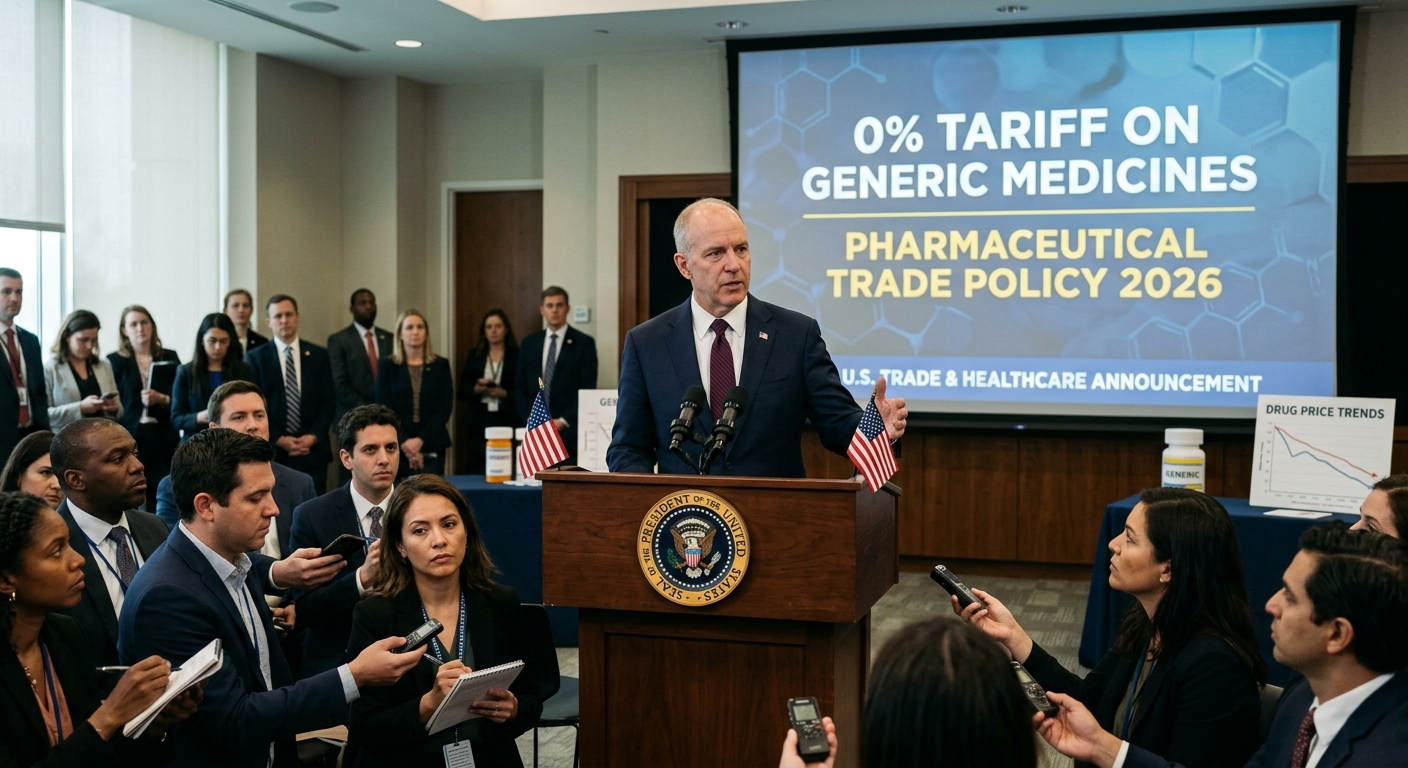
On July 21, 2026, U.S. President Donald Trump announced a phased tariff policy on imported generic medicines aimed at encouraging domestic pharmaceutical manufacturing. Under the new regime, all generic drugs imported into the United States would continue to enter duty-free for a two-year period starting August 1, 2026. After this period, tariffs on these drugs would increase sharply, rising to 100% for one year and then to 200% thereafter.
The phased approach was designed to provide pharmaceutical companies sufficient time to relocate production back to the United States before the substantial tariff hikes take effect. The policy is implemented under Section 232 of the Trade Expansion Act of 1962, which authorizes tariffs on imports deemed to threaten national security. The White House emphasized that the goal of this policy is to reduce national security risks by boosting domestic manufacturing of key medicines.
Generic drugs constitute the vast majority of medicines sold in the U.S., with the Food and Drug Administration estimating that over 90% of prescriptions are generics. However, the tariff policy does not affect patented, branded, or innovative drugs, whose import tariff status remains unchanged. Furthermore, major pharmaceutical companies had previously signed agreements exempting billions of dollars’ worth of drugs from tariffs.
Industry reactions highlighted concerns that generic drug manufacturers, which often operate with limited financial resilience, could be adversely impacted by the impending tariff increases. Some companies have reportedly begun stockpiling supplies in anticipation of the policy changes. Critics have warned that the tariffs risk increasing drug costs for American patients and could potentially undermine the domestic industry the policy seeks to protect.
Implementation and Timeline
On April 2, 2024, President Donald Trump announced a 100% tariff on patented pharmaceutical products and ingredients under Section 232 of the Trade Expansion Act, marking the first time this national security tool was applied to the pharmaceutical industry. The tariffs were set to take effect 120 days after the announcement for large companies and 180 days for smaller companies. However, generic drugs and their associated ingredients were initially exempted from these tariffs.
Subsequently, the administration introduced a phased tariff schedule specifically targeting generic drugs to encourage onshoring of pharmaceutical manufacturing. Beginning August 1, 2026, all generic drugs imported into the United States would continue to have a zero percent tariff for a two-year period. After this grace period, tariffs on generic drugs would increase to 100% for one year, followed by a 200% tariff thereafter. This phased approach was described by President Trump as a “penalty” for companies that fail to establish domestic production facilities within the allotted time frame. The policy aims to give pharmaceutical companies sufficient time to shift production to the U.S., aligning with broader efforts to enhance supply chain security and reduce dependence on foreign sources.
The tariffs outlined are cumulative and can vary depending on the product and country of origin. The tariff schedule and applicable product codes are detailed in annexes to the proclamation, covering specific pharmaceutical products and chemical intermediates. The tariffs became effective on July 31, 2026, for companies listed in Annex III of the proclamation, and on September 29, 2026, for other companies, unless otherwise modified or terminated.
These developments have prompted pharmaceutical companies to anticipate the tariff increases by stockpiling generic drug supplies. For example, imports of branded pharmaceuticals from Ireland, a major exporter to the U.S., increased significantly in March 2025 compared to the previous year. This stockpiling reflects concerns over potential shortages and the impact of tariffs on drug availability and pricing.
Motivations Behind the Policy
The primary motivation behind the Trump administration’s implementation of a temporary 0% tariff on generic medicines was to bolster domestic pharmaceutical manufacturing and reduce the United States’ reliance on foreign sources for critical medicines and pharmaceutical ingredients. The administration viewed the tariff policy as a strategic lever to encourage the expansion of U.S.-based production capacity, thereby enhancing national security by maintaining a sustainable supply of essential prescription drugs on American soil.
This initiative aligns with broader efforts by the administration to promote domestic manufacturing in strategically important industries through tariff measures. By temporarily suspending tariffs on generic drugs for two years, the administration aimed to stabilize the generics industry while encouraging investment and growth within the U.S. pharmaceutical sector. Association for Accessible Medicines President and CEO John Murphy III highlighted the industry’s commitment to policies that support domestic manufacturing and ensure patients’ access to affordable medicines, noting that the sector has already increased investments in U.S. facilities over the past two years.
Moreover, the policy was designed to address structural challenges in the purchasing and reimbursement systems that have historically hindered the expansion of generic drug production domestically. By improving profitability and incentivizing manufacturers, the tariffs sought to stimulate capacity growth and attract new entrants to the U.S. market, which would, in turn, create jobs and strengthen the supply chain.
While the administration recognized the complexity of deciding which drugs should be produced domestically, the overarching goal remained clear: to reduce vulnerabilities in the pharmaceutical supply chain exacerbated by global competition, particularly from China. The tariffs were also seen as a geopolitical tool to intensify U.S. competitiveness in biotech and pharmaceutical sectors on the world stage.
However, generic pharmaceuticals and their associated ingredients were initially excluded from Section 232 tariffs, indicating a nuanced approach that balanced trade enforcement with the need to maintain affordable access to generics in the short term. This temporary measure was part of a larger strategy that included tariff negotiations and trade agreements with other countries to protect U.S. interests while fostering domestic industry growth.
Impact on the Pharmaceutical Industry and Market
The introduction of a temporary 0% tariff on generic medicines for two years, followed by a sharp 200% increase, has significant implications for the pharmaceutical industry and market dynamics in the United States. This policy is part of a broader effort by the Trump administration to boost domestic pharmaceutical production, reduce drug prices, and increase U.S. employment in the sector.
Generic drugs constitute more than 90% of prescriptions dispensed in the U.S., making the generic drug market critical to healthcare access and affordability. However, generic manufacturers face unique challenges under the tariff regime compared to branded drug producers. Unlike branded drugs, which often have concentrated production at a few sites and more uniform tariff exposure, generic drugs are produced by multiple manufacturers, each potentially affected differently by tariffs. This fragmentation, coupled with the low profit margins typical in the generic sector, leaves manufacturers with little resilience to absorb additional costs without passing them on to consumers.
The tariff structure incentivizes pharmaceutical companies to commit to launching new manufacturing facilities in the U.S. before January 2029 to benefit from the reduced tariff rate of 20%, which can drop to zero if pricing deals with the government are struck. This is intended to encourage domestic production expansion and improve economic access to medicines by potentially lowering prices in the long term. Nonetheless, industry experts and trade bodies have expressed concerns that tariffs may lead to higher prices and drug shortages, particularly for generic medicines that are already subject to supply vulnerabilities. For instance, shortages of critical generic drugs, including chemotherapy treatments, could force patients to rely on more expensive branded alternatives that may not be ideal for their conditions.
Moreover, tariffs introduce uncertainty into supply chain management, complicating demand forecasting and potentially disrupting pharmaceutical companies’ ability to efficiently operate and launch new products in the U.S. market. This uncertainty, combined with the risk of retaliatory trade measures from other nations, threatens export markets for U.S.-manufactured pharmaceuticals and medical equipment, which are vital revenue sources for domestic manufacturers.
Industry leaders acknowledge the importance of stabilizing the generic drug market to ensure affordable patient access but note that structural challenges in purchasing and reimbursement practices continue to hinder significant domestic growth despite increased manufacturing investments in recent years. While the policy exempts patented and branded drugs from tariffs, the broad impact on generic drug availability and pricing remains a major concern as the temporary tariff relief expires.
Reactions from International Trading Partners
International trading partners have expressed concern over the United States’ tariff policies on pharmaceuticals, particularly the implications of retaliatory measures and increased drug prices. The European Union has warned that retaliatory tariffs on U.S. pharmaceutical exports could lead to higher drug prices on both sides of the Atlantic, thereby worsening access for patients in Europe. Such retaliations threaten to limit export markets for U.S.-manufactured pharmaceutical products and medical equipment, potentially harming the domestic industry that relies heavily on global revenue streams.
Several countries, including the UK, Switzerland, South Korea, and Japan, have negotiated agreements with the U.S. to maintain lower or zero tariffs on pharmaceutical shipments as part of broader trade deals. For example, a deal between the UK and the U.S. ensures zero tariffs on UK pharmaceutical exports to America, reflecting efforts to mitigate the impact of broader tariff policies on critical medicines. Nonetheless, the cumulative nature of the U.S. tariffs—with rates often added on top of existing duties—raises concerns about escalating costs and supply chain disruptions.
Public health experts and international observers remain skeptical about whether tariffs will successfully encourage domestic manufacturing of essential medicines without unintended consequences. While tariffs may incentivize increased production of brand-name drugs in the U.S., generic drugs—which constitute over 90% of the volume but represent a smaller share of spending—may face significant challenges due to already thin profit margins. This could lead to product discontinuations or cost-cutting measures that undermine drug quality and availability. Consequently, the international community views these U.S. tariff actions as potentially destabilizing to both global pharmaceutical supply chains and patient access worldwide.
Economic and Political Analysis
The Trump administration’s decision to impose tariffs on patented pharmaceutical imports and active pharmaceutical ingredients (APIs) under Section 232 of the Trade Expansion Act of 1962 reflects a broader strategy to bolster domestic manufacturing in industries deemed strategically important, including pharmaceuticals. The administration argued that the United States had become overly reliant on foreign sources for critical medicines, prompting the use of tariffs as leverage to encourage reshoring and capacity expansion by domestic manufacturers.
Economically, the administration anticipated that increased profitability for domestic manufacturers would incentivize them to expand production capacity and encourage new entrants to the market, potentially leading to greater U.S. employment in the pharmaceutical sector. However, this optimistic scenario may not fully materialize, especially in the generic drug market. The low and uncertain returns on investment for generic drug makers could undermine their ability to absorb tariff-related cost pressures, which might result in product discontinuations, cost-cutting measures that reduce drug quality, or both.
Moreover, the tariffs risk leading to higher prices for patients through increased drug costs, insurance premiums, and taxes. Supply chain disruptions triggered by tariffs on finished products and intermediate goods—such as ingredients and packaging materials—could exacerbate drug shortages, negatively affecting patient care by delaying or canceling medical procedures. Experts warn that while pharmaceuticals entering the U.S. have historically faced minimal tariff barriers, the introduction of such tariffs could reverse this trend and raise costs substantially.
Politically, the tariffs have also drawn criticism for their potential to provoke retaliatory measures. The European Union, for example, could respond with its own tariffs on U.S. pharmaceutical exports, which would likely increase drug prices on both sides of the Atlantic and worsen access for European patients. Additionally, some analysts argue that collaborative international policies, rather than punitive tariffs, would better secure a consistent and reliable domestic medicine supply while safeguarding patient interests.
Despite these concerns, the administration maintained that tariffs were necessary to address unfair trade practices, such as discrimination against American products in key markets like Canada. However, critics contend that the tariffs could ultimately harm the domestic industry they aim to protect by raising production costs and weakening competitive positioning, thus producing outcomes contrary to policy goals.
Comparison with Similar Tariff Policies
The temporary 0% tariff on generic medicines announced under the Trump administration reflects a broader pattern of using tariffs strategically to influence domestic manufacturing and trade balances. Similar tariff policies have been implemented in various sectors, often invoking Section 232 of the Trade Expansion Act to address perceived national security risks related to supply chain dependencies.
For instance, in 2025, the President expanded tariffs on imports of steel and aluminum and imposed new tariffs on automobiles, parts, copper products, trucks, and certain wood products. These measures referenced determinations made by the Secretary of Commerce in
The content is provided by Blake Sterling, 9 Minute Read