Summary
Former President Donald Trump delivered a primetime national address on July 14, 2026, in which he renewed allegations of fraud and foreign interference in the 2020 U.S. presidential election, specifically accusing China of orchestrating a scheme to influence the election outcome. Despite multiple investigations, audits, and judicial rulings affirming the legitimacy of the 2020 election results and finding no evidence of widespread fraud or vote tampering, Trump asserted that the Chinese Communist Party (CCP) produced thousands of counterfeit driver’s licenses to facilitate fraudulent mail-in ballots favoring Joe Biden. He further claimed that key intelligence and law enforcement agencies, including the FBI, suppressed this information during his presidency.
Trump’s address was notable for its delivery from the White House, attended by senior administration officials, including heads of major intelligence and security agencies, underscoring the heightened political stakes surrounding election integrity ahead of the 2026 midterm elections. His allegations, largely based on selectively interpreted and partially declassified intelligence documents, reignited debates over the nature and extent of foreign interference, though these claims were widely disputed by intelligence experts and officials who emphasized that no credible evidence exists that foreign actors, including China, manipulated votes or altered election outcomes.
The national address and subsequent release of related intelligence documents prompted a polarized response. Critics, including Democrats and much of the media, dismissed the allegations as unsubstantiated and politically motivated efforts to undermine trust in democratic institutions, while some conservative media and political figures amplified claims of institutional cover-ups and foreign meddling. Within the intelligence community, assessments acknowledged that foreign governments conducted influence operations aimed at shaping voter perceptions but found no evidence of direct interference with election infrastructure or vote counting.
The controversy surrounding Trump’s claims has fueled ongoing discussions about election security, intelligence transparency, and the impact of misinformation on public trust. It also highlighted institutional tensions over the handling and disclosure of sensitive intelligence, with calls from some lawmakers for greater accountability amid concerns that critical information was withheld or insufficiently investigated before and after the 2020 election. The episode remains a significant chapter in the broader discourse on electoral legitimacy and foreign influence in American democracy.
Background
In the lead-up to the 2026 midterm elections, former President Donald Trump delivered a primetime national address in which he revived allegations concerning the 2020 presidential election. Despite multiple investigations, audits, and recounts affirming the legitimacy of the 2020 election results and confirming that Trump lost, he continued to assert claims of election interference and manipulation. These assertions were made amidst a political climate where Trump’s vice president was reportedly pursuing his own path potentially aimed at a 2028 presidential bid, with some Republicans expressing skepticism about Trump’s influence on the GOP’s future nominee.
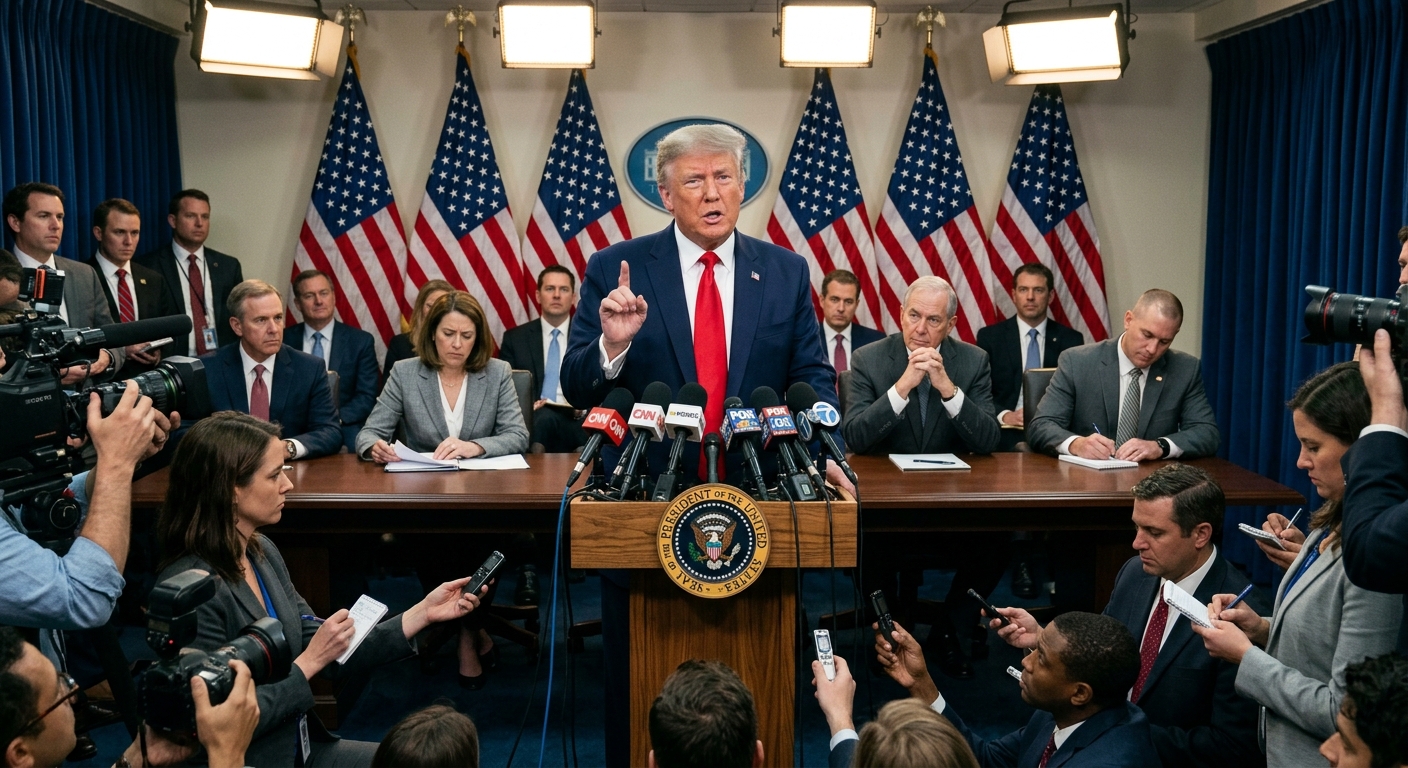
The address was delivered from the White House and was attended by top officials, including heads of key intelligence and security agencies, highlighting the administration’s focus on election security concerns. Trump’s speech specifically accused China of attempting to interfere in the 2020 election, claiming that certain elements within the U.S. government—referred to as the “deep state”—suppressed information about this interference from both the president and the public. However, these allegations lacked substantiated evidence and were met with criticism from both media outlets and political figures who emphasized the absence of systemic voter fraud or manipulation in 2020.
Many Republican senators and other officials expressed unease about revisiting the 2020 election results, advocating instead for a focus on upcoming elections in 2026. The handling of the allegations surrounding foreign interference in the 2020 election underscored ongoing challenges related to evaluating intelligence reports, navigating media bias, and addressing public trust in democratic institutions.
National Address
On July 14, 2026, President Donald Trump delivered a televised national address from the Oval Office, focusing on newly declassified intelligence regarding investigations into U.S. elections and alleged vulnerabilities in voting machines. The speech, aired at 9 p.m. EDT, was intended to highlight concerns over election integrity and to renew claims that he lost the 2020 presidential election due to widespread fraud, a claim he has repeatedly made without substantiating evidence.
During the address, Trump asserted that foreign interference, particularly by the Chinese Communist Party (CCP), had compromised the 2020 election. He alleged that China engaged in a scheme to influence the election outcome by producing and distributing thousands of counterfeit U.S. driver’s licenses to facilitate fraudulent mail-in ballots favoring Joe Biden. These claims referenced recently declassified FBI documents that purportedly revealed this activity and criticized intelligence agencies for withholding this information during his first term.
The president’s speech accused the FBI and Democratic officials of deliberately suppressing investigations into these allegations, framing the situation as a coordinated effort to conceal evidence of election tampering. Trump’s narrative was supported by selective interpretations of intelligence reports and the seizure of nearly 20,000 counterfeit driver’s licenses, which were presented as alarming proof of foreign interference. The audience for the address included key members of the administration, such as Cabinet officials and heads of major intelligence and security agencies.
However, the claims made in the speech were widely challenged by experts, former intelligence officials, and media outlets. Critics pointed out the lack of concrete evidence demonstrating that votes had been manipulated or that the outcome of the 2020 election had been altered. Many intelligence assessments concluded that while foreign actors, including China, Russia, Iran, and North Korea, have the capability to access and potentially manipulate election-related data, no credible proof existed of successful vote tampering or election outcome interference in 2020. Additionally, investigations by judges, congressional committees, and intelligence agencies after the 2020 election found no substantiation for widespread fraud claims.
The media response to the address reflected political divides, with right-leaning outlets emphasizing institutional corruption and cover-up narratives, while left-leaning outlets dismissed the allegations as unsubstantiated and politically motivated. Despite the president’s assertions, the public record does not support the notion that foreign governments, including China, manipulated votes or altered the election outcome.
Official Responses and Intelligence Assessments
In the wake of President Trump’s national address alleging Chinese interference in the 2020 U.S. presidential election, multiple official responses and intelligence assessments have emerged, providing a complex picture of foreign influence and the integrity of the election process.
The U.S. intelligence community, including bodies such as the National Intelligence Council, the CIA, the FBI, the Department of Homeland Security, the State Department’s intelligence bureau, and the National Security Agency, collectively assessed foreign involvement in the 2020 election. While it was acknowledged that several foreign governments—namely China, Russia, Iran, and Venezuela—engaged in influence campaigns aimed at shaping voter perceptions and sowing distrust, these efforts were distinguished from direct election interference, such as tampering with voting infrastructure or vote counts.
A 2021 National Intelligence Council report under the Biden administration expressed “high confidence” that China did not attempt to interfere with the election itself but noted that China considered, though ultimately did not deploy, efforts to alter the election outcome. Similarly, Avril Haines, Director of National Intelligence, stated that the intelligence community held “high confidence” that China did not interfere with the 2020 election.
Despite the consensus, a “minority view” voiced by the National Intelligence Officer for Cyber suggested with “moderate confidence” that China undertook attempts to “undermine” former President Trump’s reelection bid. These attempts were characterized primarily as influence operations conducted through social media, official statements, and public opinion analysis, rather than direct interference with election infrastructure or processes. For example, Chinese intelligence was reported to have analyzed multiple U.S. states’ voter registration data, possibly to inform influence strategies, though this was not linked to altering election results.
Concerns have also been raised about the transparency and handling of intelligence related to foreign election influence. Intelligence reports from August 2020 alleging foreign interference were withdrawn from circulation within the intelligence community around the time FBI Director Chris Wray assured Congress there was no known evidence of foreign interference. The withdrawal and delayed follow-up sparked criticism regarding institutional accountability and the FBI’s commitment to its national security mission ahead of the election. These reports were later handed over to Senate Judiciary Committee Chairman Chuck Grassley, who called for a full investigation to clarify the validity of the intelligence.
While former senior intelligence officials cautioned that releasing thousands of raw intelligence documents to the public might cause confusion and undermine trust in the electoral system, the White House established a task force to review intelligence related to election security for potential declassification and public release. This process included input from CIA Director John Ratcliffe and other senior intelligence officials. Notably, intelligence assessments maintained a clear distinction between influence operations—which attempt to affect voter opinions—and interference efforts, which target the mechanics of the election itself.
Election officials have reiterated their confidence in the security of election infrastructure, affirming that no evidence has been found of foreign intrusions capable of altering election results. Repeated audits and investigations have debunked claims of widespread fraud or manipulation in the 2020 election. Nonetheless, the debate over the extent and impact of foreign influence continues, fueled in part by newly declassified documents and political discourse surrounding the 2020 election.
Investigations, Audits, and Official Reviews
Following the 2020 U.S. presidential election, numerous investigations, audits, and official reviews were conducted to examine claims of widespread fraud, foreign interference, and election manipulation. Despite persistent allegations by then-President Trump and his allies, these efforts consistently found no evidence supporting claims of voting-machine tampering, foreign interference, or large-scale fraud affecting the election outcome.
Intelligence assessments from the final year of Trump’s first term, as well as subsequent reviews, clearly distinguished between foreign influence efforts and actual interference. For instance, the U.S. intelligence community concluded that China “probably also continued longstanding efforts” to gather information on U.S. voters and public opinion to influence U.S. policy but did not interfere with election infrastructure such as vote tabulation or the transmission of election results. These findings were echoed by the FBI and other federal agencies, which maintained that there was no known evidence of foreign interference altering the election outcome.
Despite these official conclusions, certain intelligence reports raised controversial allegations. An intelligence information report (IIR) sourced from an FBI Confidential Human Source claimed that the Chinese government was producing “tens of thousands” of fraudulent driver’s licenses to manufacture mail-in ballots in favor of Joe Biden. However, the FBI reportedly halted its investigation into these claims abruptly, and the IIR was withdrawn from circulation within the intelligence community. This decision limited access to the report by other FBI field offices and intelligence elements, raising concerns about transparency and the completeness of the investigation. Senate Judiciary Committee Chairman Chuck Grassley, a Republican, criticized the FBI’s handling of the matter and called for a full review to determine the validity of the intelligence.
Meanwhile, courts repeatedly dismissed 62 lawsuits filed by Trump contesting the election results, finding no credible evidence to support the allegations of widespread fraud. Alongside these legal failures, election audits and reviews by state and federal authorities corroborated the integrity of the election process.
In response to ongoing questions about election security, a White House task force has been reviewing thousands of intelligence and law enforcement documents to consider their possible release to the public. This process involves multiple intelligence officials, including CIA Director John Ratcliffe, aiming to enhance transparency and clarify distinctions between foreign influence and interference.
Reactions
The response to former President Trump’s national address accusing China of interference in the 2020 election was deeply polarized. Democratic leaders and critics warned that Trump was attempting to revive debunked claims of election fraud with the intent to delegitimize the upcoming 2026 midterm elections, where his Republican Party faces significant challenges. Meanwhile, conservative media outlets, including Fox News, pledged to air the speech in full, with some commentators accusing mainstream networks like NBC and ABC of suppressing what they called “the truth”.
Within the broader political and intelligence communities, there was a consensus that while foreign actors, including China, Russia, Iran, and others, conducted influence operations aimed at shaping voter perceptions, no evidence has been found of interference with the technical aspects of the election such as vote-counting or ballot casting. Multiple investigations and audits have repeatedly debunked claims of widespread fraud or manipulation in the 2020 election. The intelligence community’s findings were met with skepticism by some, including dissenting officials who felt that the threat posed by China was underplayed.
The release of intelligence documents related to foreign interference also sparked concerns about transparency and institutional accountability in the lead-up to the election, fueling ongoing debates over the scope and nature of foreign influence efforts. Notably, the Department of Homeland Security review cited in the White House’s document release highlighted issues such as non-citizen voter registrations, though these claims remain contentious and politically charged.
Impact and Aftermath
The allegations of Chinese interference in the 2020 U.S. presidential election, as asserted by former President Donald Trump, generated significant debate and heightened concerns about election security and foreign influence. Despite Trump’s claims that Beijing sought to aid his opponent, Joe Biden, the Chinese government firmly denied any involvement, reiterating its longstanding policy of non-interference in other countries’ internal affairs.
U.S. intelligence agencies acknowledged attempts by multiple foreign actors to influence public perception and sow doubt regarding the election’s integrity but found no evidence of direct interference in the voting processes themselves. Nonetheless, the release and subsequent withdrawal of certain intelligence reports, including allegations that the Chinese Communist Party planned to distribute fake driver’s licenses for fraudulent mail-in ballots, intensified demands for greater transparency and accountability within intelligence and law enforcement agencies. The seizure of nearly 20,000 counterfeit licenses underscored national security concerns and prompted calls for thorough FBI investigations.
The persistent dissemination of unsubstantiated claims about election fraud and foreign manipulation contributed to ongoing efforts by Trump and his allies to advocate for stricter voting regulations, such as enhanced voter ID requirements encapsulated in proposals like the SAVE America Act. These efforts, however, were met with widespread repudiation from election experts and numerous audits that confirmed the security and legitimacy of the 2020 election results. Analysts also noted the incongruity in allegations of widespread fraud given that Republican candidates, including those on the same ballots as Trump, won several key races.
In response to the controversy, Democrats and election officials intensified outreach to reassure the public about the safety and integrity of U.S. elections, countering misinformation and fostering trust in the democratic process. The episode has left a lasting impact on the political landscape by fueling partisan divides over election legitimacy, shaping legislative agendas on voting laws, and highlighting the ongoing challenges posed by foreign influence campaigns and misinformation in American democracy.
Related Controversies and Debates
The allegations of foreign interference in the 2020 U.S. presidential election have sparked significant controversy and debate, particularly following the release of withdrawn intelligence documents from August 2020. These reports, which were never fully investigated and were pulled from circulation around the time then-FBI Director Chris Wray assured lawmakers there was no known evidence of foreign election interference, reignited concerns over transparency and institutional accountability within the U.S. intelligence community. The documents were eventually handed over to Senate Judiciary Committee Chairman Chuck Grassley amid calls for greater federal agency transparency.
Critics of the claims argue that extensive investigations and audits by election authorities and law enforcement found no evidence of systemic voter fraud in 2020, warning that promoting unsubstantiated allegations damages public trust in democratic institutions. Media outlets, particularly on the political left, have accused figures such as Kash Patel of amplifying conspiracy theories about Chinese interference in the election, emphasizing expert consensus that debunks widespread voter fraud and describing these narratives as a “cottage industry” of misinformation. Numerous legal challenges contesting the 2020 election results have similarly been dismissed or debunked, further undermining claims of manipulation or fraud.
At the same time, the U.S. intelligence community confirmed that multiple foreign state actors engaged in overt or clandestine efforts to
The content is provided by Sierra Knightley, 9 Minute Read