
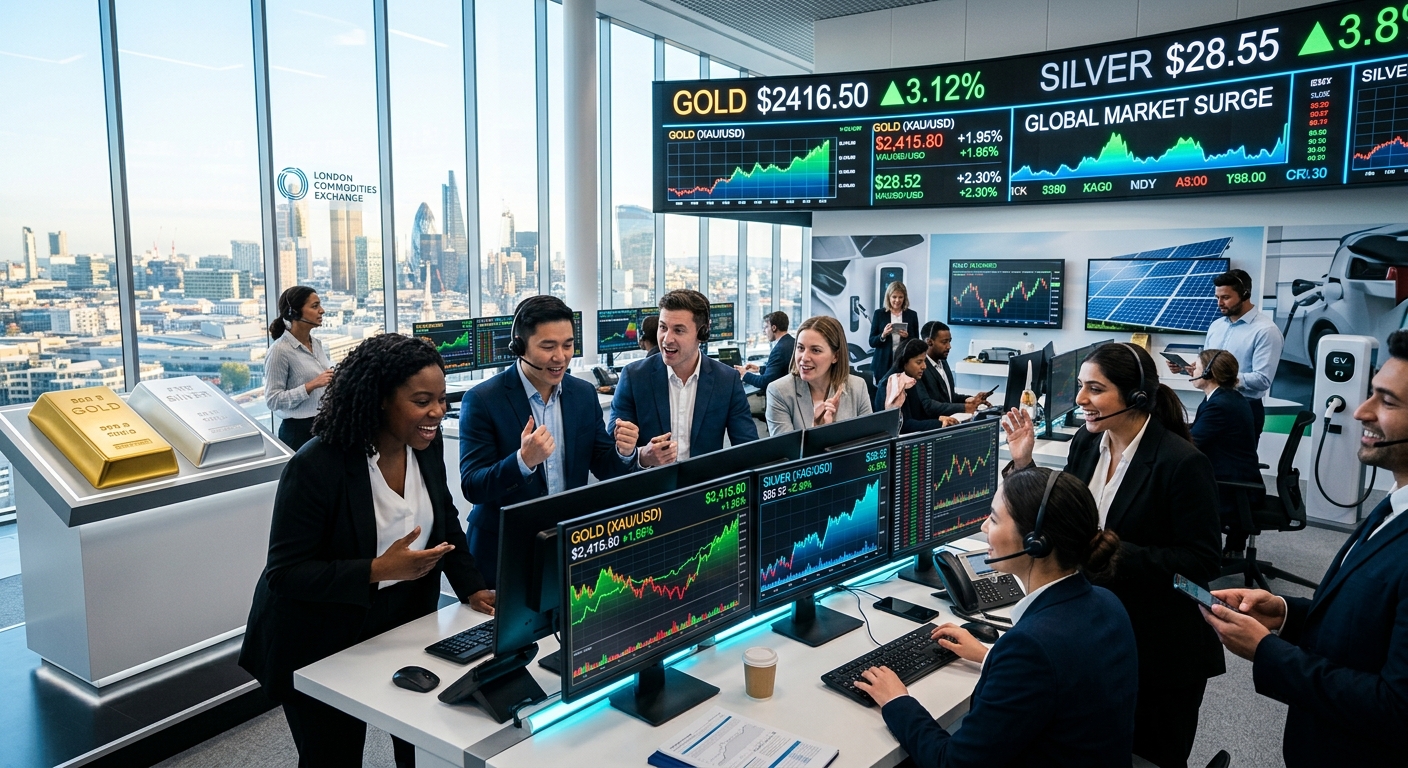
Current Surge in Gold and Silver Prices
The rise in gold and silver prices has been significant, driven by geopolitical tensions, central bank purchasing activities, and supply constraints. As the markets have evolved, gold prices have approached historic highs around $3,700 per ounce, while silver has seen peaks near $54 per ounce. This reflects a fundamental shift in demand that prioritizes safer investments amid market uncertainties rather than speculative trading alone.
Investor Behavior Drives Market Dynamics
Retail investor activity has notably contributed to the recent influx into gold and silver funds. Data indicate that retail flows exceeded inflows from institutional investors, suggesting a strong interest from individuals seeking to hedge against economic instability. Institutional investor behavior remains hesitant, often sticking to stable positions, which means that retail dynamics play a pivotal role in shaping market trends, particularly during volatile price movements.
Geopolitical Uncertainty and Demand for Safe-Havens
Ongoing global tensions have positioned gold and silver as safe-haven assets, with their prices reflecting investor concern regarding economic stability. Situations like conflicts in the Middle East elevate demand for these metals as they historically serve as a refuge during crises. A sudden thaw in geopolitical tensions could prompt profit-taking exercises, particularly in the more volatile silver market.
Industrial Demand and Supply Constraints on Silver
Silver’s price movements are increasingly influenced by robust industrial demand in emerging technologies and renewable energy sectors. However, stagnating production growth and regulatory pressures have tightened supply, contributing to upward price pressure. The delicate equilibrium between surging demand and constrained supply conditions continues to shape market dynamics, leading to substantial price rallies in silver.
Central Bank Activities and Reserve Diversification
Centrally coordinated gold purchases have surged, especially among emerging markets looking to diversify reserves away from traditional currencies. These acquisitions influence market supply and demand balance, reinforcing gold’s appeal amid caution regarding economic policies and global debt. The expectation among many central banks to bolster their gold holdings emphasizes international trends that may coincide with evolving monetary strategies.
Market Volatility and Investment Strategies
As price volatility remains prevalent, strategies employed by investors vary widely. A phased approach to investments in precious metals is often advisable to mitigate risk, with recommendations suggesting allocations of 5% to 10% for gold based on individual risk tolerance. Retail interest in ETFs remains strong, enhancing market sensitivity as participants respond to price shifts with speculative trading, leading to amplified price movements.
Role of Related Markets and Commodities
The price behavior of gold and silver is closely tied to broader economic conditions, including dollar strength and geopolitical events. Fluctuations in currency value can directly impact demand, with lower dollar values typically encouraging global investment in these metals. Understanding the interdependencies between precious metals and commodity markets can aid in better anticipating potential price movements based on evolving economic landscapes.
The content is provided by Jordan Fields, 9 Minute Read